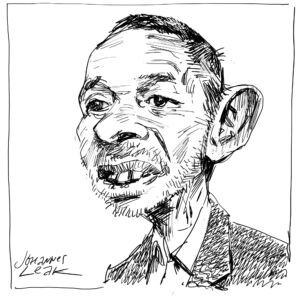
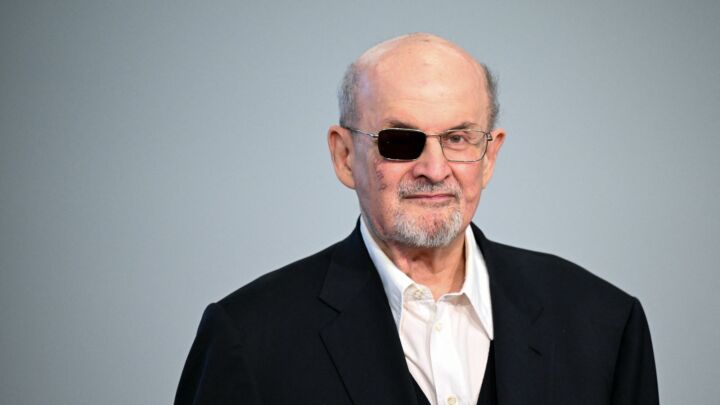
Victor J Stenger emeritus professor of physics and astronomy at the University of Hawaii in Honolulu, adjunct professor of philosophy at the University of Colorado in Boulder, and president of Colorado Citizens for Science
The first three-quarters of the Twentieth Century saw the most dramatic developments in theoretical physics since Newton. They culminated in the development of the standard model of particles and forces, built upon the twin foundations of Relativity and Quantum Theory. All this progress came about as a result of a strong interplay between theory and experiment. The standard model has proven consistent with every observation made in the physics laboratory and astronomical observatory with, at most, only minor modifications.
Lacking any guidance from experiment, progress in theoretical physics over the last three decades has stagnated. Within the next year or two, particle colliders in Europe and the U.S. should begin providing data to steer theoretical physics toward the next level of understanding of the fundamental nature of matter beyond the standard model. The challenge will be to pick up the pace again, for physics to reassert itself as an experimental science.
We need to find a new vision for humanity, one that offers hope in this world rather than the next. A century ago the huddled masses saw America as a new frontier that offered them room for dreams and big ideas. Today we live in the Age of Disillusionment, marked by a perverse strain of religious-nationalistic fundamentalism in which those big ideas lie in tatters and any frontiers are out of sight. (Thanks to Anne O’Reilly)
|