Ivory-tower liberalism
Daron Acemoglu’s What Happened to Liberal Democracy? is full of elitist prejudice.
Want unlimited, ad-free access? Become a spiked supporter.
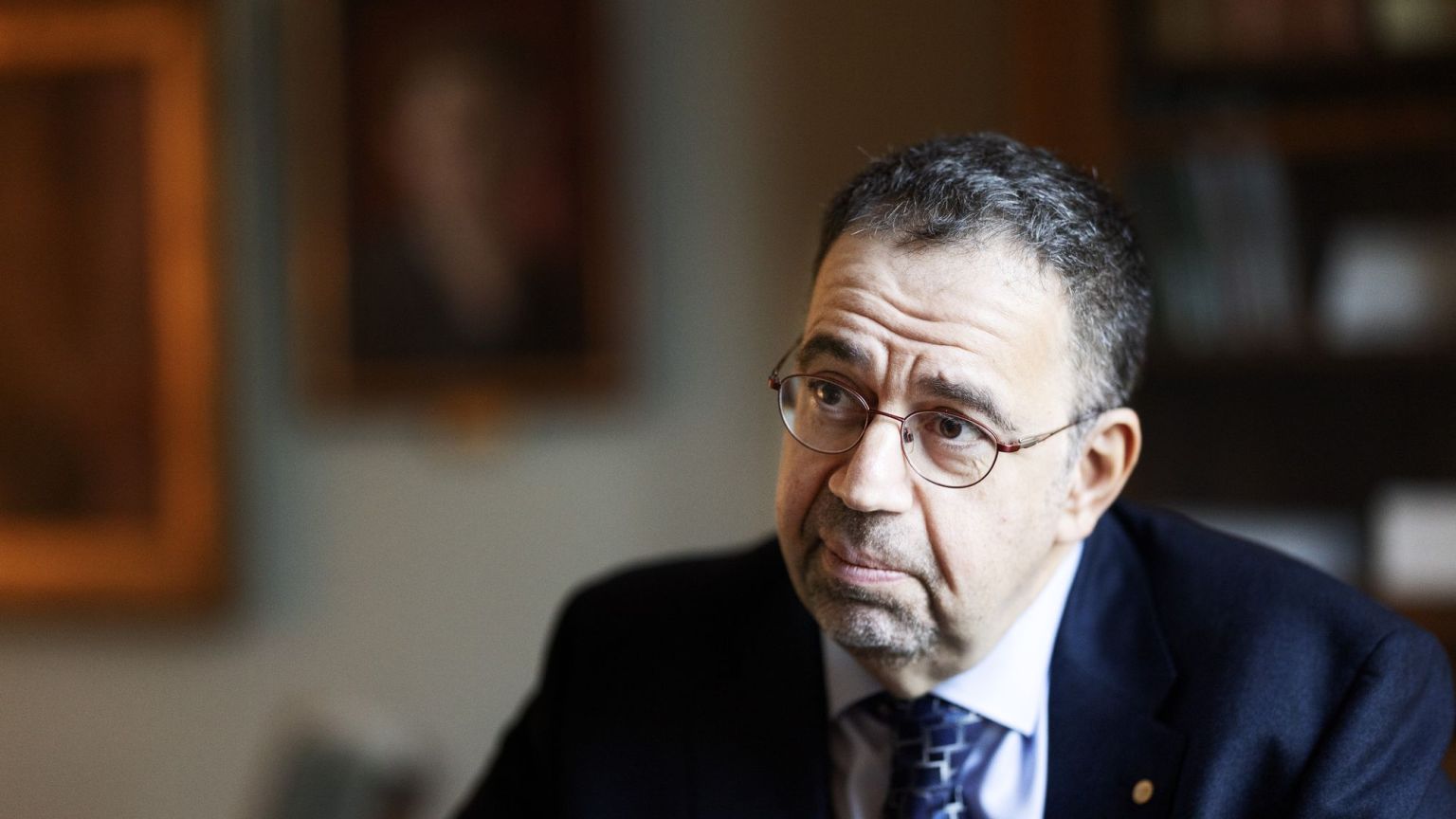
Economist Daron Acemoglu is back in London for his book tour, in the city where, more than 30 years ago, he studied for his PhD at the London School of Economics. His thesis examiner, Nobel laureate Christopher Pissarides, later wrote: ‘[Acemoglu’s] thesis is among the best ever written – if not the best at the LSE.’ The Economist has called him ‘world’s most influential economist’. Acemoglu won the Nobel Prize two years ago, has 315,045 citations, and is now a professor at the Massachusetts Institute of Technology.
He may have scaled the heights of academia, but he has a message for his liberal-minded friends. They need to start listening to the working class.
I went to Acemoglu’s recent talk at the Institute for Government to hear him discuss his new book, What Happened to Liberal Democracy?. The main thesis of the book, and his speech, is that members of the liberal elite have lived in a separate reality to the working class for far too long. They need to start engaging with the working class, and forge a working-class liberalism.
His talk was going well – until someone asked about Brexit. He said it was a ‘mistake’. He didn’t think the referendum itself was a mistake, but argued that people didn’t have access to correct information, that ‘the debate was uninformative’, and that the question had been designed ‘wrongly’, without the advice of experts. He said we needed to ‘structure the debate much better’ and that ‘the questions weren’t well formulated’.
It was a telling response. Reflecting on a vote that was largely supported by the working class, this advocate of ‘working-class liberalism’ seemed to believe not only were these working-class voters wrong, but that they also hadn’t been smart enough to acquire the correct information. He may have given a speech and written a whole book about listening to the working class, but when confronted by a largely working-class voice, he wanted to close his ears.
And that is a theme running throughout the whole of What Happened to Liberal Democracy?. Take Acemoglu’s view of why working-class voters in America are worried about high immigration levels. ‘Throughout the last several decades, about half of the US population has been concerned about immigration, especially illegal immigration’, he writes, ‘even if those concerns were sometimes much amplified by false information and Americans still largely agree that some immigration is good for the country’.
Even when he wants to engage with working-class concerns, he seems unable to put aside his liberal prejudices. And so he suggests that working-class views on immigration have been influenced by propaganda and false information. Little wonder he calls for more regulation of so-called misinformation on social media – perhaps an unsurprising position given his support in 2024 for the Brazilian government’s decision to ban X.
It seems that Acemoglu finds it as difficult to listen to working-class voices as the very liberal elites he chides. If that’s the first problem with What Happened to Liberal Democracy?, the second problem is that it’s an economist’s attempt to deal with political problems. He even seems uncertain as to what exactly liberalism is. In one chapter, he defends the idea of self-government, claiming it is ‘suspicious of excessive power of all sorts, including those that come from intense social engineering’. But in the chapter before, he happily calls for social media to be centrally regulated.
Acemoglu’s working-class liberalism wants to be all things to all men. It wants to be against social engineering, but supportive of ‘the regulation of social media and AI’. It believes in democracy and listening to the working class, but not when the working classes vote for Trump. Ultimately, Acemoglu’s liberalism feels all too familiar. It wants to talk to the working-class people, but doesn’t want to listen when they reach the ‘wrong’ conclusions.
What Happened to Liberal Democracy? is great book-club material for middle-class elites ‘concerned’ about democracy – not because it’s under threat, but because it’s giving the working classes too much of a voice
What Happened to Liberal Democracy?: Remaking a Politics of Shared Prosperity, by Daron Acemoglu, is published by Profile Books.
Mani Basharzad is a junior research associate at the Institute of Economic Affairs.
You’ve hit your monthly free article limit.
Support spiked and get unlimited access.
Support spiked and get unlimited access
spiked is funded by readers like you. Only 0.1% of regular readers currently support us. If just 1% did, we could grow our team and step up the fight for free speech and democracy.
Become a spiked supporter and enjoy unlimited, ad-free access, bonus content and exclusive events – while helping to keep independent journalism alive.
Monthly support makes the biggest difference. Thank you.

Comments
Want to join the conversation?
Only spiked supporters and patrons, who donate regularly to us, can comment on our articles.