What the Henry Nowak inquiry must answer
The public deserves to know the rotten truth about the woke capture of our police.

Want unlimited, ad-free access? Become a spiked supporter.
On Monday, UK home secretary Shabana Mahmood announced an independent review into the murder of Henry Nowak. The review, led by former justice secretary Alex Chalk KC, will look at why police did not recognise that Nowak needed first aid, how he and his family were treated by police, and if there were ‘any missed opportunities’ to apprehend the murderer, Mahmood told the Commons.
Henry, an 18-year-old university student, was fatally stabbed in Southampton in December 2025 by Vickrum Digwa. Yet when officers arrived at the scene, they placed Nowak in handcuffs, instead of helping him, even though he told officers he had been stabbed. This was because Digwa falsely claimed Nowak racially abused him and that he had acted in self-defence.
In June, Digwa was sentenced to life imprisonment for the murder, with a minimum term of 21 years. Yet that did not stem the public outrage, particularly after various documents came to light that revealed a police force heavily influenced by racial identity politics. Prime among these was the ‘Race Action Plan’ adopted by the Southampton and Isle of Wight Constabulary, whose officers were responsible for handcuffing Nowak. This document effectively instructs police to treat ethnic minorities differently from white people. Police, it says, must be ‘anti-racist’ in all that they do, including by working to reduce racial disparities in arrests and understanding the ‘impact, trauma and history of policing ethnic-minority communities’.
Henry’s family and the wider public are entitled to answers. But we have reason to be suspicious of what the review might produce. Inquiries like this tend to identify issues such as missed warnings and failures of information-sharing, followed by the predictable conclusion that ‘lessons will be learned’. I strongly suspect that no one will be held directly accountable, and nothing fundamental will change.
We can assume this because Nowak’s murder was not the first time racial thinking has interfered with policing or the conduct of the authorities. In 2000, Carl Manning and Marie Therese Kouao tortured eight-year-old Victoria Climbié to death in Haringey, north London. It was one of Britain’s worst child abuse cases. At the subsequent Laming Inquiry, Neil Garnham QC stated: ‘Fear of being accused of racism can stop people acting when otherwise they would.’ Earlier signs of abuse were ignored and so the opportunity to save Climbié’s life was passed up.
In 2023, Valdo Calocane murdered three people in Nottingham. Calocane, a paranoid schizophrenic, had previously had extensive contact with the state. Mental-health services had been considering sectioning him, but a care team released him into the community due to concerns about the ‘over-representation’ of young black men in detention.
Perhaps most notorious of all was the brutal murder of three girls at a Taylor Swift-themed dance class in Southport in July 2024. The fear of being branded racist appeared to play a role in how the authorities assessed the risk posed by Axel Rudakubana, prior to the killings. This included a social worker who dismissed a headteacher’s warning about Rudakubana’s behaviour – which included an obsession with knives – as ‘stereotyping’.

In all of these cases, the authorities’ fear of being branded ‘racist’ prevented them from doing their job. It allowed Calocane and Rudakubana to slip through the net, and it caused police officers to handcuff a dying teenager instead of his murderer. How identity politics came to plague policing should be one of the central concerns of the Nowak inquiry, if not the central concern.
Of course, racial prejudice must have no role in policing. But ‘anti-racism’ cannot become a reason to avoid recording uncomfortable facts or challenging dangerous behaviour. We only need to look at the rape-gangs scandal – another example in which a fear of being accused of racism trumped the safety of the public – to understand that.
A free society will not survive if its institutions are so paralysed by the fear of being labelled racist that they lose any courage to protect the public. Yet we find ourselves in a situation where the authorities agonise over optics, even as an 18-year-old is bleeding to death in front of them. This isn’t compassionate; it is a grotesque inversion of justice and duty.
The state’s fundamental purpose is to protect individual liberty and personal safety, not to manage public perceptions or appease activist groups. The law must be applied without fear or favour – something that we used to think of as obvious, but which is now increasingly questioned by senior figures in the police hierarchy.
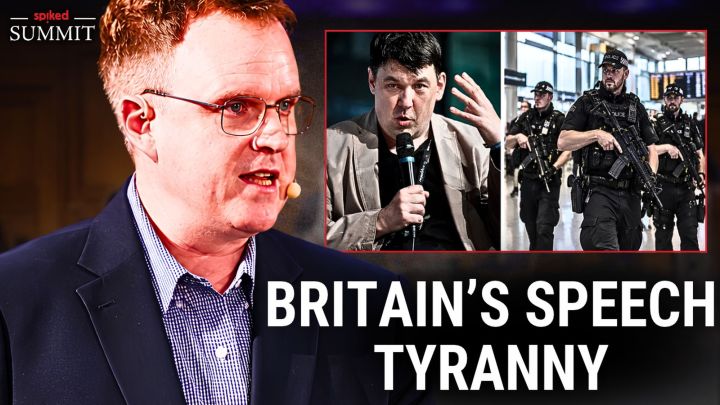
The review into Nowak’s death should be transparent and properly resourced. Above all, it must be ready to identify the factors that contributed to Nowak’s shocking mistreatment by police.
Shabana Mahmood has said we must ‘get to the truth of what happened before, during and after that awful night’. Henry Nowak’s loved ones and the public must not settle for anything less.
Paul Birch is a former police officer and counter-terrorism specialist. You can read his Substack here.
You’ve hit your monthly free article limit.
Support spiked and get unlimited access.
Support spiked and get unlimited access
spiked is funded by readers like you. Only 0.1% of regular readers currently support us. If just 1% did, we could grow our team and step up the fight for free speech and democracy.
Become a spiked supporter and enjoy unlimited, ad-free access, bonus content and exclusive events – while helping to keep independent journalism alive.
Monthly support makes the biggest difference. Thank you.


Comments
Want to join the conversation?
Only spiked supporters and patrons, who donate regularly to us, can comment on our articles.