A frenzied assault on French civilisation
The rioters’ targeting of the French Republic’s symbols speaks to their violent estrangement from their nation.

Read our latest coverage of the French riots – paywall-free all of this week.
The urban violence that has gripped France over the past week has been wilfully misunderstood.
Some still claim that the widespread rioting is part of a protest about education or the cost of living. Others unthinkingly insist that it is simply part of French people’s long-standing, popular tradition of taking to the streets to make their views known. Jean-Luc Mélenchon, the leader of the Islamo-leftist La France Insoumise (LFI), has even invoked the spirit of the May 1968 protests – when student revolts and a general strike brought France to a standstill – to justify the riots. Rival politicians and commentators have since rounded on Mélenchon and blamed LFI for encouraging and licensing the violent behaviour of the rioters.
Indeed, there has been a tendency among some observers to attribute the violence to the involvement of outside actors, from political activists to other sundry nihilists. They seem to believe that they can preserve the characterisation of the protests as essentially peaceful by blaming the violence on small groups of troublemakers – what the French call les casseurs.
Yet the most striking feature of these riots has been the extent to which they’ve been fuelled by a destructive and disruptive dynamic from the start. This dynamic has encouraged the convergence of different groups with no shared goals – from school and university students to violent bands of casseurs – to hit the streets together and cause havoc. And this, in turn, has led to a loss of self-control and the erosion of the kind of restraint that is usually associated with civilised behaviour. The riots have effectively been decivilising society.
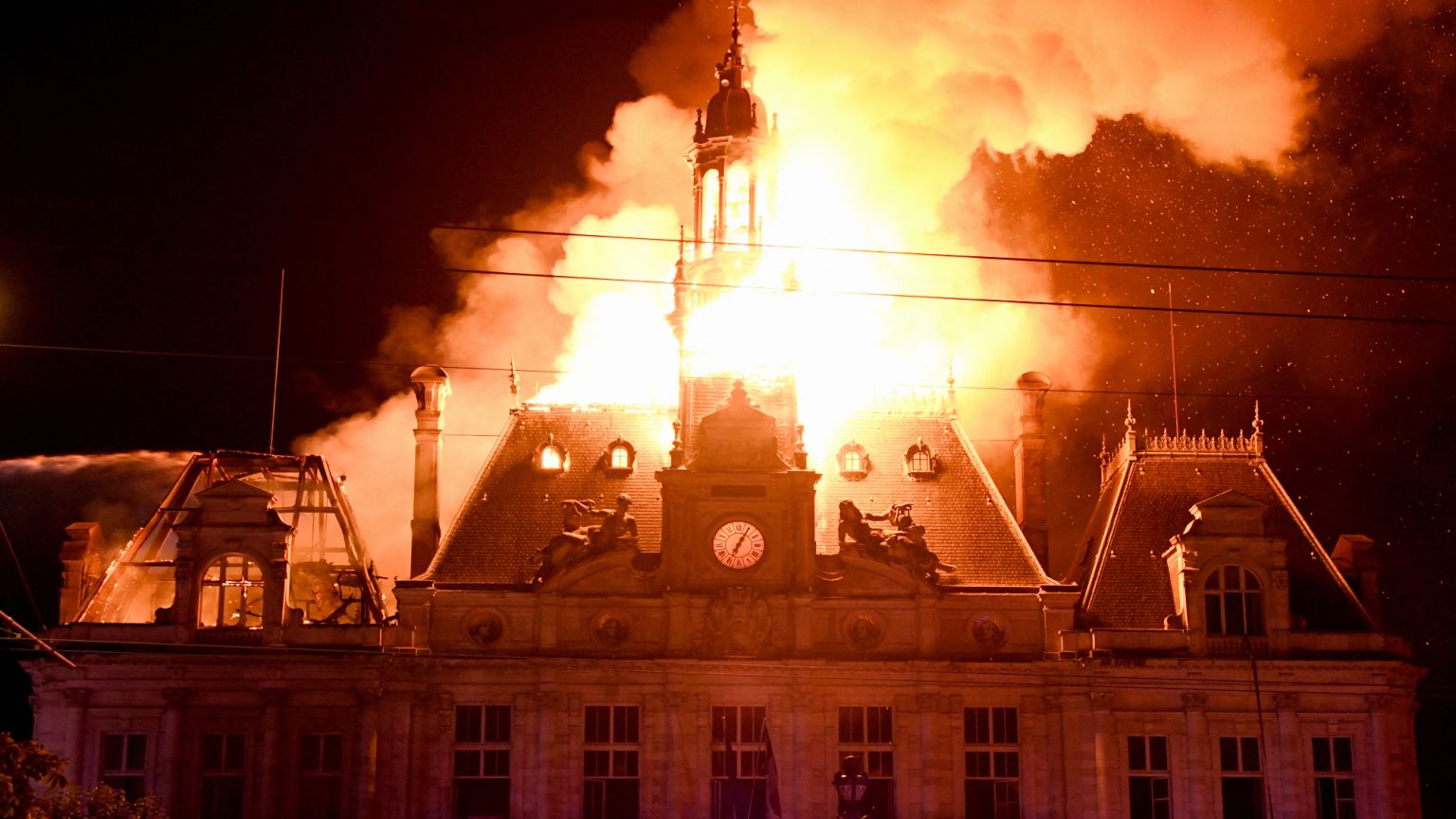
Unlike the well-known revolts of modern times, these riots seem driven by a profound sense of hatred towards France. From the outset, the mob has directed its destructive passions against the symbols of the French Republic and the authority of the state. Schools, police stations and city halls have been targeted and, in many instances, set on fire – including the ornate, 19th-century Limoges city hall, which was gutted and engulfed by flames last Saturday.
The self-conscious desecration of the institutions of the French Republic was captured well by the behaviour of the masked gangs who invaded the city hall in Marseille and hurled the bust of Marianne on to the floor. The desecration of Marianne – the female personification of the French Republic – was not an accidental act of vandalism. The mob was performing a ritual of giving France a good kicking.
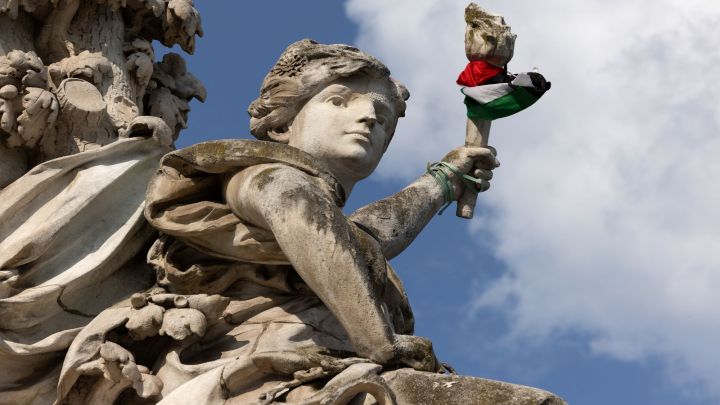
In the past, popular protests in Paris and elsewhere often marched under the French tricolore. But the national flag has been conspicuous by its absence during the course of these riots. On the contrary, the students, casseurs and others were much more likely to be waving the Palestinian flag. One video even shows young students vandalising a school, while draped in Moroccan flags. The preference of the protesters for flags foreign to France has highlighted their cultural detachment from French society, and their emotional distance from France’s republican values.

The animosity directed against the very symbols of the French Republic exposes the collapse of a common culture. In its place, cultural divisions and antagonisms have flourished. That is why the recent wave of violence has appeared as a civil-war-like attack on those citizens and institutions that have chosen to remain loyal to France. It is clear that a significant section of society – principally from immigrant communities – feels alienated from France and regards its institutions and way of life with hatred and contempt.
Through their celebration of diversity and multiculturalism, those in charge of the nation’s political and cultural institutions have forgotten what it means to be French. Unable to provide an account of what their nation stands for, France’s ruling elites have been reluctant to tackle the challenge of integrating and assimilating immigrants into a French way of life.
To make matters worse, the institutions of culture and education have failed to socialise young people and encourage them to embrace France’s historical and cultural legacy. On the contrary, these institutions have increasingly tended to portray France’s past as toxic and shameful.
The failure of French institutions and adult society to take responsibility for the socialisation of young people has grave consequences. Historically, socialisation teaches the young to understand that their world exists independently of their immediate individual desires. In this way, young people come to terms with rules, boundaries and community expectations. The internalisation of these values provides the young with a sense of belonging and an informal code of taken-for-granted behaviour to guide them as they undertake the journey to adulthood. Freed from the conventions associated with community life, today’s young become emotionally detached from their nation and its legacy, which has influenced generations of French people through the centuries. In effect, many of them become less and less French.

Hostility to France and its historical values runs in parallel with the moral disarmament of the nation’s ruling elites. They have effectively stood down morally and surrendered their nation’s values and traditions. In doing so, they have helped deprive the nation’s youth of any moral connection with a distinct French way of life. Little wonder young people are increasingly drawn towards the cause of Palestine.
The consequences are dire. In this morally confusing wasteland, where civilisational restraints are conspicuously weak, action on the streets can quickly acquire a nihilistic, violently destructive form. It now seems that France is in danger of losing many of its youth to a cause that is hostile to its very existence.
Frank Furedi is president of the Freedom and Sovereignty Initiative Europe.
Support spiked and get unlimited access
spiked is funded by readers like you. Only 0.1% of regular readers currently support us. If just 1% did, we could grow our team and step up the fight for free speech and democracy.
Become a spiked supporter and enjoy unlimited, ad-free access, bonus content and exclusive events – while helping to keep independent journalism alive.
Monthly support makes the biggest difference. Thank you.



Comments
Want to join the conversation?
Only spiked supporters and patrons, who donate regularly to us, can comment on our articles.