The Houthis have global trade in a chokehold
The ragtag band of Yemeni jihadists is closing in on the world’s energy supplies.
Want unlimited, ad-free access? Become a spiked supporter.
Missile attacks struck Riyadh’s King Khalid International Airport on Saturday 10 October, killing 13 and injuring hundreds. Another bombing targeted the airport the very next day, killing one and injuring a dozen others. Then, six people were killed in separate attacks on the King Khalid and Abha airports. The Houthis, a Yemen-based militant group, have claimed responsibility for all of them.
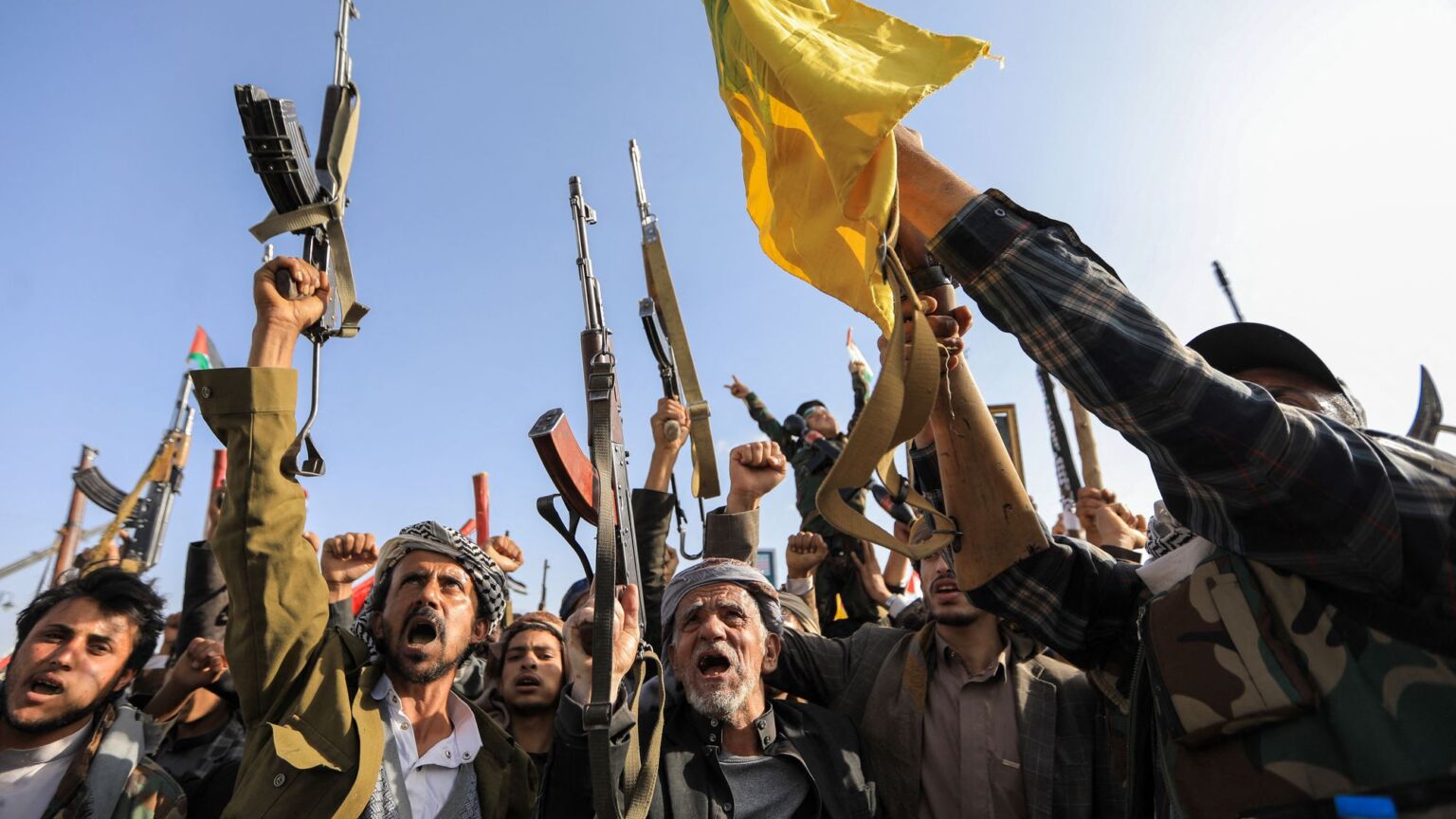
The Houthis, named after founders Hussein and Abdul Malik al-Houthi, are Iran-backed Shia jihadists constituting the Yemeni flank of Tehran’s ‘Axis of Resistance’ against Israel and the West. The slogan on their flag sets out their views in stark terms: ‘God is great, Death to America, Death to Israel, Curse on the Jews, Victory to Islam.’ In recent years, they have emerged as a key part of Iran’s ‘Shia Crescent’, the goal of which is to encircle Saudi Arabia with hostile Muslim states. Along with Hezbollah in Lebanon, they are among Tehran’s most important allies.
The Houthis spent much of the 2000s battling Yemen’s Saudi-backed authoritarian ruler, Ali Abdullah Saleh. In 2014, they succeeded in overthrowing his successor, Abdrabbuh Mansour Hadi, as well as gaining control of the capital Sanaa. Currently, the Houthis are in charge of up to one-third of Yemen’s territory, while their ranks have swollen to roughly 350,000 militants.
The fall of Sanaa is what really concerns us here. It led Saudi Arabia to create the Islamic Military Counter Terrorism Coalition, an alliance of Sunni nations whose aim was to counter Iranian proxies, and specifically the Houthis.
Saudi Arabia’s onslaught in Yemen, which began in 2015, has since created one of the world’s most severe humanitarian crises. An estimated 377,000 people were killed between 2015 and 2022. Since the start of the conflict, over five million have been displaced, and more than 22million are in need of humanitarian assistance.
A brief ceasefire between the Saudi-backed Yemeni government and the Houthis was reached in 2022. But the 7 October 2023 Hamas attack on Israel pushed all of Iran’s proxies back into the theatre of war. The Houthis relentlessly attacked Israel, as well as nearby American military bases and Western cargo ships. Since the US-Israeli attacks on Iran in February this year, the Houthis have continued to rally behind Tehran.
With the effective closure of the Strait of Hormuz, the significance of the Bab al-Mandab Strait – a chokepoint connecting the Red Sea to the Gulf of Aden – has increased substantially. The Houthis are now in charge of large sections of the Strait, which carries 12 per cent of global maritime oil and eight per cent of the liquefied natural gas. These numbers have increased since the blockade of the Strait of Hormuz, which caused Riyadh to divert a significant percentage of its energy exports. The Houthis’ recent attacks are an attempt to take complete control of Bab al-Mandab, in turn strangling Saudi Arabia’s petro-economy.

So far, Western powers have provided mainly operational support to Riyadh. The US has provided Riyadh with intelligence, while the UK has assisted Saudi planes with air-to-air refuelling. But, considering the massive ramifications for the global economy, a more decisive intervention from the West may well be coming.
With the US reluctant to fully commit to the war against the Houthis, and Sunni military allies Turkey and Pakistan dilly-dallying over their participation, Israel is an obvious ally for Riyadh. While Saudi Arabia and Israel have had covert military and intelligence relations for decades, and Riyadh has for years been pushing a group of Muslim states to normalise relations with the Jewish State, Saudi Crown Prince Mohammed bin Salman has been reluctant to officially accept Israeli participation, given the expected backlash from the Muslim world. Even so, the Yemen war might now push the crown prince to explore all options.
After all, if the Houthis are able to maintain decisive control over the Bab al-Mandab Strait, Iran will effectively determine the fate of roughly a third of the world’s seaborne oil and gas trade. This would be a catastrophe – and not just for Saudi Arabia.
Kunwar Khuldune Shahid is a writer based in Pakistan.
You’ve hit your monthly free article limit.
Support spiked and get unlimited access.
Support spiked and get unlimited access
spiked is funded by readers like you. Only 0.1% of regular readers currently support us. If just 1% did, we could grow our team and step up the fight for free speech and democracy.
Become a spiked supporter and enjoy unlimited, ad-free access, bonus content and exclusive events – while helping to keep independent journalism alive.
Monthly support makes the biggest difference. Thank you.





Comments
Want to join the conversation?
Only spiked supporters and patrons, who donate regularly to us, can comment on our articles.