The grotesque spectacle of the livestreamed execution
Even monsters like Nidal Hasan and Christa Pike should not be killed by the state.
Want unlimited, ad-free access? Become a spiked supporter.
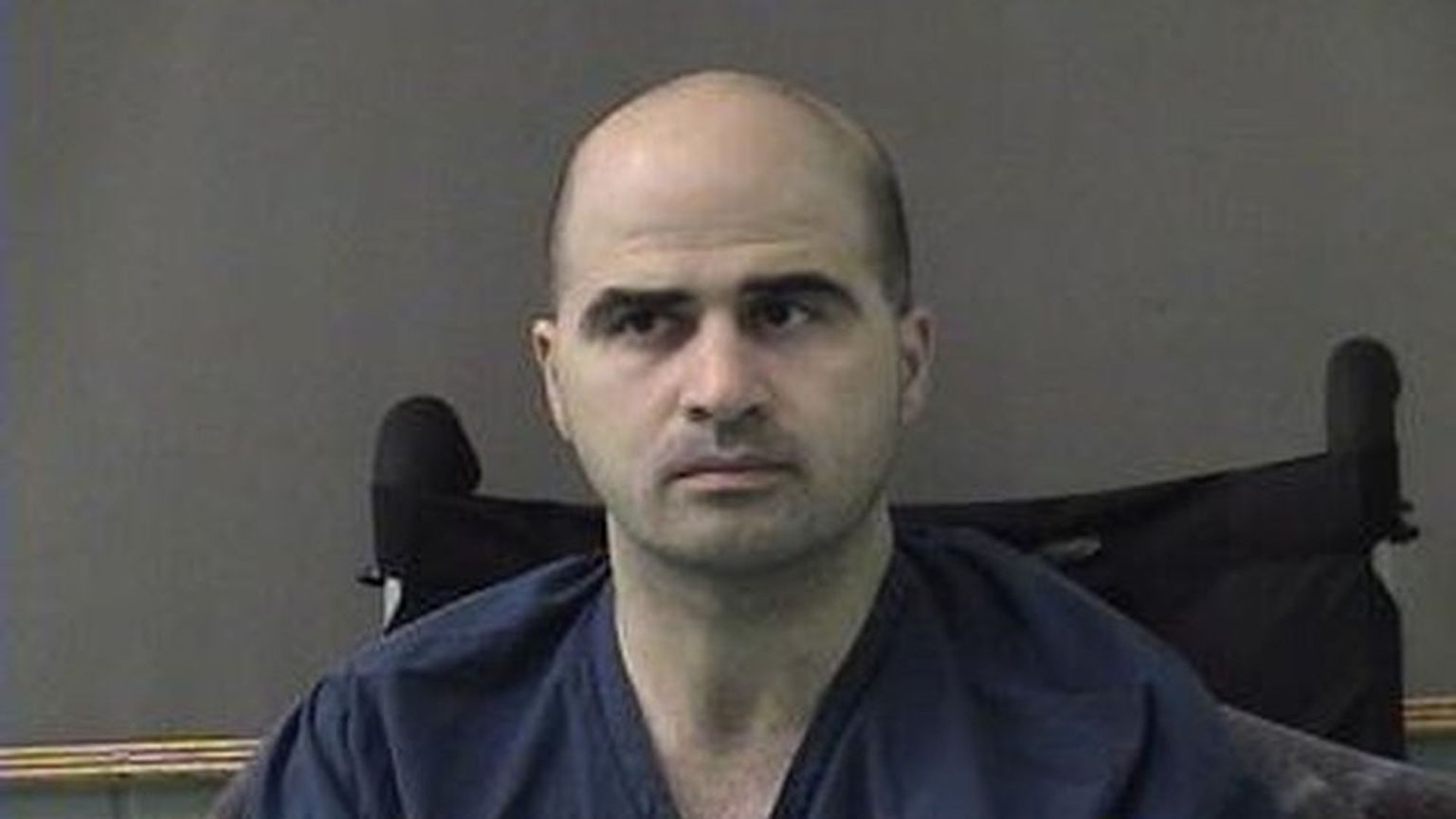
Two recent incidents in the United States have brought the death penalty back into the spotlight. The botched execution of Christa Pike on 30 September horrified people across the world. Then, US secretary of war Pete Hegseth announced last week that the execution by firing squad of mass shooter Nidal Hasan would be livestreamed to the public.
Understandably, Pike’s treatment focussed attention on whether the death penalty is appropriate in the 21st century. After she had spent 30 years on death row, a giant, normally lethal dose of the sedative pentobarbital failed to kill her. Thanks to emergency medical care, she is now conscious and walking. Having provided this life-saving support, the authorities are now contemplating whether to reschedule her execution. It is an absurd, deeply hypocritical situation.
The crimes committed by these two individuals, it must be admitted, are horrific. In 1995, Pike, aged 18, lured 19-year-old classmate Colleen Slemmer into a wooded area in Tennessee. Slemmer was tortured by Pike and her boyfriend for more than 30 minutes before she was murdered. Pike even kept a fragment of Slemmer’s skull as a souvenir. Pike confessed to the murder and was sentenced to death in 1996.
Hasan killed 13 innocent, unarmed people when he opened fire inside a medical facility at the Fort Hood military base in Texas in 2009. Shouting ‘Allahu Akbar’ before the murders, he said that he carried out the shooting to ‘protect’ Muslims and the Taliban, and that he regarded it as an act of jihad against the American military. Among Hasan’s victims was a woman who had recently told Hasan of her pregnancy. As survivor Alonzo Lunsford, shot seven times, recalled: ‘We heard a gunshot and the last thing that girl was saying was: “Oh my god, my baby, my baby.”’
Hasan is a despicable human being, yet even supporters of the death penalty are uneasy about plans to livestream his execution. Republican congressman Austin Scott declared: ‘I absolutely support the sentence of death, but livestreaming executions is what jihadists do. America is better than that.’ Even Donald Trump, who pushed for execution by firing squad for Hasan, left open the possibility of cancelling the livestream.
If Hasan’s death is livestreamed as planned, it would mark the first public execution in the US since 1936. That was when a raucous crowd of an estimated 20,000 people in Kentucky attended the execution of Rainey Bethea, a black man who confessed to raping and murdering a 70-year-old white woman. The morbid interest in Bethea’s hanging – it was described as a ‘carnival of sadism’ – led to the end of public executions across the US. Until now.
Pike’s treatment and Hasan’s planned execution should not prevent us from pointing out the hypocrisy of other nations that claim to be ‘above’ the death penalty. The condemnations of capital punishment coming from Canada ring particularly hollow. The United States spends up to $3million per executed prisoner. Most condemned to die spend over 20 years on death row, allowing time for scrutiny of every aspect of their case. That suggests America takes human life far more seriously than the Canadian state, which has euthanised 100,000 people since Medical Assistance in Dying (MAID) was legalised in 2016. With the cost of each MAID death around $2,600, and the time between consultation and death less than 24 hours in some cases, Canada is in no position to lecture its neighbours on the value of human life.

There are other ‘bad’ reasons to oppose capital punishment. Those who rushed to defend Pike because, as United Nations experts put it, the court did not take into account ‘mitigating evidence concerning her history of severe childhood sexual and gender-based violence, neurological impairments, mental-health conditions and developmental immaturity’ are really arguing against any accountability for vile crimes, rather than against the death penalty. Tennessee authorities have been right to insist that the law must apply equally to all citizens who are fit to stand trial.
There are far better reasons to oppose the death penalty. The first is practical. As the US Department of Justice concluded in 2016, there is simply no evidence that the death penalty deters crime. The others are moral. As Pope Leo XIV wisely said in October, ‘the death penalty is inadmissible because it is an attack on the inviolability and dignity of the person’. We should not ‘completely deprive those who are guilty of the possibility of redemption’. It is not that these or other guilty individuals will redeem themselves. Rather, it is that we lose part of our humanity if we lose the hope that any human being might redeem themselves. As the old adage goes, while there is life, there is hope.
Perhaps the most important moral argument is that it is wrong to take a life deliberately when it is not immediately necessary. Taking another life is so significant that it can only be done in the most extreme circumstances, such as in war or self-defence.
We need not sympathise with vicious killers like Christa Pike and Nidal Hasan. Indeed, sympathy is the last thing they deserve. But that doesn’t mean they deserve to be put to death, either.
Kevin Yuill is emeritus professor of history at the University of Sunderland and CEO of Humanists Against Assisted Suicide and Euthanasia.
You’ve hit your monthly free article limit.
Support spiked and get unlimited access.
Support spiked and get unlimited access
spiked is funded by readers like you. Only 0.1% of regular readers currently support us. If just 1% did, we could grow our team and step up the fight for free speech and democracy.
Become a spiked supporter and enjoy unlimited, ad-free access, bonus content and exclusive events – while helping to keep independent journalism alive.
Monthly support makes the biggest difference. Thank you.



Comments
Want to join the conversation?
Only spiked supporters and patrons, who donate regularly to us, can comment on our articles.