Sayeeda Warsi is minimising the Islamist threat
The woman tipped to be Labour’s Islamophobia tsar is in total denial about Islamic extremism.
Want unlimited, ad-free access? Become a spiked supporter.
Among the front-runners to be appointed the UK’s first ‘anti-Muslim hostility’ tsar is Conservative peer Sayeeda Warsi. Earlier this month, we had a grim taste of what she might bring to the table in this position.
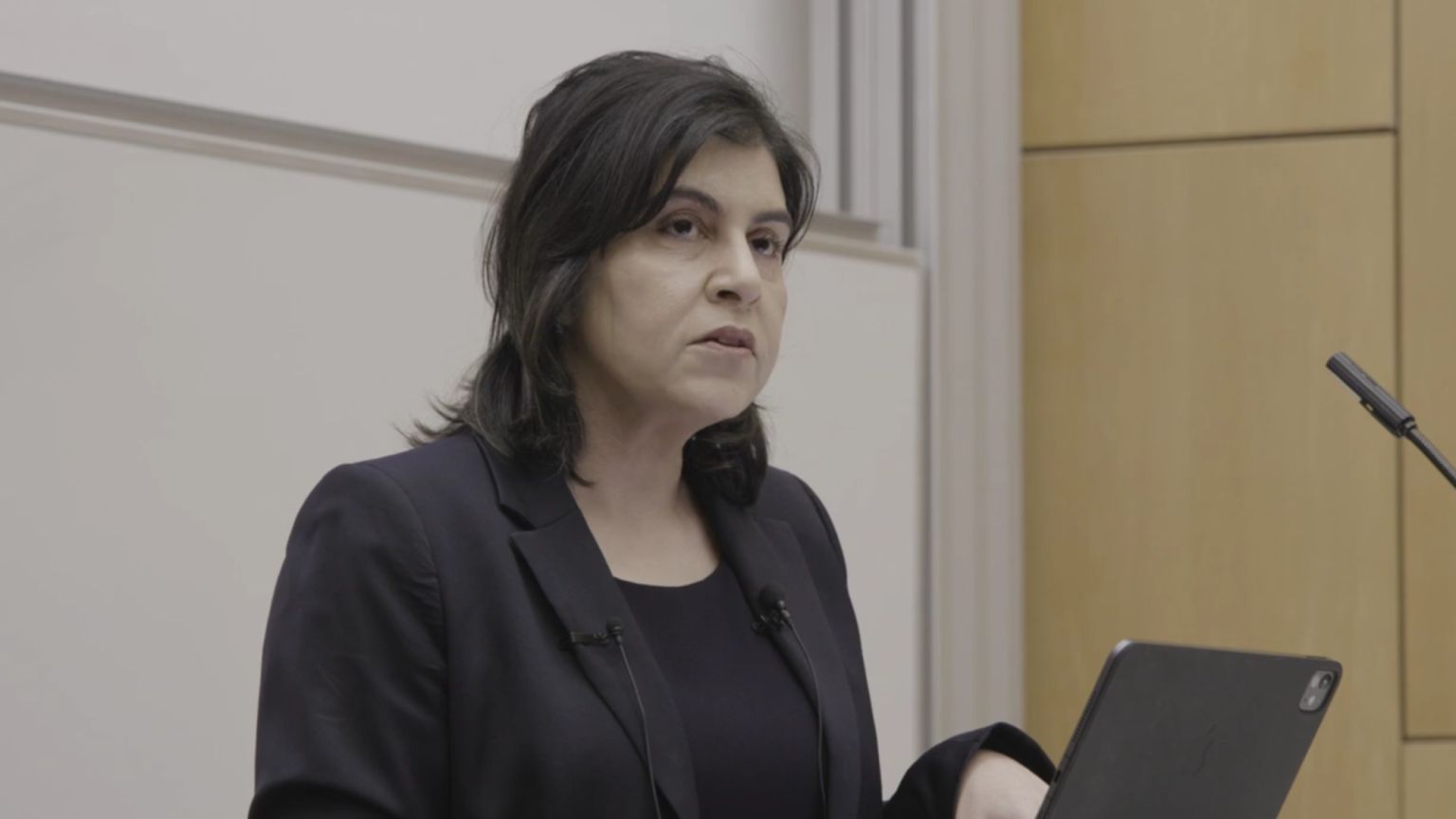
Warsi delivered the inaugural lecture at University College London for Equi titled ‘Patriotism: Pride not Prejudice’. Warsi’s carefully curated talk, as well as the nod to Jane Austen, was peppered with quotes from Edmund Burke and Samuel Johnson, along with paeans to cricket and village fetes. But these whimsical references concealed a darker message.
During the Q&A, I challenged Warsi on the framing of her lecture. We hear much from Labour and progressives about ‘Islamophobia’, but less about Islamic attitudes towards the West. What, I asked, about the profound hostility of the Deobandi and Salafi movements – which control the majority of British mosques – to the Enlightenment philosophy of personal autonomy, pluralism and universal human rights, including gender equality?
Her answer displayed a flippant disregard for the kind of threat Western nations face from Islam. In particular, the profound challenges that supremacist, exclusionary Islamic theology presents to public security, social cohesion and democracy in the UK. She said:
‘Does the Muslim community have nutcases? Absolutely. Does the Christian community have these nutcases? Absolutely. Does the Jewish community have these nutcases? Absolutely. And they’re always on display for all of us to see.’
This was a strange response. ‘Nutcases from the Muslim community’ – her phrase, not mine – have killed dozens and inflicted life-changing injuries on hundreds of Britons, including children, in the past several decades. They have stabbed two sitting MPs, one fatally. The vast majority of the suspects currently on MI5’s 43,000-person terror watchlist – as many as 39,000 – are jihadists. So why is Warsi telling me not to ‘waste my time’ interrogating the motives and goals of these ‘nutcases’?
I then asked her about support for Hamas among parts of the Muslim community and the willingness of many to deny the atrocities of 7 October. Yet rather than address these concerns, Warsi deflected and denied there was a problem. ‘I honestly don’t know who the six freaks are that you speak to that give you all this data’, she said. ‘But the people I speak with and I spend time with… hundreds and thousands of them, I have yet to meet somebody who’s told me Hamas is a great thing and I want to go out and, you know, kind of support them.’
Does Warsi really expect us to believe that only ‘six freaks’ support Hamas in the UK? It would be hard to explain, then, how a hardline Islamic platform like the UK-based 5Pillars boasts one million readers. Or the celebrations in cities across the UK after Hamas’s 7 October pogrom and the rampant anti-Semitism that accompanied them. In June 2025, 40 organisations – including students’ networks, religious groups and advocacy organisations – called for Hamas to be removed from the UK terror list.
If she’s lacking in any more inspiration, Warsi should talk to Labour MP Christian Wakeford, who, in parliament in November 2023, named four Hamas operatives living in the UK. One of the names Wakeford mentioned was Zaher Birawi, the leader of the Palestinian Forum in Britain, which was one of the organisers of pro-Palestine marches. Wakeford also named Mohammed Sawalha, a trustee of Finsbury Park Mosque and founder of the Muslim Association of Britain.
Or she could simply pay closer attention to the news. In 2007, the documentary Undercover Mosque revealed the levels of bigotry and religious extremism being preached in the UK. In 2011, Lessons in Hate and Violence revealed the intolerance rampant in Islamic schools in the UK. ISIS: The British Women Supporters Unveiled (2015) exposed the network of young women who supported the Islamic State.
Back in 2017, the year that a spate of Islamist terror attacks killed 36 people in Britain, Warsi railed against Islamophobia as Britain’s ‘bigotry blind spot’. Yet in her latest lecture, she revealed her own.

Sayeeda Warsi is clearly unfit to be highlighting prejudice or promoting social cohesion. She would be a menace if trusted to police ‘anti-Muslim hostility’.
Hannah Baldock is a journalist and researcher on radicalisation and terrorism.
You’ve hit your monthly free article limit.
Support spiked and get unlimited access.
Support spiked and get unlimited access
spiked is funded by readers like you. Only 0.1% of regular readers currently support us. If just 1% did, we could grow our team and step up the fight for free speech and democracy.
Become a spiked supporter and enjoy unlimited, ad-free access, bonus content and exclusive events – while helping to keep independent journalism alive.
Monthly support makes the biggest difference. Thank you.
Comments
Want to join the conversation?
Only spiked supporters and patrons, who donate regularly to us, can comment on our articles.