Why ‘anti-racist’ training should have no place in our schools
Identity politics is making race the defining feature of young people’s lives.
Want unlimited, ad-free access? Become a spiked supporter.
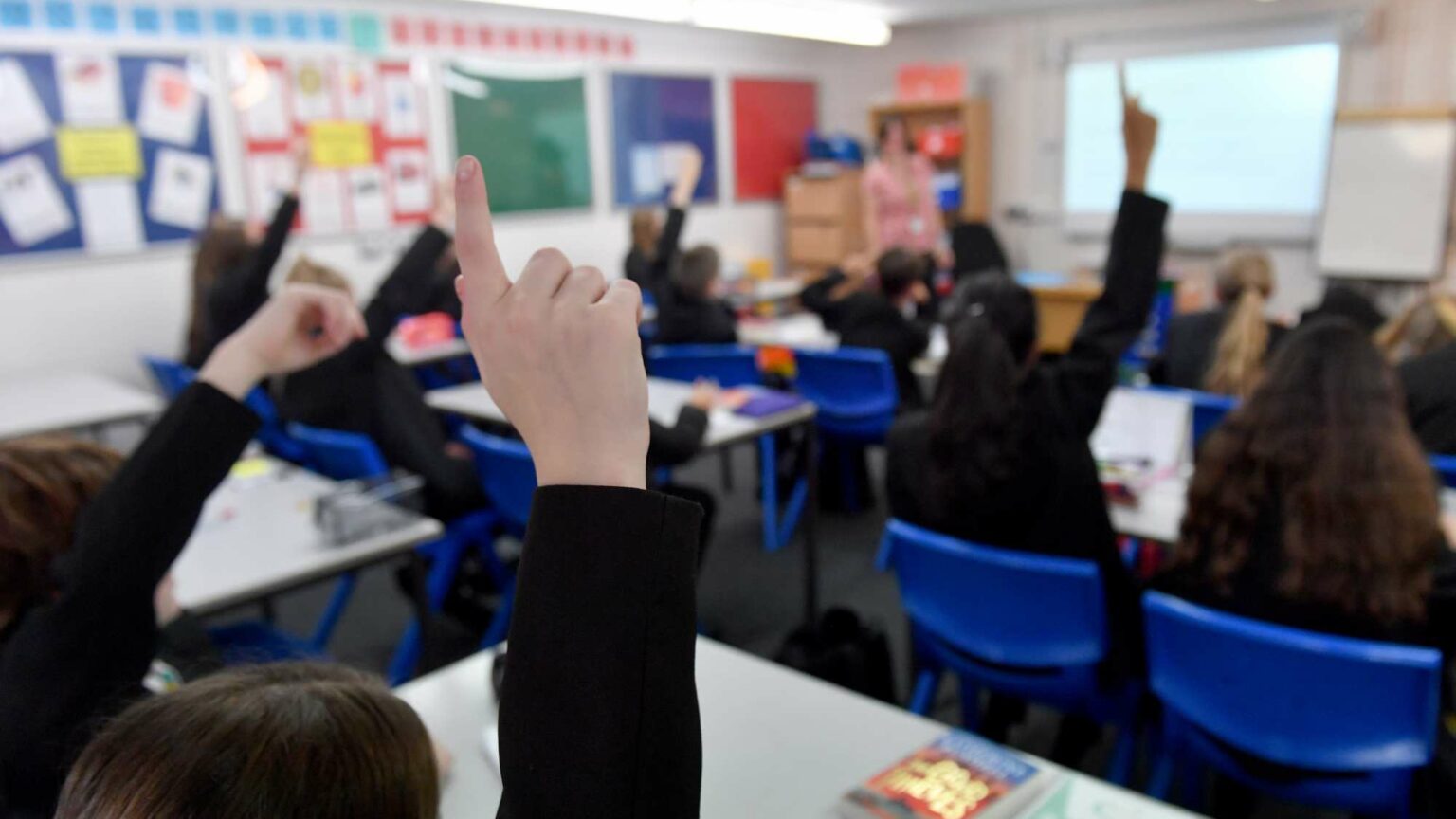
In May, it emerged that a group of Sheffield schools had devised a set of ‘anti-racism’ lesson plans. Among other things, they encouraged teachers to educate children as young as seven to believe that white people are privileged because of the colour of their skin. They were also to inculcate the belief that while black people can be racially prejudiced, because they lack cultural power, they can’t be racist.
The existence of such racial-identitarian dogma in Sheffield is not a surprise. Like most local councils in the UK, Sheffield City Council is facing some enormous challenges. Housing is in short supply and the city itself is in debt for tens of millions of pounds. But over and over again, one challenge is apparently more urgent and pervasive than the rest: racism.
Take Sheffield council’s decision in 2020 to establish a Race Equality Commission to assess ‘the nature, extent, causes and impacts of racism and race inequality within the city’. Its chair, Kevin Hylton, a professor emeritus at Leeds Beckett University, handpicked 24 Sheffielders as race commissioners. ‘The diversity of this group was exceptional in terms of gender and ethnicity’, Hylton said. This was one way of describing the appointments. Only three of the 24 commissioners were white (two women, one man). In other words, 88 per cent of the commissioners were drawn from minorities who make up approximately just 20 per cent of Sheffield’s population. Talk about ‘exceptional’.
In 2022, the commission delivered its report and concluded that Sheffield was indeed racist. Not just slightly racist, but super racist. The council heard testimonies from people accusing every one of the city’s institutions – from education to crime and justice to business – of all types of discrimination: ‘institutional, structural, microaggression, direct, indirect, conscious and unconscious bias’. One expert witness even testified to the existence of invisible racism. ‘Yes, racism is there’, he said. ‘It’s just very hard to prove it, but you know for yourself because there’s a lot of unfairness.’
‘Racism and racial disparities remain significant’, Hylton wrote in the report’s foreword. He then called for ‘positive measures and improvements in organisations and among its citizenry’. Improvements among the citizenry? Like ‘anti-racism’ training in Sheffield schools, for instance.
Indeed, this anti-racist fanaticism has been injected into the education system. As we’ve seen in Sheffield, education programmes seeking to embed ‘racial literacy’ and ‘anti-racism’ into every institution have become the prisms through which teachers are encouraged to interpret children, classrooms and achievement. The logic is as crude as it is revealing: racial disparities are treated as proof of racism, and the remedy is to send teachers into classrooms to lecture small children about white privilege.
Of course, Sheffield is hardly an aberration. It is a local manifestation of a national obsession. The belief that schools must be ground zero for decolonisation efforts is widespread. Teachers must examine their own unconscious biases to create what are called ‘more equitable and inclusive learning spaces’. Advocates of this strategy promise that non-white students will be empowered by the acknowledgement of the structural barriers to their success.

The anti-racist training seen in some Sheffield schools is not mandatory in British schools. But it might as well be. The Department for Education allows schools to implement it, provided they adhere to guidelines on political impartiality. These guidelines, outlined in the Education Act 1996 and expanded upon in 2022, require that teaching does not promote partisan political views and that balanced views are presented on politically contentious issues. In practice, however, these guidelines are often vague and inconsistently applied. In the case of race and identity, they are often ignored by educators who insist ‘anti-racism’ is beyond politics altogether.
Far from being inclusive, anti-racism training often divides children into crude racial categories – oppressors or victims – and replaces the idea of individual moral character with collective racial identity. This is because it is informed by critical race theory (CRT), which claims race is a social construct invented by white people to preserve their privilege and supremacy. The result is that white children, regardless of their economic or social situation, are ‘privileged by virtue of being white’.
At the same time, non-white children are encouraged to see themselves as victims of a system rigged against them. The classroom becomes a battleground of racial grievance. While white-skinned people are the problem, everyone else is morally pure – unless, of course, you are East Asian and doing well. In that case, you become ‘white-adjacent’, a term used in social-justice discourse to describe non-white groups that align with white people enough to benefit from their privileges.
Despite CRT’s promise of liberation from power structures, its only real purpose is chaining young people to perpetual victimhood. Yet its proponents cannot see this. They do not worry about its miasma of contradictions: that race does not exist, but it also explains the meaning of life; that race is a social construct with no biological basis, yet everything must be seen through a racial lens; that race is supposedly meaningless, though white children must constantly reflect on their whiteness so as not to let it overtake them.
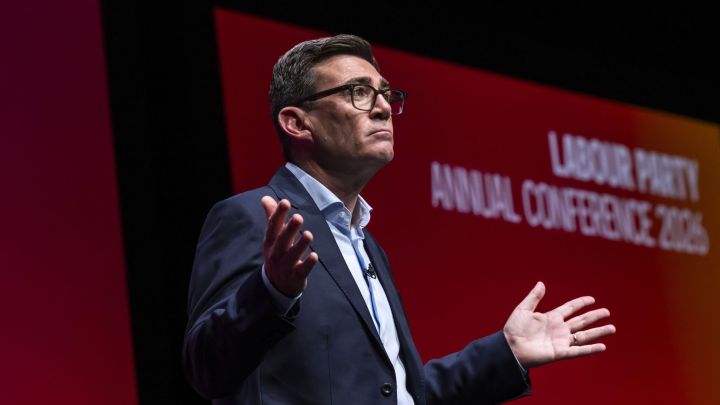
To point all of this out invites outrage from the usual suspects. When then equalities minister Kemi Badenoch addressed parliament in 2020 to argue that teaching white students about inherited guilt was unacceptable, she came under fire from teachers. This is because many believe that, without anti-racist training, their white students will grow up to become the next generation of oppressors.
All of this leaves us to wonder: if anti-racist educators truly believe that race is a social construct, why do they not simply deconstruct it? Why not teach children that race is morally meaningless, and that they should judge one another as individuals? Until we as a society stop telling people that the organising principle of their lives is race, I’m afraid any hope of actual ‘progress’ will remain a fantasy.
Bella d’Abrera is the author of Mindless: How the Education System is Indoctrinating Children and Destroying our Civilisation, published by Wyborn Press.
You’ve hit your monthly free article limit.
Support spiked and get unlimited access.
Support spiked and get unlimited access
spiked is funded by readers like you. Only 0.1% of regular readers currently support us. If just 1% did, we could grow our team and step up the fight for free speech and democracy.
Become a spiked supporter and enjoy unlimited, ad-free access, bonus content and exclusive events – while helping to keep independent journalism alive.
Monthly support makes the biggest difference. Thank you.




Comments
Want to join the conversation?
Only spiked supporters and patrons, who donate regularly to us, can comment on our articles.