
Long-read
Belfast, broken borders and the evasions of our elites
Why the UK asylum system keeps exposing the public to an endless stream of atrocities.
Want unlimited, ad-free access? Become a spiked supporter.
At around half past 10 on Monday night, 8 June, on a residential street in north Belfast, a man in his thirties allegedly pinned another man to the ground and began stabbing him. He was stopped by three members of the public, one of them carrying a hurling stick, who dragged him clear. The victim, a man in his forties, lost his left eye. His right eye sustained serious damage. He has deep lacerations to his face and back. He remains in serious condition in hospital. A kitchen knife was recovered.
The man now charged on suspicion of attempted murder is Hadi Alodid, 30 years old, of Duncairn Avenue, Belfast. He is also charged with possession of a blade in a public place and with threatening to kill a female NHS radiographer while he was being treated for a hand injury following his arrest. The court heard that while receiving that treatment, he told police: ‘I killed someone, I don’t know if they’re dead.’ Judge Steven Keown refused bail on Wednesday, finding that ‘the risks were far too great and unmanageable with any bail conditions’.
Alodid’s route to Belfast is on the public record. He flew from Sudan to Paris and from there to Dublin. On 10 February 2023, he boarded a bus from Dublin to Belfast, applied for asylum, and was granted leave to remain until 2028. He had no (known) criminal record and appeared on no police database. When Jon Boutcher, Police Service of Northern Ireland (PSNI) chief constable, contacted his counterpart in counter-terrorism, nothing came back. The attack is not, at present, being treated as terrorism. The motive is yet to be established. The investigation continues.
So too does the journey from Paris to Dublin to Belfast, for anyone minded to take it. It is worth understanding why this journey was taken, because understanding is exactly what the governing class is hoping the public will not acquire.
When the UK left the European Union, it lost participation in the Dublin III Regulation, the mechanism that had previously allowed it to return asylum seekers to whichever EU member state through which they had first passed. After Brexit, the UK introduced replacement inadmissibility rules under the Nationality and Borders Act 2022, which allow the state to refuse a claimant’s asylum request if he or she has a connection to a safe third country or passed through one before arriving in the UK. But these rules apply to Great Britain and not to Northern Ireland, where a Belfast High Court ruling in 2024 barred key provisions of the UK’s post-Brexit immigration laws. The Common Travel Area, the arrangement between the UK and the Republic of Ireland that predates both states and was preserved through Brexit as a structural requirement of the Good Friday Agreement, means that a person crossing from the Republic into Northern Ireland faces no passport check, no border control and no immigration officer.
This is not an oversight. It is the consciously constructed legal architecture, known to every government in the chain. And none has dared address the problems it poses, on the grounds that doing so might complicate the arrangements around the peace process.
Democratic Unionist Party MP Carla Lockhart asked in the Commons on Tuesday what action the UK government is taking to prevent abuse of the immigration system via the land border with the Republic. Hilary Benn, the secretary of state for Northern Ireland, confirmed what was already known: that any foreign national who abuses the hospitality of this country to commit crimes should be in no doubt of the government’s determination to deport them, and that net migration is down 82 per cent from its peak under the previous government. That, of course, is an answer to a different question.

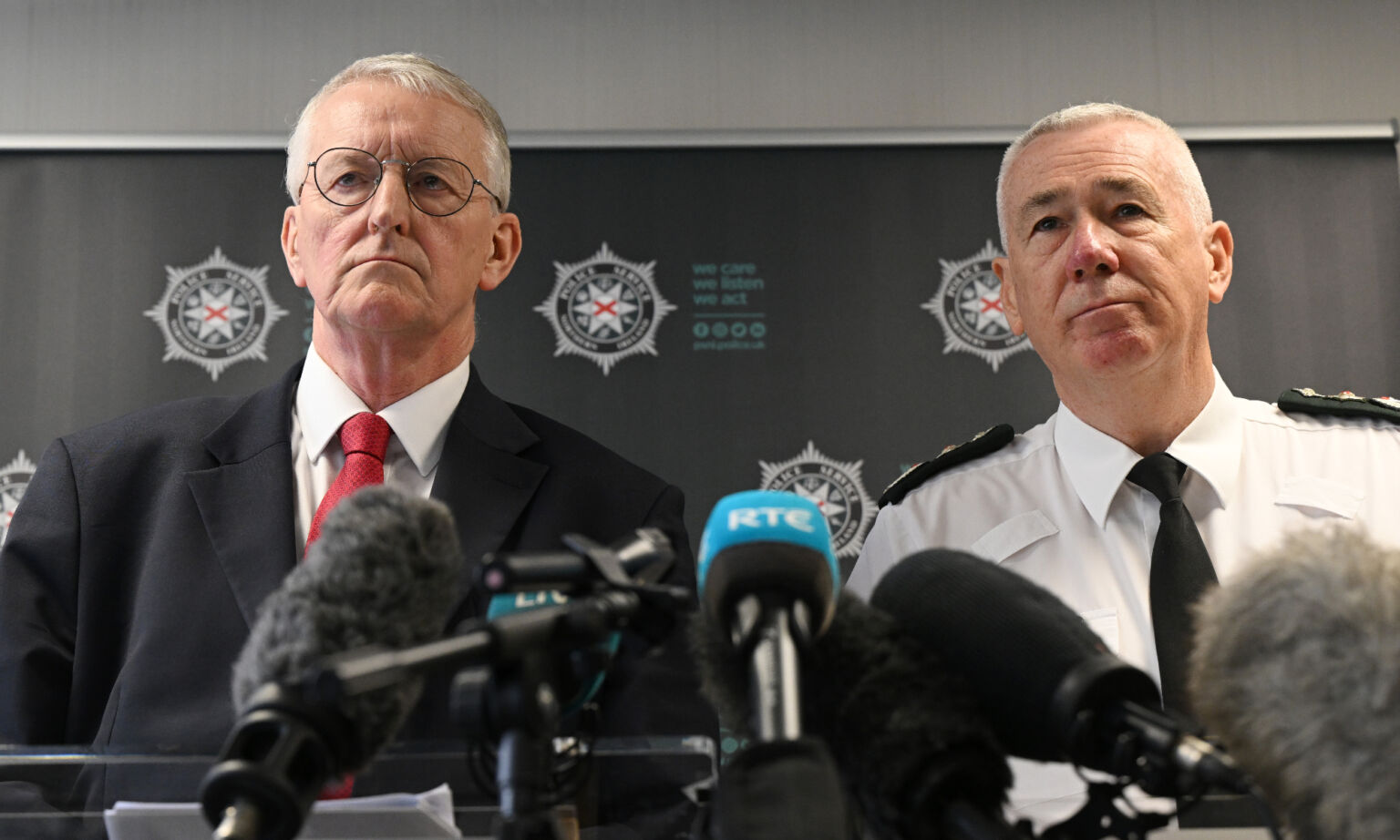
Benn subsequently offered, in good faith and apparently without embarrassment, a comment about the prospect of using someone’s history and background to assess future risk:
‘Questioning the suspect, seeking to find out more about him and the circumstances, it doesn’t necessarily follow that someone’s previous history is going to enable you to know if they are going to do something in the future. And therefore it is very hard to operate a system in those circumstances which attempts to anticipate what someone might do.’
This prompts one to reach for an argument of Thomas Sowell. There are no migrants in the abstract, Sowell observed. There are only specific people from specific places with specific histories, specific beliefs and specific characteristics. The generalisation ‘migrants’ is not a policy instrument. It is a rhetorical convenience for avoiding the actual policies that would have to be designed if you were dealing with real people. Benn is not refusing to generalise – he is refusing to particularise. He is arguing that because you cannot know in advance what a specific individual will do, the only defensible conclusion is that prior history, background, ideology and behaviour offer no useful information whatsoever. The system, he implies, simply cannot anticipate anything of note. We are, apparently, operating national border control much like a roulette wheel.
This is not merely wrong. It is the precise negation of what every risk assessment, every parole-board hearing, every terrorism analyst, every child-protection social worker and every insurance actuary does for a living. Risk assessment is the applied science of inferring future probability from prior evidence. The counter-extremism Prevent programme, which the government funds to the tune of tens of millions of pounds annually, is predicated entirely on the premise that prior indicators – ideology, association, behaviour, radicalisation pathway – are meaningful predictors of future violence. Following Benn’s logic, Prevent should be abolished immediately, because its entire operational rationale is the thing he just said is impossible.
The government funds a counter-extremism programme built on the premise that prior behaviour predicts future violence. And yet it sends its secretary of state for Northern Ireland to argue on television that prior behaviour cannot meaningfully predict future violence as a reason for declining to scrutinise how a specific individual came to be in Belfast before allegedly attempting to decapitate someone. One of these positions is true. The Prevent position is closer to the truth, which is why Benn’s broadcast remarks are not a serious argument. They’re a holding measure, a way of filling the airtime between the event and the moment when the news cycle obliges by moving on.
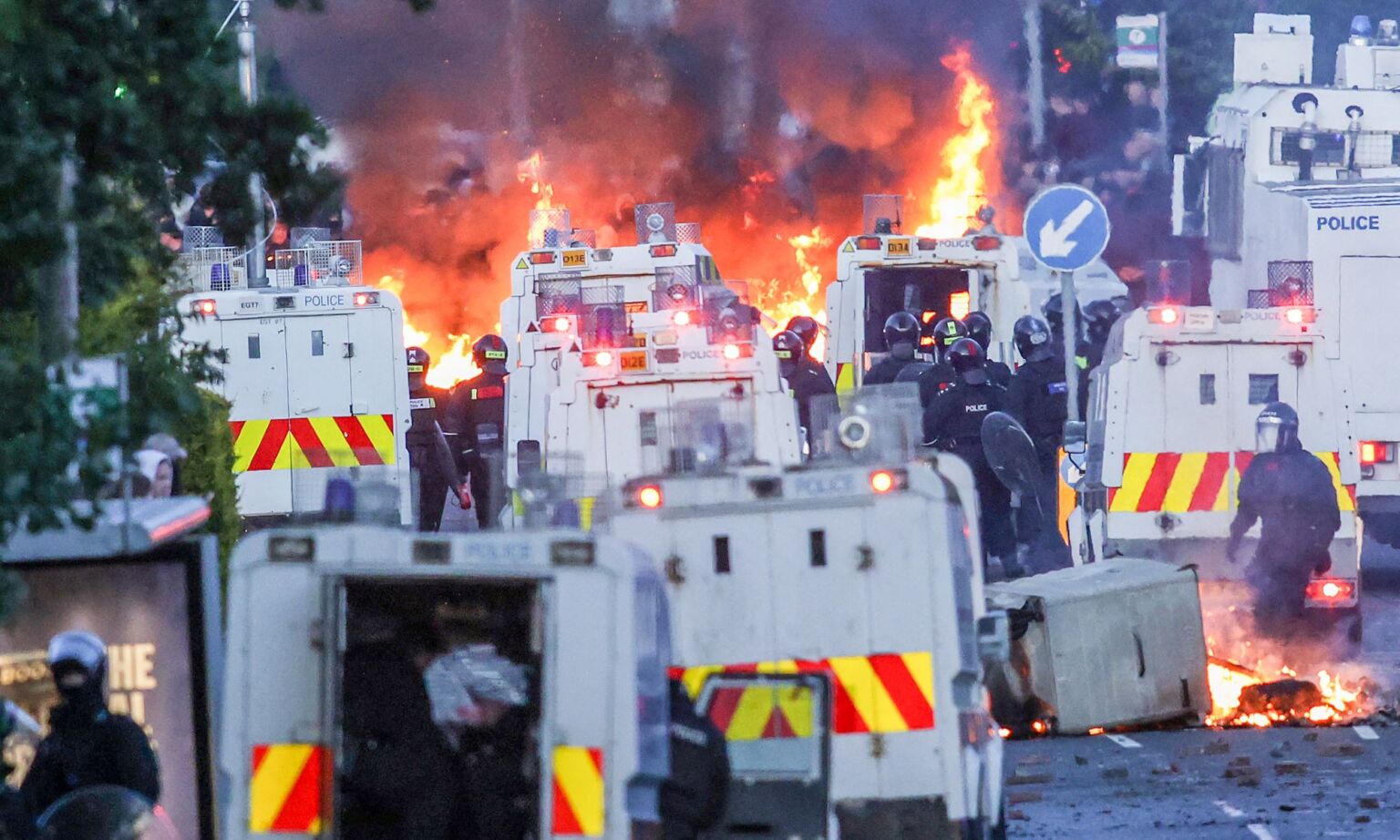
Now consider what happened simultaneously at Wednesday’s press conference. PSNI chief Boutcher, appealing for calm and promising law enforcement against the rioters, said that those involved in the disorder would have their images plastered everywhere. It is a legitimate deterrence instrument, and images of rioters do result in identification and prosecution. The observation that the institution declining to characterise the perpetrator of the original attack is energetically committed to naming and imaging the people who responded badly to it will not, however, have escaped the notice of the people being told to go home and be calm. The asymmetry is visible. And visible things tend to be noticed.
This is not an argument for outing defendants before trial. Sub judice rules are sensible and the presumption of innocence is not negotiable. It is an observation about where the state deploys its energy and its language. The prosecutorial machinery has historically moved with speed and purpose against such rioters, just as it did in 2024 after the Southport attack unrest. Yet it tends to be much more cautious when it comes to the events that have prompted the riots. That’s when the authorities throw out the usual lines: the motive is yet to be established, the investigation continues, please be mindful of what you share online. This pattern, swift action against one form of disorder and studied caution around the other.
The Prevent dimension deserves attention. Prevent is the British government’s programme for identifying and supporting individuals considered vulnerable to radicalisation. William Shawcross’s 2023 Independent Review of Prevent found multiple issues: that it had drifted from adequately confronting Islamist extremism; that it was characterised by institutional timidity on the subject; and that Islamist terrorism remained the primary domestic terrorist threat. Indeed, Islamist terrorism accounted for approximately two-thirds of attacks since 2018, three-quarters of MI5’s caseload and 64 per cent of those in custody for terrorism-connected offences. The review recommended reorientation toward the primary threat.
The government accepted several of these recommendations. The acceptance was followed, as usual, by a considerable number of further discussions about how the acceptance might be implemented without causing too much disruption to existing arrangements.
Alodid was not, the PSNI chief Boutcher confirmed, known to Prevent. He was not known to any national-security database. He was, in other words, exactly the type of individual that Prevent’s acknowledged gap in non-networked, non-referred coverage is designed to miss. This was a man who had arrived from Sudan, a nation in the grip of an active civil war in which Islamist militias – designated as terrorist organisations by the US State Department as recently as March of this year – were being absorbed into the Sudanese Armed Forces’ fighting ranks. It is entirely reasonable to ask whether he should have been given leave to remain and why he was not properly vetted. Benn’s answer, that previous history doesn’t tell you what someone will do, is rejected daily by his own government’s counter-terrorism strategy.
Then there is the question of what the word ‘refugee’ is being required to carry in this discussion, and it is carrying considerably more than it can bear.
Refugee status is a legal designation, not a moral quality. It is a determination made by a caseworker, on the basis of evidence available at the time of claim, that a person faces a well-founded fear of persecution in their country of origin. It says nothing about ideology. It says nothing about mental health. It says nothing about criminal propensity or the individual’s relationship to political violence. These are orthogonal categories. A person can be a genuine refugee, genuinely fleeing genuine persecution and also pose a serious risk to British citizens. When determining whether someone is a refugee, caseworkers assess the persecution claim. The security and public-protection assessment is a separate exercise, conducted separately, resourced separately, and in the case of an individual arriving via an unmonitored land border under the Common Travel Area, conducted with whatever information the Home Office happens to have – which, in this case, was apparently nothing.
The governing class and its media interlocutors have fused refugee status and individual safety assessment into a single category. To define someone as a refugee is to declare they pose no threat. This is not an honest synthesis. It is a category error with a political function. The function is to ensure that the concrete question – whether this individual was adequately assessed before being granted leave to remain and whether the route through which he arrived constitutes a structural gap in public protection – cannot be posed without triggering the response that you are calling for the abolition of the asylum system. Nobody serious is calling for that. The question is whether the asylum system, as it currently exists, is doing the full job that protection of the public requires. Benn’s claim, that prior history doesn’t tell you what someone will do, is not an answer to that question. It is a device for making the question sound unanswerable so that it need not be answered.
As Sowell taught us, there are no migrants in the abstract. There is no refugee in the abstract. The abstract refugee is a politically useful figure. He is stateless and suffering, the exemplar of everything the liberal conscience requires one to defend. The abstract refugee cannot be scrutinised without implicating the liberal conscience. The concrete individual here, suspect Hadi Alodid, is a specific man, from a specific country, with a specific recent history. He arrived via a specific route that specific legal decisions have left unmonitored. He was granted leave to remain in September 2023 on the basis of a specific assessment by a specific caseworker. His particular case desperately needs to be scrutinised. Scrutiny is not an attack on the abstract refugee. It is how you protect the next person. The governing class prefers the abstract refugee, because the abstract refugee requires only sentiment. The concrete individual requires accountability.

‘Progressive’ journalist Mehdi Hasan’s appearance on BBC’s Newsnight on Tuesday evening deserves credit for its internal consistency. He argued that this is a story of far-right actors exploiting a hideous crime, amplified by Elon Musk and Tommy Robinson. The danger, he continued, is to minority communities, and that anyone drawing wider conclusions from the attack is doing the demagogues’ work.
This is a partial argument presented as a total one. The partial truth is real. On Tuesday evening, homes burned, families were forced to flee and a Turkish barber’s shop in Ballyclare was attacked. These are genuine harms visited on innocent people. All of that is true. But none of it is an argument about whether the system that produced the conditions for the original attack is functioning adequately.
The existence of disreputable or thuggish people who exploit a failure does not determine whether the failure is real. If it did, institutional failure could never be examined, because there is always, in any charged situation, someone willing to exploit the examination for bad purposes. The governing class has understood this and used it consistently in response to incidents similar to the one in Belfast this week. Produce a Musk. Point at the mob. Claim that anyone not pointing at the mob is in league with it. The examination of the actual problem at hand is indefinitely deferred, which is the point.
The history that makes Hasan’s position untenable is not a history he disputes. It is a history he declines to address. The grooming-gangs scandal in Rotherham illustrates the point. The 2015 Jay Report documented over 1,400 victims of organised sexual exploitation in Rotherham between 1997 and 2013. The Casey Review of 2015 found Rotherham council ‘in denial’. Casey’s Rapid Audit of June 2025 found that institutions had, across two decades, avoided discussing perpetrator ethnicity ‘for fear of appearing racist, raising community tensions or causing community cohesion problems’. It found that one local authority had replaced a plan targeting specific perpetrators with a ‘broad commitment’ to tackling exploitation ‘in its varied manifestations across the district’s communities’, and that police were told by councils to avoid publicising convictions ‘due to fear of raising tensions’.
This was a deliberate institutional choice, made in the face of known evidence, to prioritise what officials called ‘community cohesion’ over the protection of children. ‘Community cohesion’ here means the management of political embarrassment at the expense of the people being harmed. It is a bureaucratic alibi, not a social good.
The language around Belfast – that the motive is yet to be established, that prior history doesn’t necessarily tell you what someone will do, that the investigation must be allowed to proceed – is not identical to the Rotherham mechanism. But it runs on the same fuel and it serves the same interest. Hasan is running the same machine under a different brand, and the machine is running fine.
The same PSNI chief constable who will plaster rioters’ images everywhere is the head of a service whose intelligence operations, as disclosed in recent Investigatory Powers Tribunal proceedings, included routine six-monthly trawls of journalists’ phone data. The same secretary of state who told the Commons that those abusing the hospitality of this country will be deported is the minister responsible for an immigration architecture with a functioning open door in it. The same prime minister who found the attack sickening took the knee in 2020 and is now managing a premiership whose departure timetable is a matter of active parliamentary negotiation. The people moving quickly are moving quickly against the people who reacted badly to the failure. The people responsible for the failure are explaining, at measured length, why the failure was in the nature of things. Why previous history cannot tell you what someone will do, and why it is very hard to operate a system in these circumstances.
Many of us, for different reasons, find this less than fully satisfying. The religion of calm has its sacraments and its clergy. Its central liturgy is the substitution of the emotional register for the analytical one. Their emotivist lexicon consists of sickening, harrowing, deeply shocking, deeply concerning. Its founding doctrine is that concern about the immigration system is contamination, that the person asking the structural question stands in proximity to the mob and must prove they are not by not asking it. Its clerisy are the Benns and the Hasans and the Boutchers and the Starmers. All mostly reasonable people, managing unreasonable circumstances they helped to construct. All gesturing toward the next calm that will precede the next event on the next street.
Three brave people with a hurling stick ran toward such an event this week. Yet the governing class continues to look the other way.
Owen Shapell is a PhD researcher in social sciences.
You’ve hit your monthly free article limit.
Support spiked and get unlimited access.
Support spiked and get unlimited access
spiked is funded by readers like you. Only 0.1% of regular readers currently support us. If just 1% did, we could grow our team and step up the fight for free speech and democracy.
Become a spiked supporter and enjoy unlimited, ad-free access, bonus content and exclusive events – while helping to keep independent journalism alive.
Monthly support makes the biggest difference. Thank you.


Comments
Want to join the conversation?
Only spiked supporters and patrons, who donate regularly to us, can comment on our articles.