
Long-read
Labour: enemies of the people
The party that swam against the populist tide is now being swept away by it.
Want unlimited, ad-free access? Become a spiked supporter.
Less than two years on from its landslide General Election victory, Labour is in crisis. It now regularly polls below 20 per cent, about 10 percentage points behind Reform UK. Labour leader Keir Starmer is, according to surveys, the most unpopular prime minister on record. These are the kind of data that presage a future parliamentary wipeout.
The widespread loathing of Labour is already playing out electorally. It suffered devastating local-election defeats last year and again earlier this month, losing thousands of local councillors across England. It also lost control of the Welsh Senedd for the first time in its history and squandered the chance to challenge the Scottish National Party’s dominance north of the border.
The signs of Labour’s morbidity are everywhere. Football fans regularly fill the stadium air with chants alerting us to Starmer’s alleged onanism. Farmers have flooded the streets in protest against chancellor Rachel Reeves’ livelihood-destroying tax raid. And in towns and cities around the nation, anger and frustration over a broken, dangerous asylum system have frequently boiled over.
Labourites and their legion of media sympathisers are nothing if not delusional, however. They seem to think that the party’s problems boil down to the man at the top: Keir Starmer. Get rid of Starmer, the adenoidal robot, and replace him with someone possessing better ‘communication skills’ and, ideally, a pulse, then hey presto, Labour can reverse its fortunes. ‘The government can get on with delivering the delivery it promised to deliver’, say the Labourites ad infinitum.
But Labour’s crisis is not what its MPs, members and supporters think it is. This is a crisis not of leadership, but of the party as a whole. It doesn’t matter if its members shuffle the ministerial deck, swapping in Angela Rayner, Wes Streeting or Andy Burnham for the wretched Starmer. It doesn’t matter if one or another of these products of the Labour machine tacks ‘left’ or ‘right’. Because this party is done. It is no longer capable, ideologically or organisationally, of speaking for vast swathes of Britain. It is a party whose disdain for the views, values and demands of the nation’s working-class heartlands runs through it like Brighton through a stick of rock. Indeed, it is a party that, having aggressively and stubbornly swum against the populist tide since Brexit, is now slowly but surely being swept away by it.
It has been a long time coming.
Labour has been riven with tension from its birth in the trade union movement at the turn of the 20th century. Since then, it has been torn between the ideal of defending working-class interests and its actual role of blunting class conflict and maintaining stability. Indeed, this has long been a party that only appeared to challenge the status quo, while invariably, at times of crisis, ensuring its survival. Yet, for much of the 20th century, it was still the party-political representative of a mass working-class movement. Its political vision – indeed, its ideology – was still informed to a large extent by working-class interests and values.
With the collapse of the postwar consensus in the late 1970s, followed by the Conservative government’s defeat of the unions during the 1980s, Labour began to change. It slowly and tentatively started to reform itself away from its working-class base. But it wasn’t until the 1990s, under the leadership of Tony Blair, that Labour’s estrangement from – and turn against – the working class began in earnest.

The context for New Labour’s emergence is important. The defeat of organised labour during the Miners’ Strike and the legal defanging of the trade unions was followed by the broader collapse of left-versus-right politics after the end of the Cold War. Labour’s failure to defeat John Major’s exhausted Tories in the 1992 General Election left it disoriented and flailing. This was a crisis for Labour’s old guard. But it was an opportunity for the youngish, middle-class operators of what would become New Labour.
The likes of Philip Gould, Tony Blair, Alastair Campbell and Peter Mandelson took advantage not just of Labour’s electoral defeat, but also of its social and ideological hollowing-out. They effectively grabbed hold of this husk of a party and repurposed it for what they saw as the new post-ideological age. Elements of Labour’s older class-based ideology were watered down or jettisoned. The old commitment to the ‘common ownership of the means of production’, enshrined in Clause IV of the party’s constitution, was dumped in 1995. In 1997, Labour chancellor Gordon Brown outsourced control of monetary policy to the Bank of England, within his first 100 hours of entering No11. These were significant moves. Class-based politics had always centred on a contest over the economy. Blair and his friends effectively removed the economy from political debate. ‘New Labour is neither old left nor new right’, announced Blair in 1995. ‘We understand and welcome the new global market.’
This was New Labour in a nutshell. It turned alignment with the ‘new global market’ into the closest thing it had to a vision, embracing it even as its ‘Third Way’. New Labour was ‘globalist’ before the word was widely recognised. It dreamed of a world reshaped by the unrelenting forces of globalisation, a world of vanishing borders, in which goods, services and people moved ever more freely. A technocratic political universe in which those who knew best, the experts and the NGOs, were allowed to get on with administering the globalising society ‘free from short-term political manipulation’, as Brown once put it. A global order in which nation states were increasingly subordinate to the superior wisdom of transnational institutions, be it the EU or the WTO. New Labour elevated an expert class, a credentialled class, a professional-managerial class, and decommissioned the working class. It empowered transnational actors and lawmakers in the service of global causes, such as the fight against global warming, and disenfranchised British citizens.
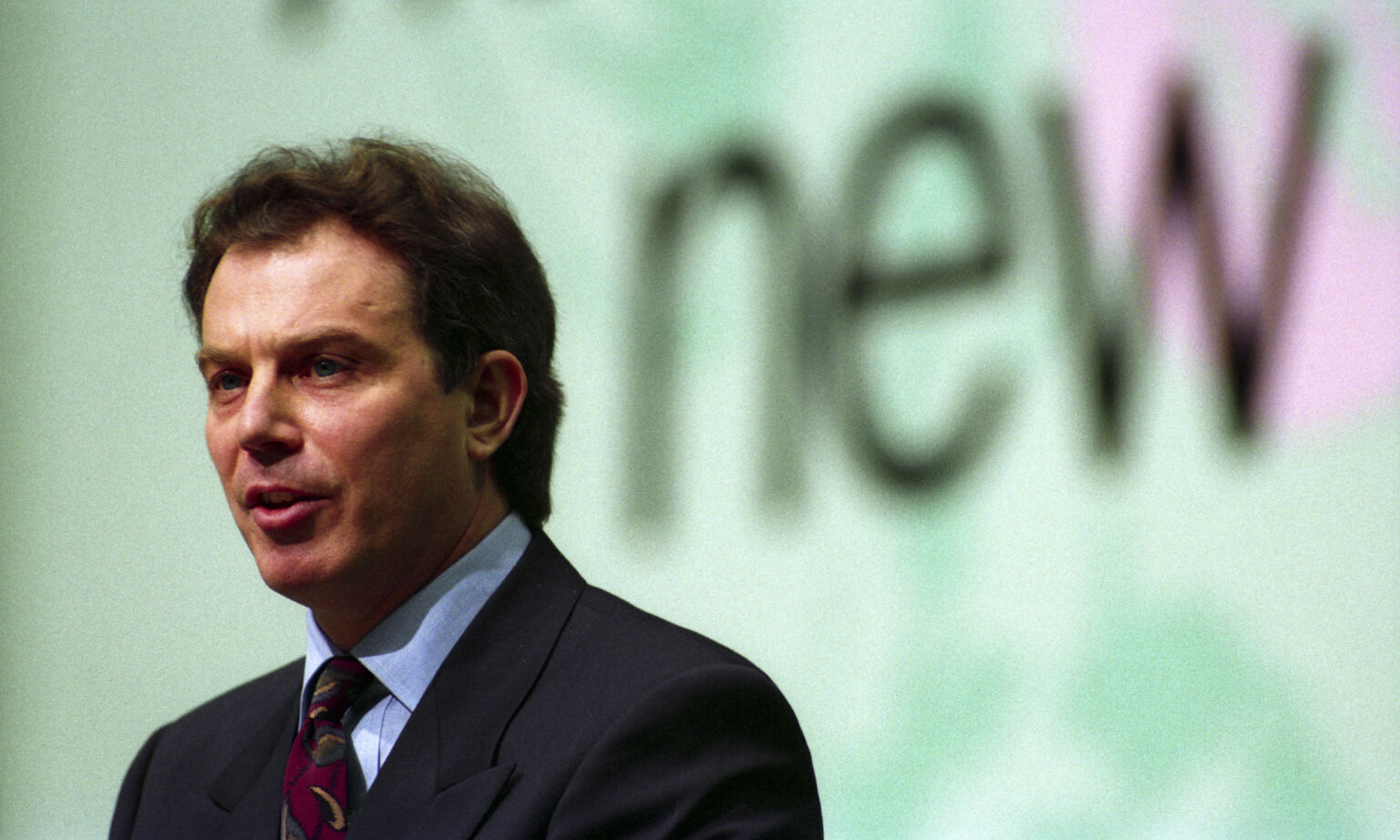
In New Labour’s eyes, all this globalisation was synonymous with ‘progress’. And vice versa: opposition to it was seen as backward and reactionary. This, in part, explains why New Labour politicised and weaponised immigration in particular. It didn’t just welcome 2.5million incomers into the UK in little over a decade for economic reasons. It also did so for culture-war reasons. Immigration was the means through which New Labour could give real moralistic content to its project of modernising Britain. The means through which it could transform the country into a globally oriented territory, open for business. The means through which it could realise its ideals of ‘diversity’ and ‘multiculturalism’ in place of older notions of nationhood. As Andrew Neather, a former special adviser to an early New Labour immigration minister, revealed in 2009, the government of the time was privately talking up the ‘social impacts’ of immigration. He claimed ministers wanted ‘to rub the right’s nose in diversity’.
Identity politics and greenism were relentlessly pushed by New Labour. But the core New Labour mission was to plunge Britain into the globalised order, modernise it, change it, bring it bang up to date. As Brendan O’Neill has explained, New Labour promoted ‘progress’ over custom, global institutions over national integrity, ‘expertise’ over democracy, and new cultural values like ‘diversity’ over the cultural anchors that had oriented communities’ ways of life for decades. It revelled in this vision of creative destruction, of melting all that was solid into air. In a 2005 party-conference speech, Tony Blair sounded like an Italian Futurist of the 1920s. He hailed the ‘character of this changing world’ for being ‘indifferent to tradition, unforgiving of frailty’. It is ‘replete with opportunities’, he continued, for ‘those swift to adapt… open, willing and able to change’.
The New Labour worldview resonated with Britain’s business owners, affluent middle classes more broadly, and above all with an ever-growing graduate class. They enjoyed the mobility of ‘globalism’, the economic benefits of access to cheap overseas labour, and the warm, fuzzy moralism of the ‘progressive’ culture war against the old, outdated and traditional – and especially against the people recast as ‘right-wing’, ‘closed-minded’ and ‘bigoted’.
But the New Labour worldview didn’t resonate with those for whom the Labour Party used to speak. Many among Britain’s working class and beyond experienced the New Labour era for what it was: a slow-motion political, economic and cultural assault on their ways of life, communities, traditions and values – a war on the very sense of who they are.
The populist pushback, fuelled by working-class marginalisation, was germinating during the 2000s. But at this stage, the pushback was quiet; the rebellion hidden. It can be glimpsed in the plummeting electoral turnout during New Labour’s 13-year tenure. The percentage of the electorate voting fell from an already relatively low 71 per cent in 1997 to just 59 per cent in 2001. As James Tilley and Geoffrey Evans note in The New Politics of Class (2018), the vast majority of these non-voters were working class.
The same pattern continued for the remainder of the New Labour era. Blair and pals won elections, but on historically low turnouts. Many middle-class voters also tired of New Labour’s deathless managerialism or rebelled over the Iraq War. But they invariably continued to vote. They simply picked another brand of the same technocratic, ‘progressive’ political product off the political-class shelf, be it the Lib Dems or David Cameron’s Blair-lite Tories. England’s working classes had no such choice. They were unrepresented.
The ideological reorientation of Labour during the New Labour era – its transformation into the leading party-political vehicle of ‘progressive’ middle-class sentiment – was also reflected in the changing backgrounds of its MPs. In 1964, Labour’s parliamentary intake comprised many from working-class backgrounds, with over 37 per cent of MPs coming from manual occupational backgrounds. By 2010, this had fallen to just under 10 per cent. Today, it is virtually zero.
Instead, a new breed of ‘professional’ politician flourished during the New Labour era. Processed and credentialled at Oxbridge or, failing that, at some other Russell Group university, these identikit politicos shared the outlook and values of the broader middle-class graduate class that had fallen hard for New Labour. They usually had no employment experience outside party politics. Rather, they emerged from within the machine, working as researchers, campaigners or parliamentary assistants before, if fortunate, being parachuted into a safe seat somewhere. Andy Burnham, the current pretender to Starmer’s crown, is a prime example.
Labour’s mutation was remarkable. The Labour Party was originally known as the Labour Representation Committee. It had been established, as the name suggests, to provide working-class representation in parliament. Under Blair’s stewardship, New Labour instead provided representation for the credentialled graduate class. Its globalist, ‘progressive’ worldview was mirrored in its globalist, ‘progressive’ parliamentary intake and staff.
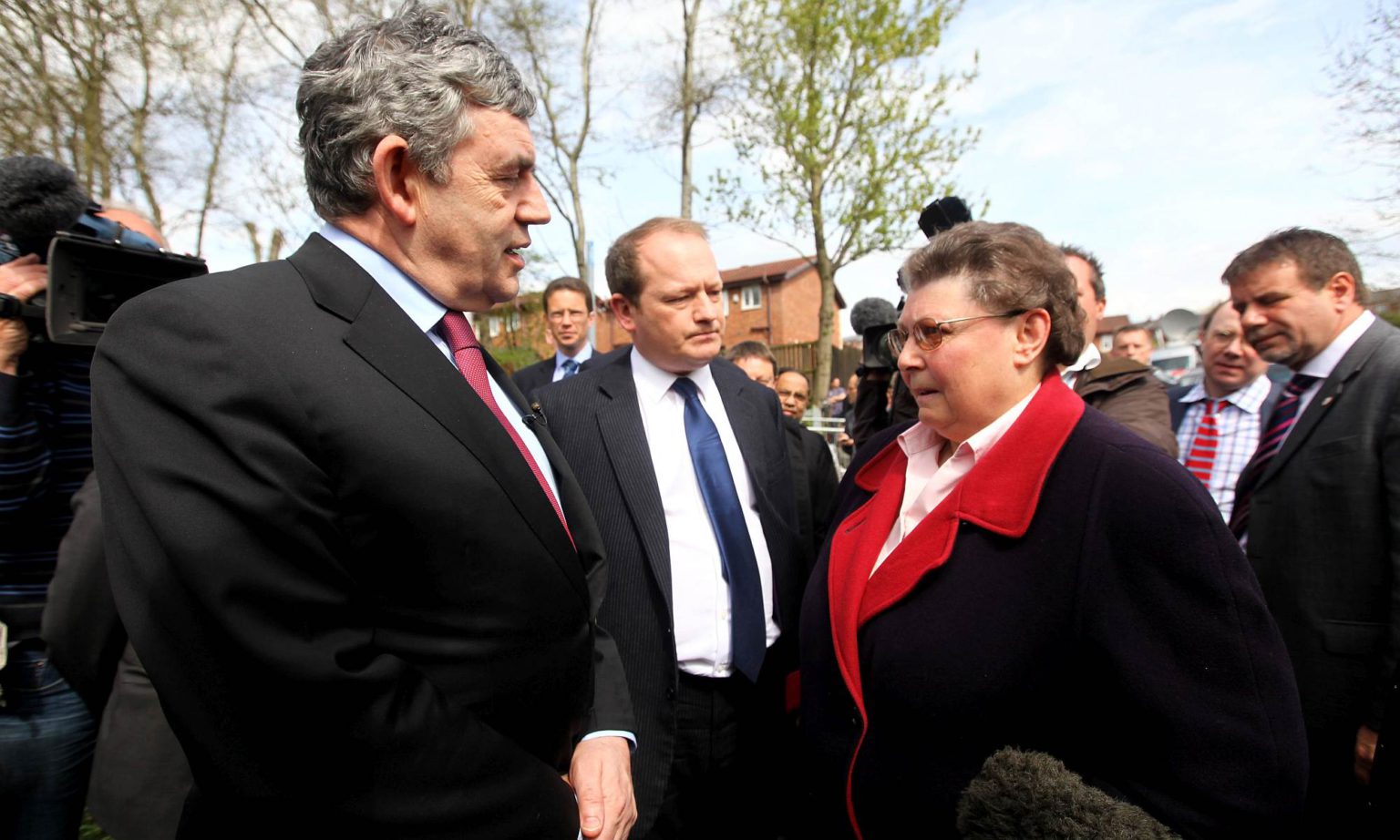
Labour’s loss in the 2010 General Election did not change the dynamic. If anything, the defining moment of the election – Labour PM Gordon Brown dismissing Gillian Duffy, an elderly woman from Rochdale concerned about immigration, as ‘that bigoted woman’ – confirmed the belief among many in Labour’s former heartlands that this party was not on their side; that in outlook and personnel it was actively antagonistic towards them.
In the early 2010s, against the backdrop of the 2008 financial crisis, working-class estrangement from Labour deepened. But it had not yet acquired a clear means of political expression. The rate of non-voting remained high, but there was still little to vote for.
That began to change at the 2015 General Election, which was won by David Cameron’s ‘progressive’, green and socially liberal Tories. Under the managerial leadership of Ed Miliband, Labour continued to play to its affluent middle-class, graduate-class and public-sector base. According to electoral data, it was the first election in which middle-class voters opted for Labour at a higher rate than working-class voters. But, as Evans and Tilley note, there was also a renewal of working-class voting for the first time since the 1990s – and many ticked the box for Nigel Farage’s UKIP, which won 12.5 per cent of the vote. This was a sign of the populist revolt to come, an indication that time was being called on the New Labour-fied political class.
UKIP’s breakthrough was nothing compared with what happened a year later. Cameron’s Tories finally gave the electorate the chance to vote, on 23 June, on the UK’s membership of the European Union. It was a referendum in which all the main political parties, Labour included, lined up on the side of the globalist EU. They were backed by large sections of the media, big business, the wider cultural establishment and even the then US president, Barack Obama. It was proof that the New Labour worldview – ‘progressive’, anti-tradition and anti-nation – had become the establishment worldview.
Class voting returned with a vengeance in the referendum. In defiance of political- and media-elite opinion, Leave won overall by 52 per cent to 48 per cent in a ballot with a 72 per cent turnout – a trend-bucking increase in electoral participation compared with the post-1990s norm. It was a victory fuelled overwhelmingly by a populist, democratic demand for control – for control over nation, community and way of life. A populist demand with a beating working-class heart. The statistics tell their own story: whereas affluent middle-class voters chose Remain by 59 per cent to 41 per cent, working-class voters plumped for Leave by 63 per cent to 37 per cent.
Leave voters were far less likely to have degrees. They tended to be older. Large numbers were concentrated in deindustrialised northern towns, coastal communities and rural areas. In other words, they were precisely those looked down upon as outdated by New Labour and the metropolitan political class forged in its professionalised image. They were those disenfranchised during the New Labour years and their aftermath – those treated as necessary casualties in the political class’s pursuit of ‘modernisation’. Brexit was the fightback.
It certainly exposed Labour’s profound alienation from the very people in whose name it had been founded. Though led by the veteran left-wing MP and noted Eurosceptic Jeremy Corbyn, Labour still found itself organisationally and intellectually incapable of affirming Brexit. It was too infused with ‘progressive’ middle-class sentiment and personnel, too institutionally and ideologically anti-working class. That may sound counterintuitive, given plummy-voiced Corbynistas’ talk of ‘socialism’ and their near-physical aversion to Blairism. But ultimately, they were continuous with New Labour rather than opposed to it. Where New Labour embraced the ‘progressive’ thrust of globalism, Corbynistas embraced the ‘progressive’ thrust of identity politics. Both shared an animus towards the attitudes, values and traditions of supposedly unreformed, backward sections of society. They viewed them as something to be overcome, to be changed, to be re-engineered. New Labour went to war against nationhood and tradition. Corbynistas took the ‘progressive’ crusade further and doubled down on sex, gender and race.
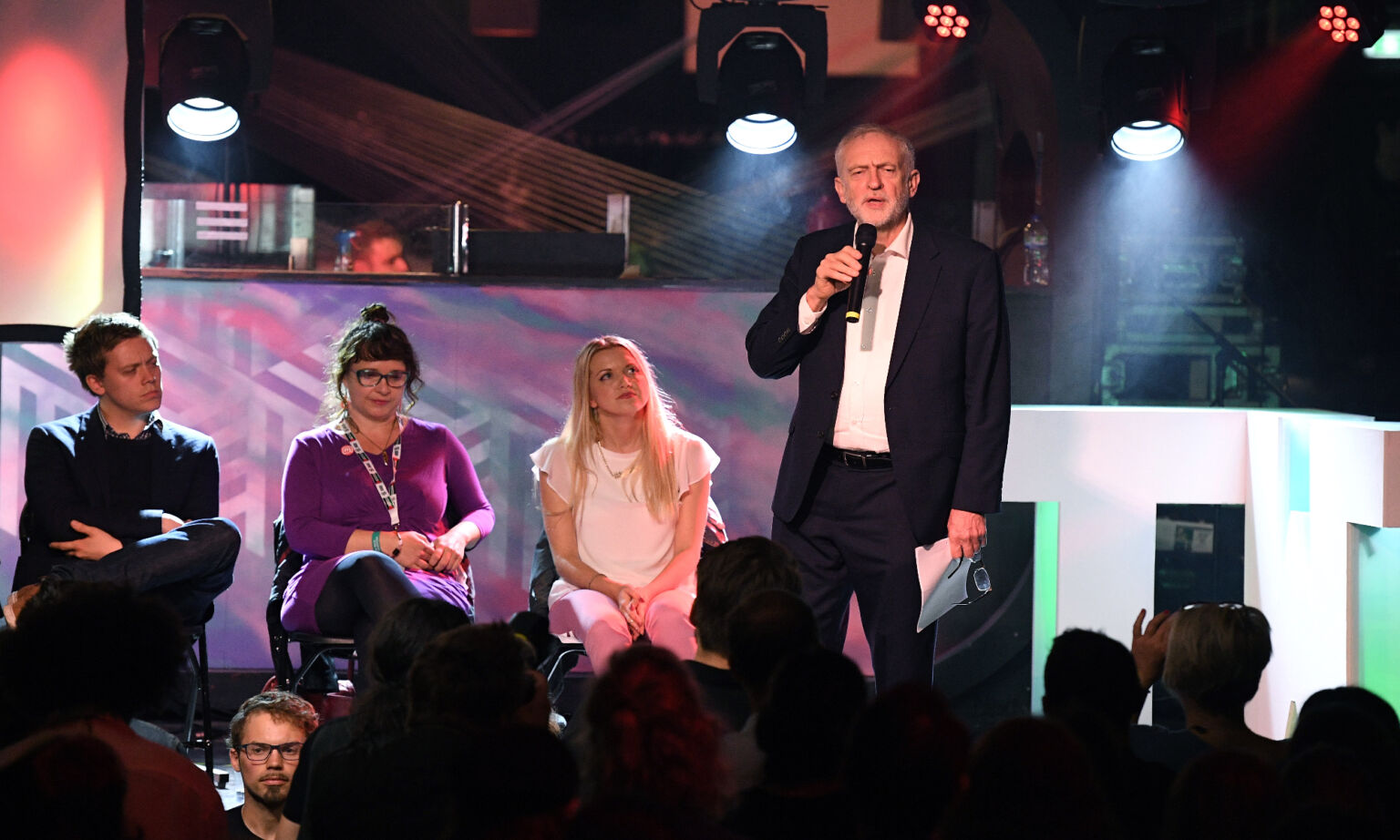
If anything, Corbyn’s Labour was even more of an affluent middle-class and graduate-class vehicle than it had been under Tony Blair. The make-up of its greatly enlarged membership suggests as much. As a Labour Sheffield City councillor reported in a Fabian Society article in 2015: ‘The vast majority of new members come from the middle classes, the public sector and BAME [Black, Asian and minority ethnic] communities, all sharing a distinctly cosmopolitan outlook.’ As a result, ‘the membership of wards in middle-class areas is growing much faster than wards in working-class areas. Membership is also growing fastest in London and slowest in the north east’.
According to reports from 2016, a disproportionate number of Labour members who joined after the 2015 General Election were ‘high-status city dwellers’. This finding was reinforced in 2019 by Tim Bale, professor of politics at Queen Mary University of London. He concluded that ‘Labour members are definitely more middle class than the average voter’.
The 2017 General Election result flattered to deceive Corbyn’s Labour. Its promise to respect the Brexit vote kept a portion of Leave voters onside, while its ‘progressive’ posturing had secured its support among graduates and affluent middle-class voters. Yet its 40 per cent vote share did not tell the whole story. The populist revolt unleashed by Brexit was now beginning to find expression through the Tory vote. The Conservatives increased their vote share in Brexit-voting, working-class Red Wall Labour seats by an average of 10 per cent – nearly five percentage points above the rise in their national vote share. Remarkably, the Tories also won a higher proportion of the working-class vote than Labour: 44 per cent versus 42 per cent, according to YouGov.
At the subsequent 2019 General Election, the Red Wall did turn blue. It should not have come as a surprise. After 2017, Labour, with Keir Starmer serving as shadow Brexit secretary, had effectively set about trying to thwart Brexit. Its MPs, many of New Labour provenance, frequently joined in the wider media attack on working-class Leave voters. They painted them as fascists-in-waiting and dupes of malevolent actors. In response, those voters switched decisively to the Tories, delivering Boris Johnson’s government an 80-seat majority on 44 per cent of the vote.
Tory gains included Bishop Auckland, Bassetlaw, Wakefield, Leigh and Don Valley, all of which had been Labour-held since before the Second World War. The Conservatives even took Bolsover, former Labour stalwart Dennis Skinner’s old seat, which Labour had never previously lost.
The 2019 election was a watershed. It demonstrated once and for all that any representational link between Labour and the labouring classes had been well and truly broken. New Labour had treated school leavers and the non-graduate class as a problem – an obstacle to be overcome in the pursuit of globalisation and ‘progress’. The Labour Party of the post-Brexit Corbyn years, brimful with bourgeois identitarians, only reinforced the party’s hostility to working-class communities. And in its opposition to Brexit – in its attempt to thwart the democratically expressed will of the people – Labour became, in the eyes of many, the vehicle of their class enemy.
Five years on, little has changed. We are constantly told by privately educated, middle-class champions of Starmer’s Labour government that this is the most working-class cabinet in history – if you haven’t heard, it is led by a toolmaker’s son. Yet it is also true that many of its leading figures, from Yvette Cooper to David Lammy to Ed Miliband – not to mention the returning king himself, Andy Burnham – are veterans of the New Labour years. More broadly, in terms of MP intake, membership and voter base – not to mention its broad ‘progressive’, globalist outlook – Labour remains as thoroughly estranged from its original class base as ever.
It won the 2024 General Election largely in spite of itself, on a tellingly low turnout of just 59.7 per cent. The extraordinary unpopularity of the Tories was Labour’s only real asset. It did not win back substantial working-class support, the base of the populist revolt. Many of those voters either stayed home or opted for Reform UK. Labour’s success rested, as it has for over a decade, on the affluent, ‘progressive’ middle class. It is now a party so far removed from those it once represented that it can scarcely see them anymore.
Indeed, as a recent British Election study showed, for the first time ever, the proportion of voters in the highest income bracket – earning more than £70,000 – who say they intend to vote Labour is higher than the proportion of those in the lowest income bracket – earning under £30,000 – planning to back the party. It is a party of the posh and ‘progressive’. Of the pro-migrant and anti-Brexit. Of people who think the only thing the great unwashed want is a bit more welfare.
Over the past 20 or so months, Labour has exposed its social and intellectual exhaustion. Technocratic in style, globalist in aspiration, and culturally antagonistic towards the nation’s working-class heartlands, it has demonstrated time and again that it has no answers to the problems Britain now faces. It continues to double down on the green war against industry. It remains incapable, ideologically and logistically, of securing the nation’s borders. And, egged on by Britain’s cultural and media elites, it continues to posit rejoining the EU as the solution to all our woes.
Alongside all this, it continues to libel England’s working classes – just as Brown did Gillian Duffy – as bigoted. Indeed, it continues to paint the largely working-class-backed Reform and the wider populist pushback as ‘far right’, proto-fascist or, in Keir Starmer’s recent words, the trailblazers of a ‘very dark path’.
It is this demonisation of the increasingly assertive populist opposition to Labour and the broader political class that is most revealing. Labour is disdaining people’s demands for national and cultural security. It is ignoring their calls for new industries and decent jobs rather than welfare dependency. It is dismissing their profoundly democratic desire for greater control over their lives and their nation.
If Labour thinks that simply putting a new face at the top of the party will quell the populist, largely working-class anger now stirring across the country, it is deeply mistaken. Starmer’s Labour – or indeed Burnham’s or Streeting’s – is no longer the future. It is the last dying gasp of the party forged by Blair and his allies some 30-odd years ago. It was built in opposition to the interests, values and aspirations of the working classes. And now it is likely to be destroyed by them.
Tim Black is associate editor of spiked.
You’ve hit your monthly free article limit.
Support spiked and get unlimited access.
Support spiked and get unlimited access
spiked is funded by readers like you. Only 0.1% of regular readers currently support us. If just 1% did, we could grow our team and step up the fight for free speech and democracy.
Become a spiked supporter and enjoy unlimited, ad-free access, bonus content and exclusive events – while helping to keep independent journalism alive.
Monthly support makes the biggest difference. Thank you.


Comments
Want to join the conversation?
Only spiked supporters and patrons, who donate regularly to us, can comment on our articles.