The zombie ‘socialism’ of the middle-class left
The modern Labour Party disdains the very forces that made social democracy possible.
Want unlimited, ad-free access? Become a spiked supporter.
There is a spectre haunting Britain – the spectre of zombie socialism. This is not socialism in the old sense. It’s not rooted in organised labour, industrial progress or democratic solidarity. Rather, this is a hollowed-out copy of socialism, sustained by middle-class ‘progressives’, institutional decay and nostalgia for a state that no longer exists.
You can see this spectre stalking not only the remnants of Corbynism inside the Labour Party, but increasingly the modern Green Party of England and Wales, too. Nationalisation, mass council-house building and expanded public ownership are no longer advanced as serious programmes for national renewal. They function instead as moral postures – a way for progressive professionals to distinguish themselves from the managerial centrism of the Blair years and the compromises of neoliberalism.
But there is a profound contradiction at the heart of this zombie socialism. Traditionally understood, social democracy rests on a belief in the nation state. It requires borders, democratic accountability, shared civic obligations and a population willing to act as a national public. Yet most on the contemporary Labour left and in the Green movement are deeply hostile to precisely those assumptions.
The postwar labour movement emerged organically from British civil society – from trade unions, working men’s clubs, municipal politics and industrial communities. Its reforms were justified unapologetically in national terms. Council housing, the National Health Service and nationalised industries were presented as instruments through which Britain, collectively, might improve itself.
Today’s ‘progressive’ politics operates within an entirely different moral universe, shaped by globalisation and elite cosmopolitanism. The nation is frequently regarded with suspicion – treated as exclusionary, backward or morally tainted. As New Labour muse and sociologist Anthony Giddens argued in The Third Way, resistance to globalisation and attachment to the nation state bear all the hallmarks of the ‘far right’. In place of democratic national solidarity came the language of transnational obligations, diversity management and universal rights detached from citizenship itself.
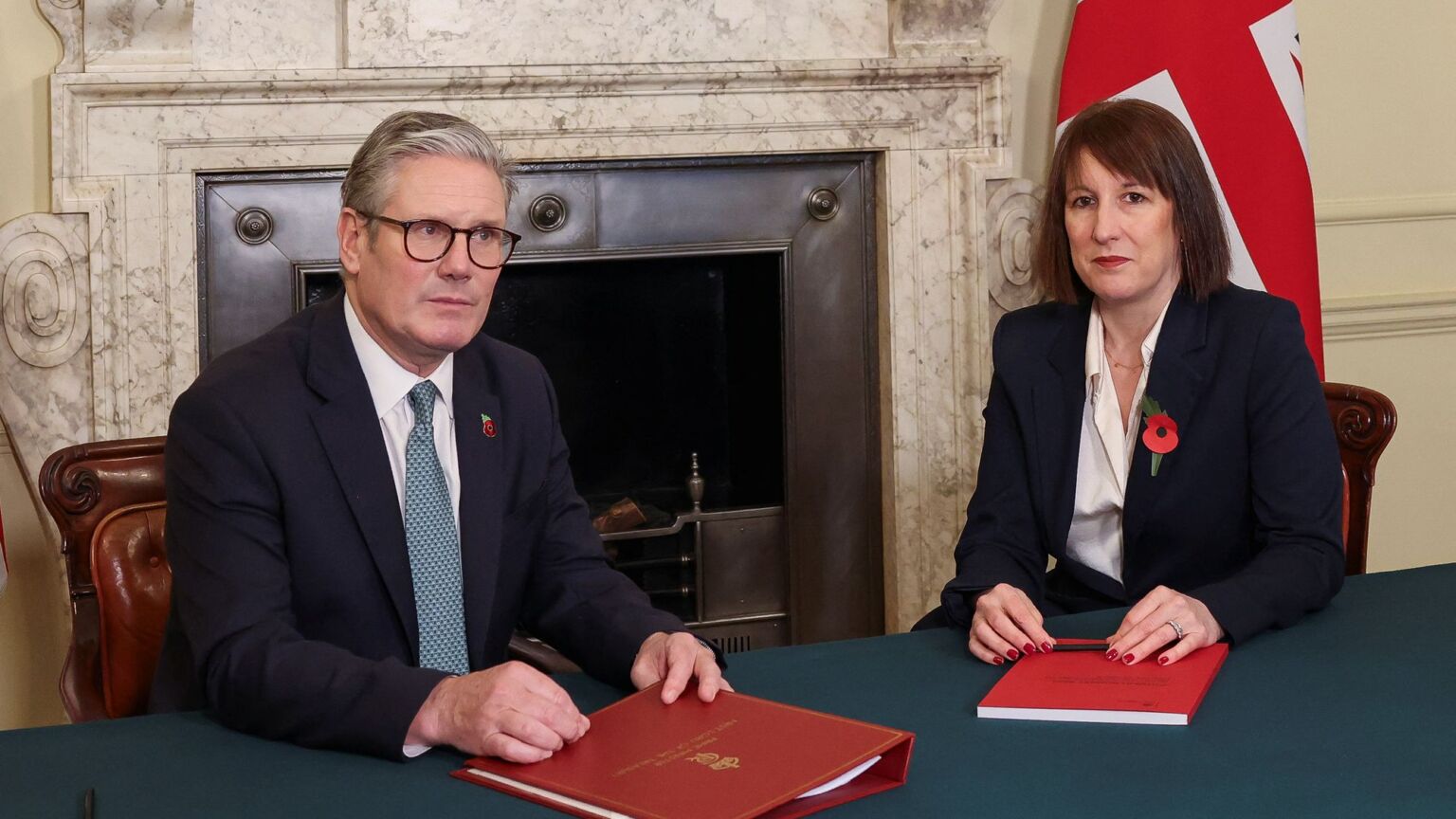
This helps explain why Keir Starmer’s Labour, despite partially adopting the rhetoric of social democracy, has yielded so little change in practice. Grand manifesto promises of a nationalised energy body, renationalised railways and mass housebuilding have already dissolved into familiar managerial drift. Housing construction has slowed significantly rather than accelerated, while state intervention increasingly takes the form of branding, regulatory announcements and public-relations exercises.
This is not merely a failure of political will. It reflects the disappearance of the social foundations that once made social democracy viable. The great reforms of the 20th century were not benevolent gifts from enlightened elites. They were concessions extracted through organised working-class pressure. Trade unions, industrial militancy and mass democratic organisation forced the state to expand welfare provision, public housing and collective ownership.

That pressure does not exist today. Britain’s working class is fragmented, institutionally weak and politically under-represented. As a result, governments face little meaningful pressure to pursue ambitious programmes of reconstruction. They can comfortably adopt the rhetoric of social-democratic reform while indefinitely postponing substantive action.
Instead, the modern state increasingly sees its role not as advancing working-class interests, but as containing popular passions. The political class appears more anxious about populist discontent and the expression of ‘incorrect’ opinions than about economic stagnation or industrial decline. This helps explain why governments often display greater enthusiasm for policing speech, regulating behaviour and restricting protest than for building infrastructure or reviving productive industry. State capacity has not vanished – it has simply been redirected toward managing the public.
For all its faults, Old Labour sought to expand productive capacity and construct institutions capable of reshaping society. Today’s progressive politics, in contrast, is far more interested in targeting morally disapproved groups for symbolic punishment. Labour’s campaigns against private schools, private landlords and other allegedly privileged minorities are cases in point. These don’t amount to coherent economic reform, but nor is that their point. They are better understood as public demonstrations of moral virtue.
This reflects the sociological transformation of the left itself. Radical demands no longer emerge primarily from organised labour, but from educated middle-class professionals clustered within universities, NGOs, the public sector and the cultural industries. Their politics is intensely moralised and individualised. Social problems are increasingly interpreted not through the lens of national development or class organisation, but through identity and personal values.

The contradictions become most obvious around immigration and citizenship. Welfare states depend on the existence of a shared political community, on citizens who recognise one another as members of a common national project. Yet large sections of the progressive left appear more comfortable articulating abstract universal rights than defending the interests of the British public.
Indeed, last year, then home secretary Yvette Cooper secured a High Court ruling preventing the closure of the Bell asylum hotel in Epping, Essex, on the grounds that the ‘human rights’ of asylum seekers trumped the safety of local residents. When ministers elevate the rights of migrants above the concerns of British citizens, they erode the solidarity upon which social democracy ultimately depends. A state cannot indefinitely weaken national cohesion while simultaneously expanding its obligations to all-comers.
The Greens have consciously inherited much of the emotional energy once attached to Corbynism. This is because they offer the aesthetics of radicalism while remaining fully embedded within the assumptions of globalised liberalism. They promise state intervention without confronting the erosion of sovereignty, borders and democratic accountability that make such interventions ineffective or impossible. As with the Labour-left slogan ‘love socialism, hate Brexit’, this is a contradiction in terms.
The deeper question confronting Britain is not simply whether the state should intervene more or less. It is whether there is still a cohesive community capable of sustaining any ambitious collective projects at all. In the absence of national sovereignty and an empowered working class, ‘socialism’ and ‘social democracy’ will remain empty slogans.
Neil Davenport is a writer based in London.

spiked summit 2026
10am-5pm, Saturday 27 June
Emmanuel Centre, London, SW1P 3DW
With Lionel Shriver, Brendan O'Neill, Katharine Birbalsingh, Toby Young, Allison Pearson, Paul Embery, Tom Slater, Andrew Doyle, Fiyaz Mughal and more
Become a spiked supporter to get a discounted ticket
£80 or £50 for supporters
You’ve hit your monthly free article limit.
Support spiked and get unlimited access.
Support spiked and get unlimited access
spiked is funded by readers like you. Only 0.1% of regular readers currently support us. If just 1% did, we could grow our team and step up the fight for free speech and democracy.
Become a spiked supporter and enjoy unlimited, ad-free access, bonus content and exclusive events – while helping to keep independent journalism alive.
Monthly support makes the biggest difference. Thank you.






Comments
Want to join the conversation?
Only spiked supporters and patrons, who donate regularly to us, can comment on our articles.