Is Scotland on the verge of a populist surge?
Reform’s breakthrough in Holyrood has unsettled the cosy status quo.
Want unlimited, ad-free access? Become a spiked supporter.
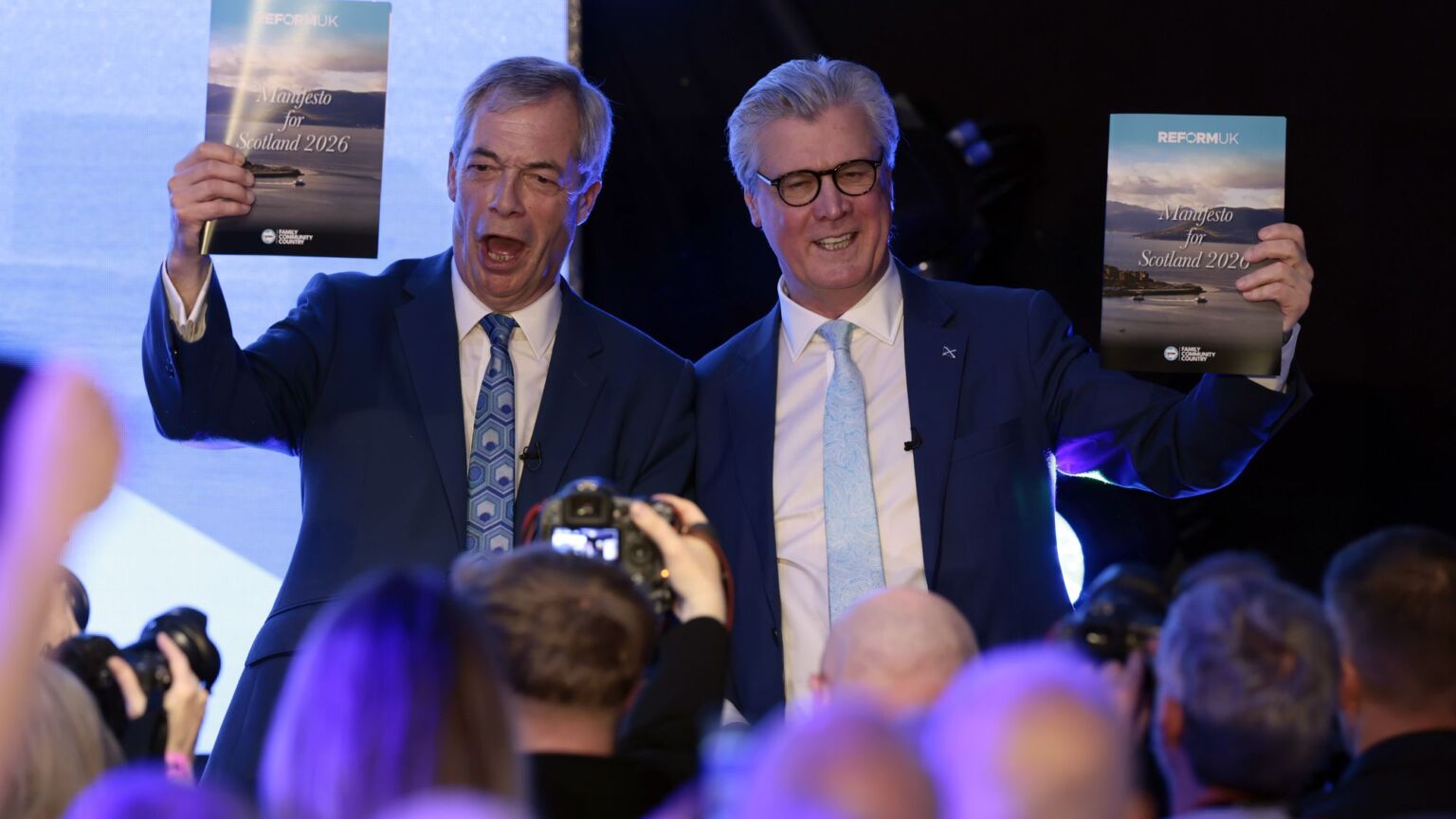
Reform UK’s success in this month’s Scottish parliament election is proof that the political status quo, like in England and Wales, is crumbling. At last, Reform has given voice to the longing for a real alternative that challenges the sclerotic, anti-democratic nature of political life in Scotland.
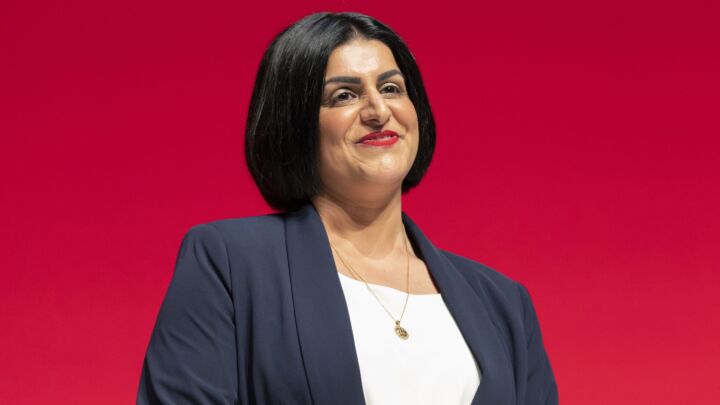
As in England and Wales, Scotland’s populist surge coincides with the decline of the establishment parties. For Labour, the recent elections proved just another stage in its long death in Scotland. It picked up just 17 seats. To add insult to injury, Scottish Labour leader Anas Sarwar lost his constituency seat, scraping a return to Holyrood via the regional list. The Scottish Tories, meanwhile, had their worst ever result, losing 19 seats and pushed into fourth place.
Despite winning its fifth consecutive election, the SNP is in dire straits. It remains dogged by allegations of corruption – namely, Operation Branchform, which last year led the former SNP chief executive and ex-husband of Nicola Sturgeon, Peter Murrell, to face court on embezzlement charges. The Sturgeon era, defined by its attacks on women’s rights and freedom of expression, lingers unpleasantly in the minds of many Scots. First minister John Swinney now heads up a government bereft of ideas.
This became painfully apparent in a lacklustre election campaign. Having overseen a deficit that has blown out to £26.5 billion, all the SNP could muster was a cap on grocery prices, free goodie bags to every primary school child and a minimum wage for comedians. It speaks to an exhausted political machine, running on empty after years of decline.
The SNP’s long dominance in Holyrood shouldn’t be interpreted as a sign of slavish loyalty on behalf of the Scottish people. It is much more a result of the anti-democratic character of the devolution settlement imposed on Scotland by New Labour than an accurate reflection of the country’s political beliefs. The electoral system in Scotland is significantly different from that of England and Wales. English council elections involve a straightforward majoritarian first-past-the-post system. In Wales, Senedd members are elected using a closed proportional list system.
Rather than combining the best elements of first-past-the-post and proportional representation, the Scottish system cancels out the democratic benefits of both. The result is a parliament that is neither proportional nor majoritarian in its make-up.
Given the barriers implicit in the electoral system, Reform’s breakthrough illustrates just what a complete game changer it can be in Scotland. Much like its success across England and Wales, Reform’s Scottish breakthrough has been 10 years in the making, giving voice to a populist desire for change that broke surface with the 2016 Brexit vote.
The EU referendum reenergised sections of the Scottish electorate, which became invested in defending the populist mandate. It was not for nothing that the Conservatives doubled their vote in Scotland at the 2017 General Election, winning 13 seats – their most seats since 1983 – despite refusing to make Brexit an election issue. Voters were searching for a vehicle to express their dissent.
For a decade, the Scottish establishment has conspired to ignore Scotland’s populist movement. Reform has now given it an electoral form.
Shortly after the election, Swinney claimed a second independence referendum would be necessary to ‘Farage-proof’ Scotland. That the political establishment should so openly declare war on the party that hundreds of thousands of Scottish people voted for, clearly illustrates that the cosy status quo engineered by devolution has been broken.
New battle lines are being drawn. Next May’s Scottish local council elections will be another chance to take the fight to the political class and drive home the populist message.
Dr Carlton Brick is a sociologist and researcher.
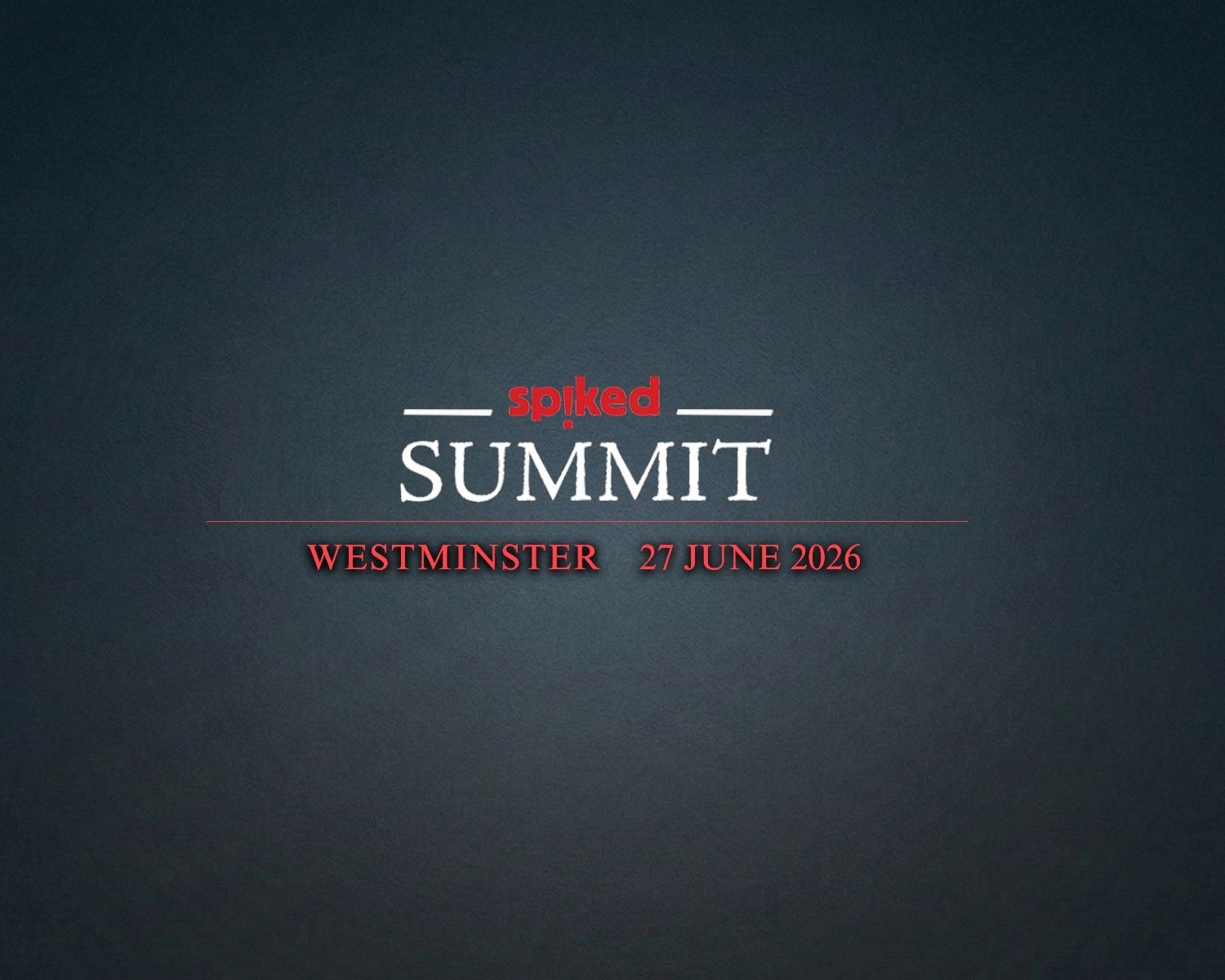
spiked summit 2026 – SOLD OUT
Saturday 27 June 2026
10am-6pm, Saturday 27 June
Emmanuel Centre, London, SW1P 3DW
With Lionel Shriver, Brendan O’Neill, Katharine Birbalsingh, Toby Young, Allison Pearson, Paul Embery, Tom Slater, Andrew Doyle, Fiyaz Mughal and more
The spiked summit has now SOLD OUT. To join the waitlist, email:
[email protected]
£80 or £50 for supporters
You’ve hit your monthly free article limit.
Support spiked and get unlimited access.
Support spiked and get unlimited access
spiked is funded by readers like you. Only 0.1% of regular readers currently support us. If just 1% did, we could grow our team and step up the fight for free speech and democracy.
Become a spiked supporter and enjoy unlimited, ad-free access, bonus content and exclusive events – while helping to keep independent journalism alive.
Monthly support makes the biggest difference. Thank you.
Comments
Want to join the conversation?
Only spiked supporters and patrons, who donate regularly to us, can comment on our articles.