Why did the BBC downplay the horror of Afghan men selling their daughters?
The Beeb framed a story about the exploitation of girls solely around the anguish of men.
Want unlimited, ad-free access? Become a spiked supporter.
There’s a phrase used a lot in journalism called the ‘top line’. When you’re pitching a story to an editor and it’s not quite landing, they’ll ask: ‘Yeah, but what’s the top line?’ What is this story really about? What’s the thing readers absolutely need to understand first? Often, that becomes the headline.
So when I read the BBC News headline, ‘Selling children to survive: Afghan fathers forced to make impossible choices’, I thought I knew what kind of story I was about to read. A humanitarian piece about desperate Afghan men, crushed by poverty and famine, making painful choices to keep their families alive. But that is not really what this story is about at all. It is actually about little girls being sold into child marriage and domestic slavery in Taliban-controlled Afghanistan.
So how does a story that is fundamentally about women and girls end up emotionally centred on men? The answer lies in the structure of the article itself.
It begins with vivid scenes of men gathering in a dusty square in Chaghcharan, desperately searching for work. ‘I live in fear that my children will die of hunger’, says one father. Then come devastating statistics about hunger, unemployment and collapsing aid. We’re told millions of Afghans are one step away from famine.
Next: a heart-wrenching interview with a desperate father whose children have not eaten for two days. ‘I felt like I should kill myself’, he says. ‘But then I thought, how will that help my family? So here I am looking for work.’
In the next scene, men fight over stale bread handed out by a bakery owner. Then they fight each other for a day’s labouring work offered by a passing motorcyclist.
And only then – a good third of the way into the 2,500-word article – comes the detail that completely changes the moral reality of the story. The men are not ‘selling their children’. They are selling their daughters – into child marriage and domestic slavery.
One father says he has already sold his five-year-old daughter to a male relative to pay for her medical treatment. It is an arrangement that will lead to her marriage to one of his sons when she turns 10.
Another openly discusses selling one of his seven-year-old twin girls. ‘If I sell one daughter, I could feed the rest of my children for at least four years’, he says. The BBC tells us he hugs and kisses the little girl while he cries. ‘It breaks my heart, but it’s the only way.’
The real story here is the commodification of girls. A story of fathers selling their daughters to other men. Yet it is framed primarily as a story about the anguish of the men selling them – rather than the girls being sold into child exploitation and abuse.
The fathers’ suffering is explored in depth. Their tears are described. Their suicidal thoughts quoted. By contrast, the girls themselves remain voiceless. And their mothers, too. The fathers speak for everyone.
The article explains matter-of-factly that there is ‘a tradition in which a marital gift is given to the family of the girl’. A marital gift? That’s one way of describing cash for girls.
The piece raises no questions about the men willing to acquire these children. No questions about these future husbands. No questions about the relatives agreeing to purchase a five-year-old girl who will later be expected to marry into the family.
Instead, the main villain in the eyes of the BBC journalists appears to be the US. It was once the top donor to Afghanistan, but ‘cut nearly all aid to the country last year’, we’re told. Other donors, including the UK, have also reduced contributions, the article notes.
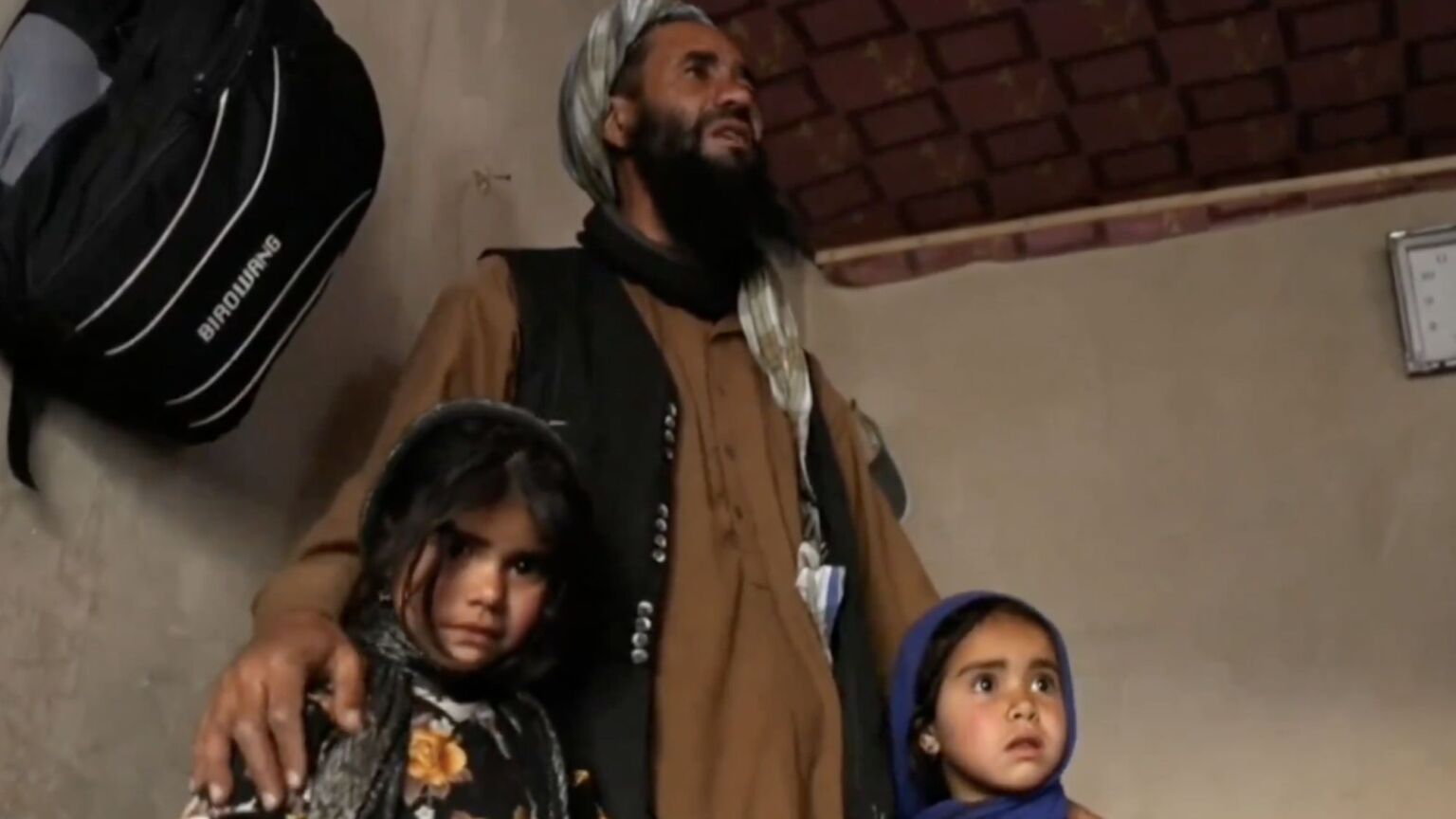
When I finished reading the piece, I scrolled back up to the photograph at the top. It shows a sad-looking father beside three children, including a little girl. The caption reads: ‘Abdul Rashid Azimi says he is prepared to sell one of his daughters to feed the others.’ So the BBC clearly knew what the real ‘top line’ of the story was. But it chose to frame it differently.
The issue here is not factual inaccuracy. Afghanistan’s humanitarian crisis is real. Girls sadly are being sold into child marriage and domestic slavery by their own fathers. And journalism should, absolutely, explain the context in which human beings make catastrophic choices.
But distortion in journalism does not only happen through factual inaccuracies. It can also happen through omission, emphasis and framing. And what is striking about this BBC report is how the girls themselves remain strangely peripheral within their own story.
Instead, the men are centred. That is not an accidental distinction. It is an editorial one.
Janet Murray is a freelance journalist and director of Seen In Journalism.

spiked summit 2026 – SOLD OUT
Saturday 27 June 2026
10am-6pm, Saturday 27 June
Emmanuel Centre, London, SW1P 3DW
With Lionel Shriver, Brendan O’Neill, Katharine Birbalsingh, Toby Young, Allison Pearson, Paul Embery, Tom Slater, Andrew Doyle, Fiyaz Mughal and more
The spiked summit has now SOLD OUT. To join the waitlist, email:
[email protected]
£80 or £50 for supporters
You’ve hit your monthly free article limit.
Support spiked and get unlimited access.
Support spiked and get unlimited access
spiked is funded by readers like you. Only 0.1% of regular readers currently support us. If just 1% did, we could grow our team and step up the fight for free speech and democracy.
Become a spiked supporter and enjoy unlimited, ad-free access, bonus content and exclusive events – while helping to keep independent journalism alive.
Monthly support makes the biggest difference. Thank you.


Comments
Want to join the conversation?
Only spiked supporters and patrons, who donate regularly to us, can comment on our articles.