No, the police are not ‘systemically racist’
The outrage over disproportionate strip searches performed on black teens ignores reality on the ground.
Want unlimited, ad-free access? Become a spiked supporter.
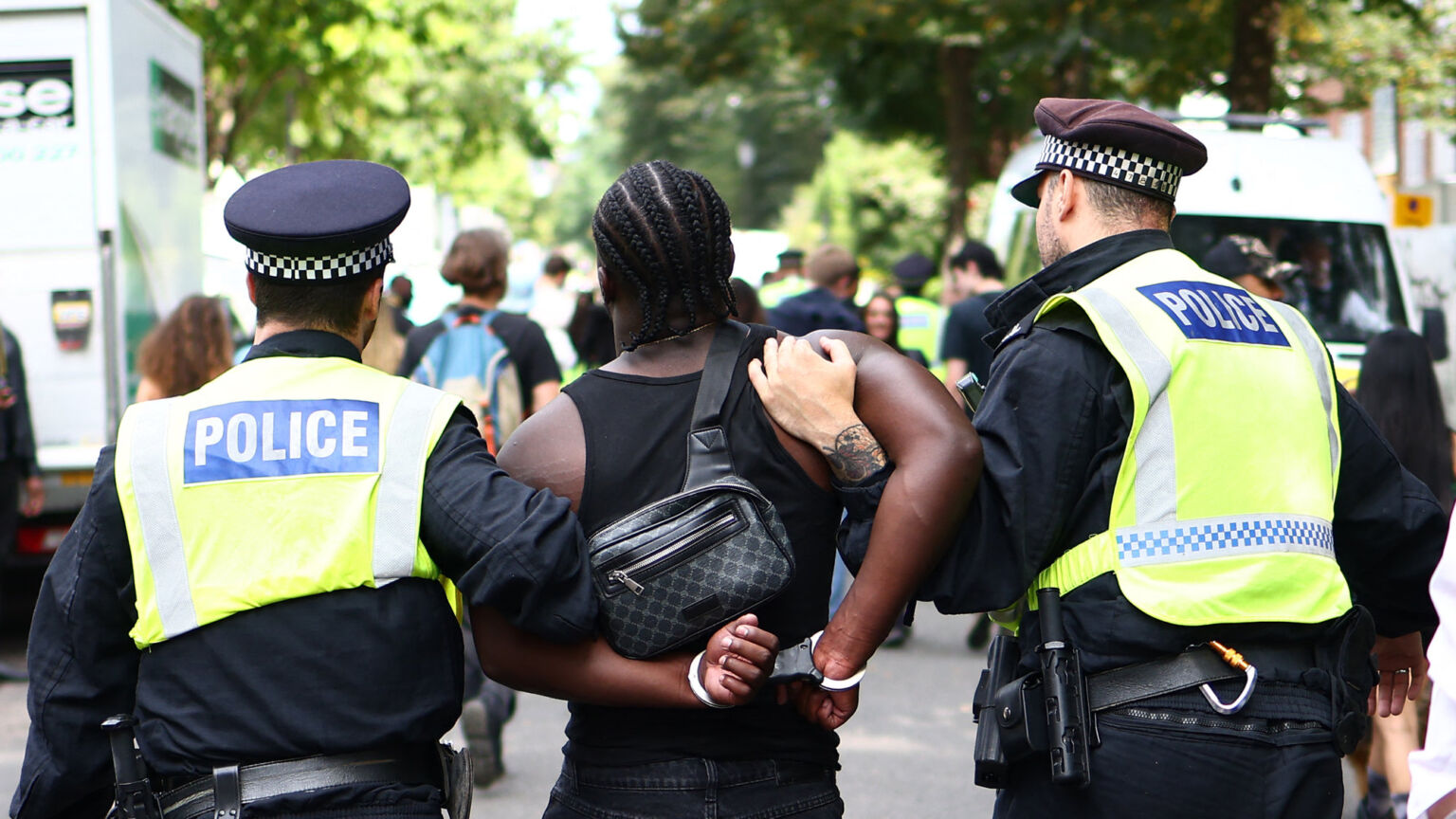
A report published in April by the Children’s Commissioner for England on the police’s record on strip searching children has caused tumult in elite circles. The document, ‘Police powers and children – strip searching and use of force’, states: ‘Although only six per cent of the population of 10- to 17-year-olds in the 2021 census were black, 35 per cent of the children strip searched were of black ethnicity.’ The conclusion, we are told, is obvious: Britain’s police are systemically racist.
Few statistics are deployed more aggressively in Britain’s culture wars than those around policing. Yet the claim that British police are racist is as lazy as it is unfair. It rests on a single move: take a statistic showing a disparity, strip away all context, and assume a motive. No serious discipline would accept that standard of evidence or such dishonest reasoning. Yet, when the topic is policing, it is simply taken at face value. Maybe because the reality is less convenient.
The first point to make is that policing is not distributed evenly across the population. It is concentrated in the places where crime is most prevalent. These areas are generally the most economically deprived and contain the highest number of people from ethnic-minority backgrounds (that certain minorities are statistically more likely to be poorer in the first place is a separate debate). This means law enforcement clusters in specific neighbourhoods, particularly in major urban centres. These areas do not resemble the country as a whole, either in crime patterns or demographics.
The accusation of racism crumbles when this fact is acknowledged. If police activity is focussed in a relatively small number of high-crime areas, and those areas have distinct demographic profiles, then uneven outcomes are inevitable.
Critics are quick to cite disparities in enforcement, the recent complaints about strip searches being a perfect example. But they are far less willing to engage with the realities of criminality and youth exploitation in the areas where these searches occur. It is a sad fact that black people (of all ages) are more likely to be the victims of violent crime than other ethnic groups. In London, 62 per cent of homicide victims are black – but so are 65 per cent of offenders. So what are the activists saying – that the police shouldn’t try to prevent homicide from happening?
None of this requires the belief that policing is perfect. Of course officers make mistakes. Procedures are sometimes poorly followed. Oversight has, in some cases, identified serious failings in the treatment of minors. These issues deserve attention. But they do not at all amount to evidence of a system animated by racial bias.
This is not serious thinking. It is political rhetoric. Even the commonly cited evidence does not support the sweeping conclusions drawn from it. Too many studies and news reports collapse different contexts into a single headline figure, erasing the role of geography, crime distribution and police strategy. The result is a narrative that is emotionally forceful but factually thin.

Accusations of systemic racism reflect what has become an inbuilt woke scepticism toward an institution which, in recent years, has bent over backwards to appeal to the lanyard classes. This has warped public trust and, ultimately, the willingness of ordinary coppers to act decisively in high-risk situations – especially with the senior ranks’ propensity to throw front-line police under a bus at the first hint of controversy. That outcome serves no one, least of all the communities most affected by crime.
The truth, as ever, is less convenient than the slogans. Policing means meeting the demands of public safety with the imperfect judgement of human beings, usually operating under substantial pressure. Disparities can emerge from all of these factors without requiring a single, all-encompassing explanation. To insist otherwise is not to pursue justice. It is to impose a politically charged narrative.
Certainly, the strip-search figures deserve scrutiny. But they do not justify the confident declaration of systemic racism that so often follows. If Britain is to have an honest debate about policing, it must begin by abandoning the idea that unequal statistical outcomes are racist. They are not. And until that distinction is acknowledged, the conversation will remain driven, not by evidence, but by ideology.
Paul Birch is a former police officer and counter-terrorism specialist. You can read his Substack here.


spiked summit 2026
10am-5pm, Saturday 27 June
Emmanuel Centre, London, SW1P 3DW
With Lionel Shriver, Brendan O'Neill, Katharine Birbalsingh, Toby Young, Allison Pearson, Paul Embery, Tom Slater, Andrew Doyle, Fiyaz Mughal and more
Become a spiked supporter to get a discounted ticket
£80 or £50 for supporters
You’ve hit your monthly free article limit.
Support spiked and get unlimited access.
Support spiked and get unlimited access
spiked is funded by readers like you. Only 0.1% of regular readers currently support us. If just 1% did, we could grow our team and step up the fight for free speech and democracy.
Become a spiked supporter and enjoy unlimited, ad-free access, bonus content and exclusive events – while helping to keep independent journalism alive.
Monthly support makes the biggest difference. Thank you.





Comments
Want to join the conversation?
Only spiked supporters and patrons, who donate regularly to us, can comment on our articles.