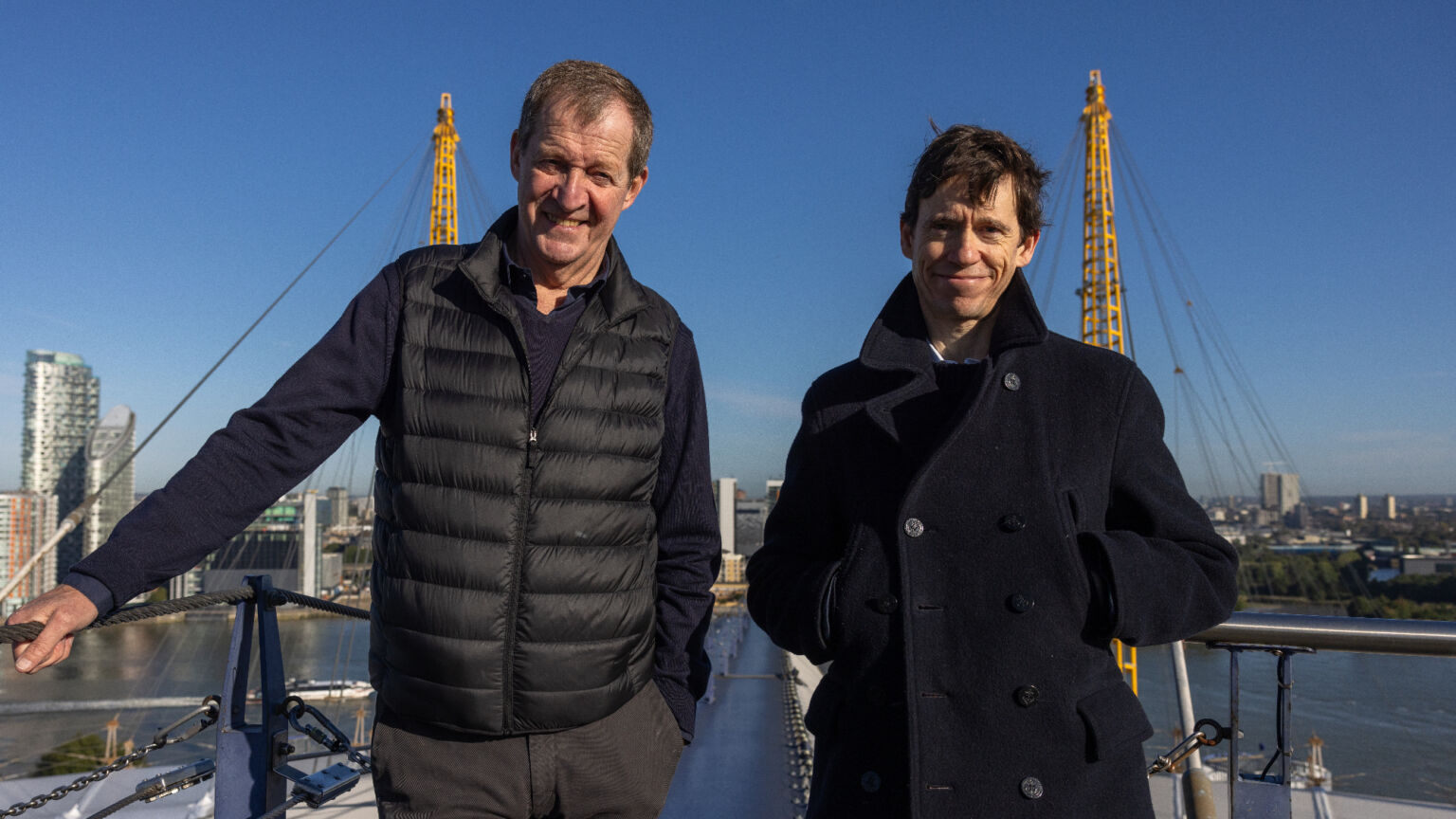
Is there really such a thing as a ‘sensible’ centrist?
Adrian Wooldridge’s Centrists of the World, Unite! skewers the idiocy that passes for the centre ground today.
Want unlimited, ad-free access? Become a spiked supporter.
One can only imagine Rory Stewart’s disappointment at picking up his pre-ordered edition of veteran journalist Adrian Wooldridge’s new book, Centrists of the World, Unite! The Lost Genius of Liberalism. What could Wooldridge mean when he says that liberals have turned American cities into decrepit slums? What’s this business about free trade impoverishing the working class and benefitting only the most well-educated and well-connected? And what kind of self-respecting centrist could possibly say that immigration from certain Islamic nations had imported religious bigotry into the UK?
Despite its title, Wooldridge’s book is unlikely to win him an interview on those podding factories of centrist sentiment, The Rest Is Politics or The News Agents. But that only makes it all the more worth reading. What he’s produced isn’t so much a vindication of the likes of Emily Maitlis or Ed Davey, as it is a demolition of everything they believe in.
Wooldridge, though not a household name, is a journalist and intellectual of some heft, having spent 20 years at The Economist before taking up his current role as a Bloomberg columnist. In Centrists of the World, Unite!, he offers an insightful analysis of how today’s so-called liberals, otherwise known as centrists, came to support policies that undermine everything classical liberalism stood for. As he puts it in sum: ‘Left-liberals embraced oppressed groups, the more oppressed the better; neoliberals worshipped the markets, the freer the better; managerial liberals loved bureaucracies, the more global the better.’
One of his case studies in liberal, centrist failure is mass immigration. It is, he says, damaging to the liberal cause in two fundamental respects: it erodes trust and national identity in areas where it is most concentrated, and damages the economic prospects and living conditions of the working class. Liberals, he argues, ‘support “open” immigration policies that provide them with clear benefits… while ignoring the costs that they impose on working-class people who lack their subtle defences against competition’. ‘Liberal immigration policies’, he writes, ‘fit into the same pattern as liberal free-trade policies: the benefits accrue to richer people while the costs are borne by the poorer indigenous population’.
But, as Wooldridge explains, the negative impacts aren’t only economic, they also damage the cultural life of a nation. Supporters of mass immigration had always assumed they were creating a more diverse and enlightened society. But the events of 1988, when angry crowds of men started burning copies of Salman Rushdie’s new novel, The Satanic Verses, were the first of many to blow a hole in this naive assumption. It turned out large sections of the British Muslim community did not support Rushdie’s freedom of expression, repudiating the very principles of the society they had immigrated to. When the Supreme Leader of the Islamic Republic of Iran, Ayatollah Ruhollah Khomeini, issued the fatwa against Rushdie in 1989, many British Muslims supported it, as attested by countless demonstrations and book-burnings. Since then the ‘battle between liberal principles and fundamentalist Islam’ has come to engulf Europe, reaching its bloody apogee in the murder of 12 journalists at the French satirical magazine, Charlie Hebdo, in 2015.
The erosion of free speech, and the violent response accompanying allegations of ‘blasphemy’, is one aspect of the crisis of integration. The other is less immediately threatening but no less ominous: the creation of ethnic and religious enclaves that are detached from the civil society and economic life of their host countries. Towns in northern England are ‘not just Muslim dominated but Muslim only’, Wooldridge writes. As a result, English social and even legal customs are dislodged in a generation and soon forgotten altogether. The practice of cousin marriage has become so widespread that British Pakistanis, despite representing 3.4 per cent of births, account for 30 per cent of regressive genetic disorders. Islamic schools in the UK instruct pupils in the most crude passages of the hadith – including the stoning of gays and the subordination of women. When such misogyny is officially sanctioned, it is no surprise that towns with large Muslim populations – Rochdale, Rotherham, Derby – have been at the epicentre of the grooming-gangs scandal.
The liberal-elite response to these developments has been found wanting. If cowardice played a role in this, so too, to a greater extent, did liberals’ own turn against Western values. Instead of asserting liberal principles (and in some cases, the law of the land), they engaged instead in a process of morbid self-criticism. ‘Why respect your host society’s traditions when those traditions are routinely mocked by your hosts themselves?’, asks Wooldridge.
Much of this is attributable, argues Wooldridge, to the cultural ascendancy of the French ‘new left’ from the 1970s onwards. Michel Foucault and Jacques Lacan popularised the belief that ‘individual selves are socially constructed… and that aesthetic and moral standards are relative to the society that produces them’. It is a ‘profoundly illiberal argument’, he warns, and one that paved the way for the identity politics and ‘standpoint epistemology’ – writ large in expressions such as, ‘speaking as a black woman’ and ‘my truth’ – that currently dominate Western universities.
This illiberal, anti-Enlightenment shift has been most acute in America. ‘We don’t need anymore black faces that don’t want to be a black voice’, said Democratic congresswoman Ayanna Pressley in 2019. ‘The only remedy to racist discrimination is anti-racist discrimination’ was the mantra of Ibram X Kendi, one of America’s most influential academics and an intellectual leader of the Black Lives Matter movement. But it has also made its presence felt in Britain. ‘We must not fetishise “debate” as though debate in itself is some neutral act’, Labour MP Nadia Whittome said.
Hence we have arrived at a place where ‘objective truth, like merit, does not exist’ – a quote Wooldridge provides from an introduction on critical race theory. American liberal strongholds – Wooldridge focuses on San Francisco – show that this same contempt for supposedly Western concepts such as knowledge could be applied to customs like law and order and the most basic rudiments of civility. San Francisco is now ‘such a mess, its streets lined with tents for the homeless and drug addicts, openly toking and injecting, that even progressives have had enough’. He notes that drug addicts are encouraged by city authorities with the provision of free and clean needles, while billboards featuring ethnic minorities encourage people to smoke and snort their drugs, rather than inject them, to reduce the risk of overdose. Petty theft, including shoplifting, has effectively been decriminalised.
Is it any surprise, writes Wooldridge, that the ‘great theme of modern politics is a rejection of anarchy in the name of order’? Proof of this arrived with the 2024 US presidential election, argues Wooldridge, when Trump flipped liberal strongholds such as South Philadelphia and Lower Manhattan, winning a majority of Latino voters and a record percentage of black voters.

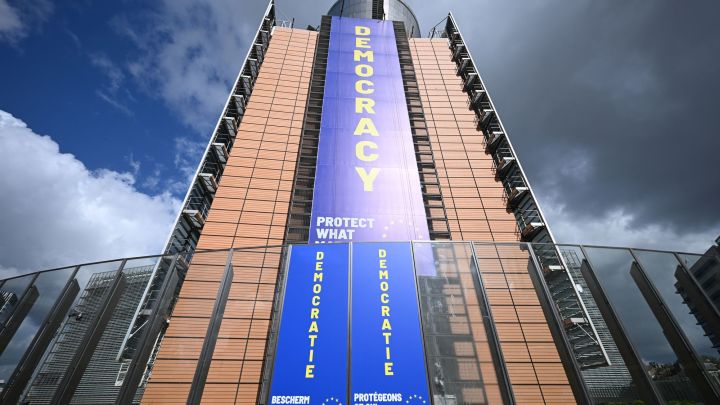
Wooldridge is also wise to the many hypocrisies of modern liberalism. Even while liberals regard themselves as the standard-bearers of democracy, they retain an unshakable faith in one of the most powerful, anti-democratic and elitist institutions in the world: the EU. This, writes Wooldridge, is a ‘managerial project’, ‘administered by a professional elite unaccountable to voters’. Not just unaccountable, as Wooldridge shows, but contemptuous of them, too. EU member states were forced to vote multiple times on treaties of Maastricht, Nice and Lisbon in the mid-to-late 2000s until the ‘right’ result was reached, and the goal of ‘ever closer’ union was eventually accepted by European voters.
Wooldridge’s fundamental gripe with the EU is that it is incompatible with the nation state, and therefore democracy. He has little time for the globalist dreams of a borderless world, or for the view that nationalism is synonymous with parochialism. ‘Nation states provide the common memories and loyalties that turn isolated individuals into citizens’, he writes, ‘channeling the need for belonging to civilised ends’. He points out that liberalism and nationalism have often been hand in glove, and that the ‘that the great train of liberalism was set in motion by a nationalist revolution – that of the American people against the British Empire’.
None of this is to say that Wooldridge’s book is perfect. Indeed, centrist orthodoxies break out at awkward moments. He includes Boris Johnson, Marine Le Pen and Donald Trump alongside Vladimir Putin and Xi Jinping in his list of ‘Enemies of Liberty’. He is also a strong supporter of the nanny state, praising the persecution of smokers as proof of the ‘power of soft paternalism’. Nor does he seem interested in analysing what has recently become the great bête noire of today’s liberals – namely, Israel. Wooldridge does not comment on the strange state of affairs that has allowed anti-Semites to launder their bigotry as ‘anti-Zionism’.
Still, these sins of omission can be forgiven in light of the book’s main achievement – which, ironically, is in providing a merciless takedown of the ‘centrists’ in the title. These people, as Wooldridge lays bare, were never nearly as moderate or ‘sensible’ as they like to make out. Instead, they have shown themselves to be slaves to every passing fashionable belief, dragging the West off the cliff with them.
Hugo Timms is a staff writer at spiked.
Centrists of the World, Unite!, by Adrian Wooldridge, is out now.
spiked summit 2026 – SOLD OUT
Saturday 27 June 2026
10am-6pm, Saturday 27 June
Emmanuel Centre, London, SW1P 3DW
With Lionel Shriver, Brendan O’Neill, Katharine Birbalsingh, Toby Young, Allison Pearson, Paul Embery, Tom Slater, Andrew Doyle, Fiyaz Mughal and more
The spiked summit has now SOLD OUT. To join the waitlist, email:
[email protected]
£80 or £50 for supporters
You’ve hit your monthly free article limit.
Support spiked and get unlimited access.
Support spiked and get unlimited access
spiked is funded by readers like you. Only 0.1% of regular readers currently support us. If just 1% did, we could grow our team and step up the fight for free speech and democracy.
Become a spiked supporter and enjoy unlimited, ad-free access, bonus content and exclusive events – while helping to keep independent journalism alive.
Monthly support makes the biggest difference. Thank you.



Comments
Want to join the conversation?
Only spiked supporters and patrons, who donate regularly to us, can comment on our articles.