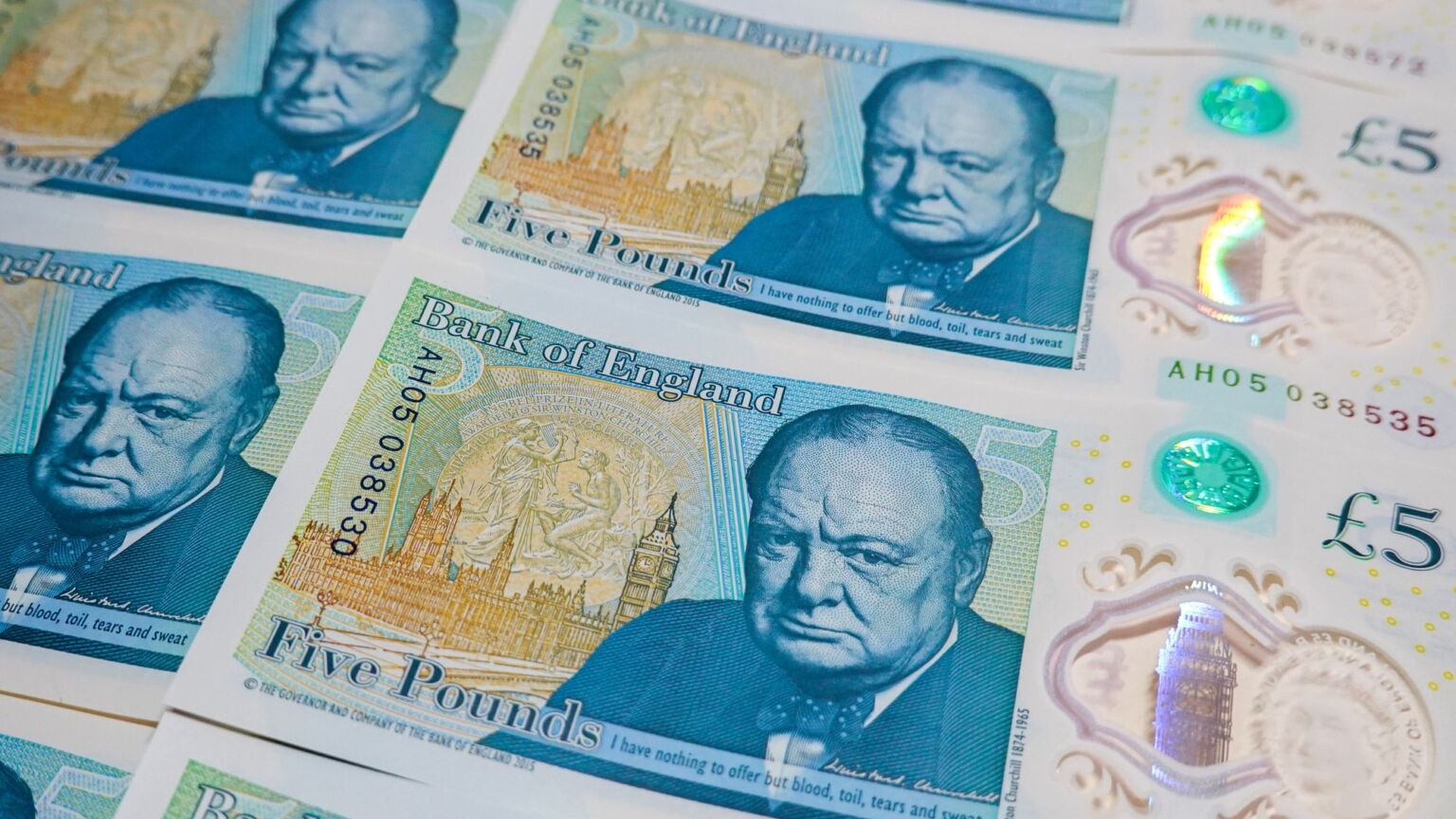
Why are they swapping Churchill for a hedgehog on our banknotes?
The Bank of England’s efforts to avoid ‘divisive’ historical heroes has rightly riled up the nation.
Want unlimited, ad-free access? Become a spiked supporter.
British banknotes are getting a facelift. In fact, the only human face remaining on them will belong to the king. The backs of the notes have long been home to portraits of national figures of historical importance – Dickens, Alan Turing, Jane Austen, etc. Now those old fuddy-duddies are to be replaced by voles, badgers and beavers. In essence, we are swapping Winston Churchill for a hedgehog.
Apparently, it keeps wicked counterfeiters on their toes to switch the design every decade or so. The thinking is that just as the dastardly forger has got George Stephenson off to a tee, he suddenly has to master Su Pollard.
Like you I’m sure, I haven’t used cash very much for a very long time. Though I have my doubts about the wisdom of virtual money replacing folding green, I haven’t been too sad about this – rattling about with heavy pockets full of change could make one feel like a piece of human percussion. It’s something of a surprise to those of us who’ve never known any different that the heroes of history only appeared for the first time on British currency in 1970, an innovation to tie in with decimalisation. Before that, the backs of notes were occupied by symbols like Britannia or a British lion. Despite the comparative brevity of the custom, the change still feels a bit of a wrench.
Of course, the Bank of England getting to this decision has taken an endless series of meetings, consultations, reviews, processes, reviews of processes, processes of reviews, and committees and panels. Quite why somebody in charge couldn’t just turn to an artist and say, ‘Right, I dunno… er… Tales of the Riverbank, get on with it’, is anybody’s guess. And we still don’t really know why the national treasures had to be abandoned in the first place (though we can have a good guess – old, white, pre-Windrush, get rid).
The BofE’s consultation set out the criteria for what would make a good new ‘theme’ for pounds sterling. These included, a) it symbolises the UK; b) It ‘resonates’ with the public; and c) it is not ‘divisive’. This last requirement is worth dwelling on. The bank explains further: ‘The theme should not involve imagery that would reasonably be offensive to, or exclude, any groups.’
Groups, eh? What ‘groups’ in particular – Coldplay? The Nolan Sisters? Showaddywaddy? As we all know but must never say, ‘groups’, like ‘communities’, is lanyardese for Muslims and transvestites, because the powers-that-be are terrified of both. Also, what about people who hate squirrels? Aren’t they a group, with rights?
The panel who decided on the new theme replaced another panel, the Banknote Character Advisory Committee, which was charged with managing ‘the selection of individuals to appear on new notes’. The terms of reference for that erstwhile committee say that ‘the bank seeks to celebrate individuals that have shaped British thought, innovation, leadership, values and society. The bank represents on its notes a person or small group of individuals whose accomplishments or contributions have been recognised widely at the time, or judged subsequently to have been of lasting benefit to the United Kingdom.’ This brings up the vexed question of significant but deceased historical figures who annoy the progressive establishment. In fact, one begins to suspect that the chucking off of the old theme in its entirety is merely a means to avoid having to put the first female prime minister on the notes.
Now we have a new panel – of wildlife experts, selecting the animals the British public can choose from. Imagine the fraught, 12 Angry Men-style scenes of their sequestered debates. ‘So help me, the newt is going on the shortlist!’ ‘Godammit, the Eurasian shrew stays or I walk out that door!’
One of this team, wildlife broadcaster Nadeem Perera (no, me neither), has said of the change:
‘The wildlife of the UK is not separate from our culture. It sits in our football crests, our folklore, our coastlines and our childhoods. Giving it space on something as symbolic as our currency feels both overdue and significant.’
How can people spout this tripe? Was anybody out there really furrowing their brow and tapping their watch, fuming: ‘WHEN, OH, WHEN will there be an otter on a fiver?’
I’m sorry for quoting at length, but this corporate waffle has to be savoured in its entirety for full effect. Talking of which, here’s Victoria Cleland, chief cashier at the Bank of England:

‘I was delighted by the level of public engagement during our banknote-theme consultation last year. The response underlines how important banknotes remain to people. The key driver for introducing a new banknote series is always to increase counterfeit resilience, but it also provides an opportunity to celebrate different aspects of the UK. Nature is a great choice from a banknote-authentication perspective and means we can showcase the UK’s rich and varied wildlife on the next series of banknotes. I look forward to hearing about the public’s favourite wildlife during our forthcoming summer consultation.’
What a laughing riot the Cleland household must be. Still, at least nobody involved has used the word ‘iconic’. Yet.
And let’s face it, it could have been a lot worse. Knowing the lanyard class, we could’ve had India Willoughby, Paddington and Shamima Begum.
The news has sparked predictable outrage and counter-outrage. Actually, that’s not fair; the progressive counter-reaction has been more of the ‘Why do you care?’ variety. But this won’t wash. Either it matters who or what appears on our banknotes, or it doesn’t matter. If it didn’t matter, nobody would have been bothered enough to make the switch in the first place. And somebody clearly was.
What does the incident reveal? Obviously, coming as it has done in these fraught times, it carries an extra unspoken significance, of an erased and rewritten national history. Everybody knows why they’ve really done it, and we know that they know that we know that they know. But, as always with these progressive rebrands, noticing it and objecting is part of the process, to mark out people who get narked as low status and nasty. Though this may have misfired. Even Lib Dem leader Ed Davey is fuming about the Churchill / squirrel exchange, which suggests the BofE may have misread its suppliants.
Anyway, my suggestion for when and if a Reform UK government gets in is for Chancellor Jenrick – purely for banter reasons – to immediately junk the whimsical fauna for lovingly rendered portraits of Jim ‘Nick Nick’ Davidson, JK Rowling and Jeremy Clarkson. See how much it ‘doesn’t matter’ then.
Gareth Roberts is a screenwriter, author and novelist, best known for his work on Doctor Who. The above is an edited extract from Gareth’s new book, Middle Class Holes: A Guide to the Worst Semi-Posh People in Britain Today.
You’ve hit your monthly free article limit.
Support spiked and get unlimited access.
Support spiked and get unlimited access
spiked is funded by readers like you. Only 0.1% of regular readers currently support us. If just 1% did, we could grow our team and step up the fight for free speech and democracy.
Become a spiked supporter and enjoy unlimited, ad-free access, bonus content and exclusive events – while helping to keep independent journalism alive.
Monthly support makes the biggest difference. Thank you.
Comments
Want to join the conversation?
Only spiked supporters and patrons, who donate regularly to us, can comment on our articles.