The shameful disinformation over the Gaza death toll
Pro-Palestine journos and activists still treat Hamas’s demonstrably false figures as uncontested facts.
Want unlimited, ad-free access? Become a spiked supporter.
The way much of the media handled last week’s ‘news’ about Gaza’s death toll is nothing short of shameful.
On 29 January, left-wing Israeli newspaper Haaretz reported, based on an anonymous source, that the Israel Defence Forces (IDF) had ‘accepted’ the Gaza Health Ministry’s (GHM) estimate of 70,000 Palestinian deaths since October 2023. Immediately, major outlets ran headlines declaring an Israeli ‘u-turn’ – after all, officials had long dismissed such figures as Hamas propaganda. Journalists and commentators, who had spent two years lambasting those sceptical of the GHM figures, rushed to claim vindication. Among them was Mehdi Hasan, who crowed on social media that after every Gaza war, Israel ‘accepts the Palestinian death toll’. Hasan implied that those of us who dared ask questions about it were engaging in gaslighting.
However, as is often the case, there appears to be a significant gap between media narrative and reality. To begin with, the IDF has outright denied Haaretz’s report. LTC Nadav Shoshani of the IDF Spokesperson’s Department stated the reported 70,000 figure ‘does not reflect official IDF data’. In other words, the widely promoted ‘admission’ was based on an anonymous background briefing – not an official, verified statement. The IDF emphasised that any formal report would be issued through the proper channels. Unsurprisingly, this caveat has been conveniently ignored in much of the news coverage.
Even so, the framing of this story has been highly misleading. The debate over the death toll was never about whether tens of thousands have died in Gaza. Everyone agrees the war has been devastating. The real dispute, both then and now, concerns the composition of that death toll, the credibility of its sources, and how many of the dead were Hamas combatants or victims of Hamas’s own actions, rather than civilians killed by the IDF. In addressing these questions, the media’s performance has been appalling.
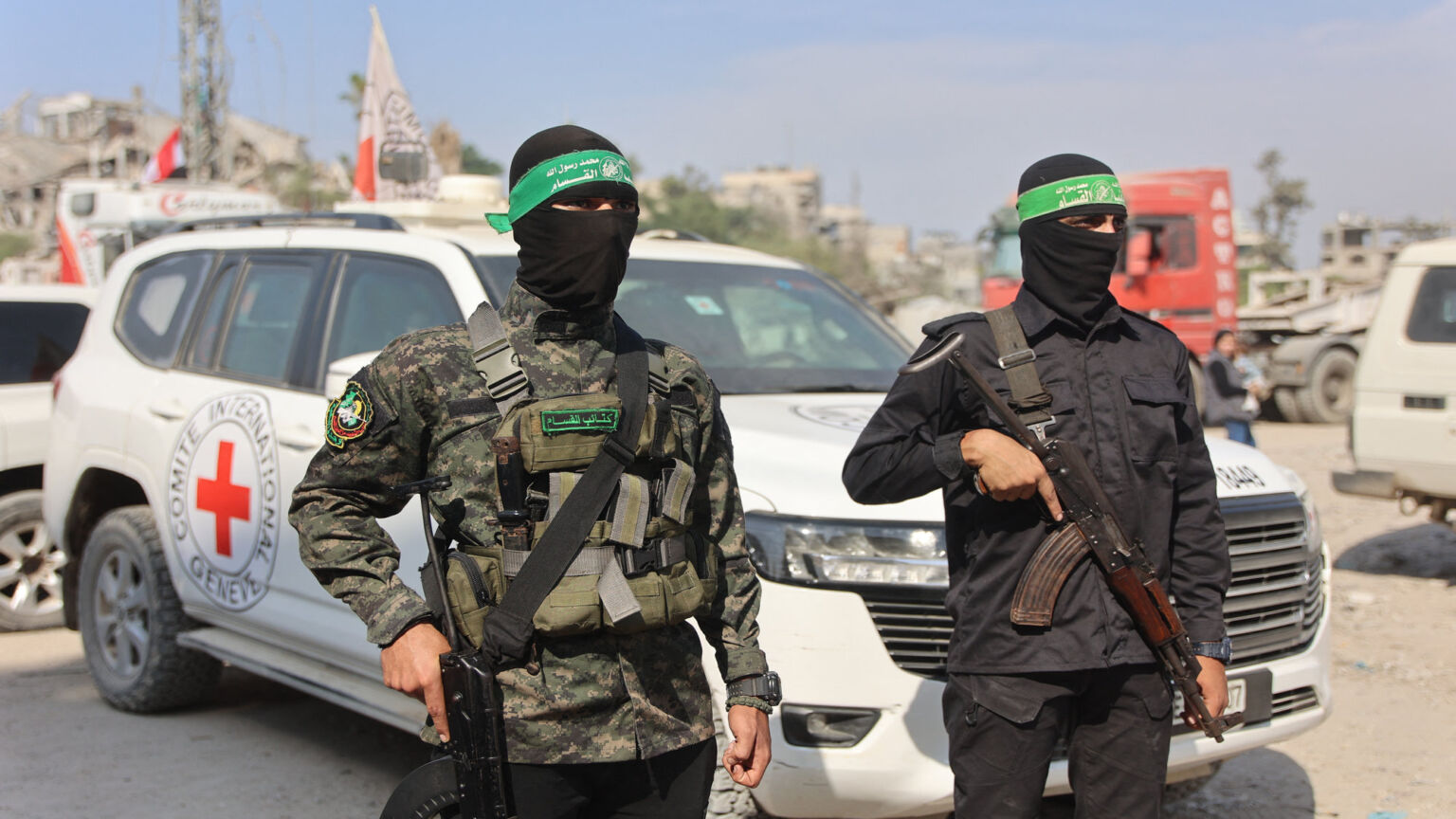
From the outset of the war, the Hamas-run GHM became the main source of casualty figures in Western reports. By early 2024, the GHM was claiming that about 70 per cent of the dead were ‘women and children’ – a statistic cited endlessly by sympathetic journalists and activists. This claim was always nonsense, and is easily disproven just by looking more closely at Hamas’s own data. Most of the casualties were, in fact, male, with a disproportionate number of those being of fighting age. But you wouldn’t know that from reading the BBC.
Those of us who dared to scrutinise the Gaza death toll were not denying that civilians were being killed. We were simply emphasising that the figures came from a party directly involved in the conflict. A study of international coverage between February and May 2024 found that a staggering 84 per cent of major media reports failed to distinguish between combatant and civilian deaths when citing Gaza’s death toll. Ninety-eight per cent of reports cited Hamas’s numbers, while only five per cent referenced Israeli estimates. Tellingly, one in five articles didn’t even attribute the death toll to a source, presenting Hamas’s tally as if it were an uncontested fact. Meanwhile, on the rare occasions that Israeli figures were mentioned, they were often treated with outright scepticism. This blatant double standard undoubtedly laid the foundations for today’s rampant disinformation.
Over a year ago, the Henry Jackson Society published my team’s analysis on the GHM’s fatality lists. The findings were damning. We discovered that Hamas’s lists were riddled with errors and non-combat deaths. Individuals’ ages and genders were frequently misreported (men were listed as women, adults as children) in ways that artificially inflated the count of female and child victims. The lists included people who had died before the war – including those killed by Hamas’s own actions (such as by misfired militant rockets). All of these were lumped together as if Israel was directly responsible. Unsurprisingly, the published toll made no mention of any Hamas combatants whatsoever. Every single fatality was implicitly presented as a civilian who died as a result of Israeli strikes – a near-impossible scenario in a conflict of this nature.
We also observed evidence that the Gazan death toll encompassed natural deaths, which would have occurred regardless of the war. Gaza, like any society, experiences deaths from illness and old age every day. These do not stop during wartime. But the GHM’s methodology appeared to include all manner of deaths in the conflict tally. It even used a public Google Form for individuals to self-report deceased relatives. Given that compensation is offered to families of the deceased, this was clearly a system prone to duplicate entries or misuse. Our qualitative analysis found that these lists were unreliable, and the media should never have treated them as definitive.

Initially, the Palestinian representative in London angrily dismissed our warnings. But a few months later, Hamas discreetly took action that proved our point. In March 2025, the Gaza Health Ministry released an updated casualty report that had quietly removed around 3,400 names that appeared on previous lists. At least a thousand supposed child victims were among those deleted. The likely explanation is that these were duplicate entries, errors, or otherwise invalid records that Hamas erased once they were identified. Our paper was validated: the lists contained thousands of errors.
Our research identified a consistent pattern in conflicts in Gaza: Hamas hides its combatant casualties during the fighting, only acknowledging them much later (if at all). This war has been no exception. Hamas officials have largely remained silent on how many of their militants have perished. Meanwhile, the IDF has consistently reported its estimates of enemy fighters killed. By late 2025, the IDF stated it had killed at least 22,000 Hamas and allied combatants in Gaza. It reported that the fatalities were roughly one-third combatant, two-thirds civilian. This ratio, though tragic, has been consistently maintained in Israeli military briefings. It is a far cry from the ‘nearly all civilians’ picture painted by Hamas.
Can we say for sure that the IDF’s own militant body count is reliable? Of course, Israel is itself an actor in the conflict. But there is historical precedent to suggest its figures are more reliable. After the 2014 Gaza war, independent analyses of casualty lists, along with statements made by Hamas officials, revealed that hundreds of the dead were combatants. Though during the 2014 conflict, Hamas had insisted that almost all fatalities were civilian, the numbers ended up roughly aligning with Israeli estimates.
The same dynamic is unfolding now. While Hamas’s public statements still account for zero militant deaths, behind closed doors, Palestinian sources have acknowledged thousands of militant losses via their Telegram channels. Our report found that Hamas privately pegged around 6,000 of the dead as their fighters. While this number is far lower than Israel’s estimate, it offers stark proof that the GHM’s narrative is a fabrication.

It is important to remember that the GHM figure includes everyone who died as a result of the war. This covers not only airstrike victims, but also people who died from secondary effects like lack of medical care, starvation, being trapped under rubble, or strikes from stray rockets launched by Hamas or Palestinian Islamic Jihad. While Gazan officials claimed over 440 deaths from malnutrition or starvation during the war, Israel firmly disputes that any deaths from hunger ever occurred. The IDF notes that Hamas likely counted individuals with severe illnesses as ‘starvation’ victims. The upshot remains that the death toll of 70,000 is a composite of many categories of deaths which, though devastating, cannot be attributed entirely to Israel.
The heated debate that followed the Haaretz report completely overlooks these vital distinctions. Instead of engaging with the complex reality of Gaza’s death toll, much of the press chose self-congratulation. ‘See, even Israel now admits 70,000 died – we told you so!’, they have insisted. But what exactly did they ‘tell us’? Many of these outlets spent two years obscuring the very issues I have outlined. They parroted Hamas’s GHM without caveats, failed to verify the figures, and overlooked the astonishing lack of combatants listed among the dead. They were quick to doubt Israeli statements about militant casualties, yet slow to acknowledge clear evidence of Hamas’s number-fudging. When the GHM quietly removed thousands of names from its records in March 2025, did CNN or the BBC make it headline news? Of course not. That ‘small inconvenience’ was largely left to niche researchers and think-tanks to expose.
Personally, I do not enjoy saying ‘I told you so’. The loss of tens of thousands of lives in Gaza is a reality, and nothing can lessen that human tragedy. However, facts matter, especially in wartime. I warned over a year ago, in detail, that the Gaza death toll was being reported without proper care: that it included errors, double counts, natural deaths and propaganda; that the frequently cited civilian-versus-combatant breakdown was unreliable; and that eventually, the truth about the underreported militant casualties would emerge. I was correct on all points.
Shame on the world’s media for ignoring these red flags for so long. Shame on them for allowing a terror group’s unverifiable claims to shape the narrative, and for smearing those who raised legitimate questions as bad-faith actors. The press should be scrutinising both sides’ claims rigorously, not selectively echoing whichever figures fit a simplistic morality tale we wish to tell ourselves.
The mishandling of this issue has done a huge disservice to both truth and history. Gaza’s dead deserve to be remembered accurately, not reduced to pawns in a propaganda contest. We can mourn the innocents lost while still insisting on an honest accounting. We should not fail them by obscuring the reason their lives were cut short in the first place: a war that was started by the terrorists of Hamas, in which they did everything they could to place civilians in harm’s way.
Andrew Fox is a former British Army officer and an associate fellow at the Henry Jackson Society, specialising in defence and the Middle East.
£1 a month for 3 months
You’ve hit your monthly free article limit.
Support spiked and get unlimited access.
Support spiked – £1 a month for 3 months
spiked is funded by readers like you. Only 0.1% of regular readers currently support us. If just 1% did, we could grow our team and step up the fight for free speech and democracy.
Become a spiked supporter and enjoy unlimited, ad-free access, bonus content and exclusive events – while helping to keep independent journalism alive.
———————————————————————————————————————————–
Exclusive January offer: join today for £1 a month for 3 months. Then £5 a month, cancel anytime.
———————————————————————————————————————————–
Monthly support makes the biggest difference. Thank you.





Comments
Want to join the conversation?
Only spiked supporters and patrons, who donate regularly to us, can comment on our articles.