Spain has just flung open Europe’s borders
Pedro Sánchez’s illegal-migrant amnesty will be Merkel 2.0.
Want unlimited, ad-free access? Become a spiked supporter.
In 2015, Europe experienced its most significant wave of inward migration since the Second World War. German chancellor Angela Merkel responded by unilaterally opening her nation’s borders, without consulting her own people or her European neighbours. More than a decade on, the impact of that migrant crisis has yet to subside. EU countries, from Germany to the Nordics, are still struggling to integrate new arrivals and process asylum claims. Support for populist and right-wing parties has spread like wildfire across the continent.
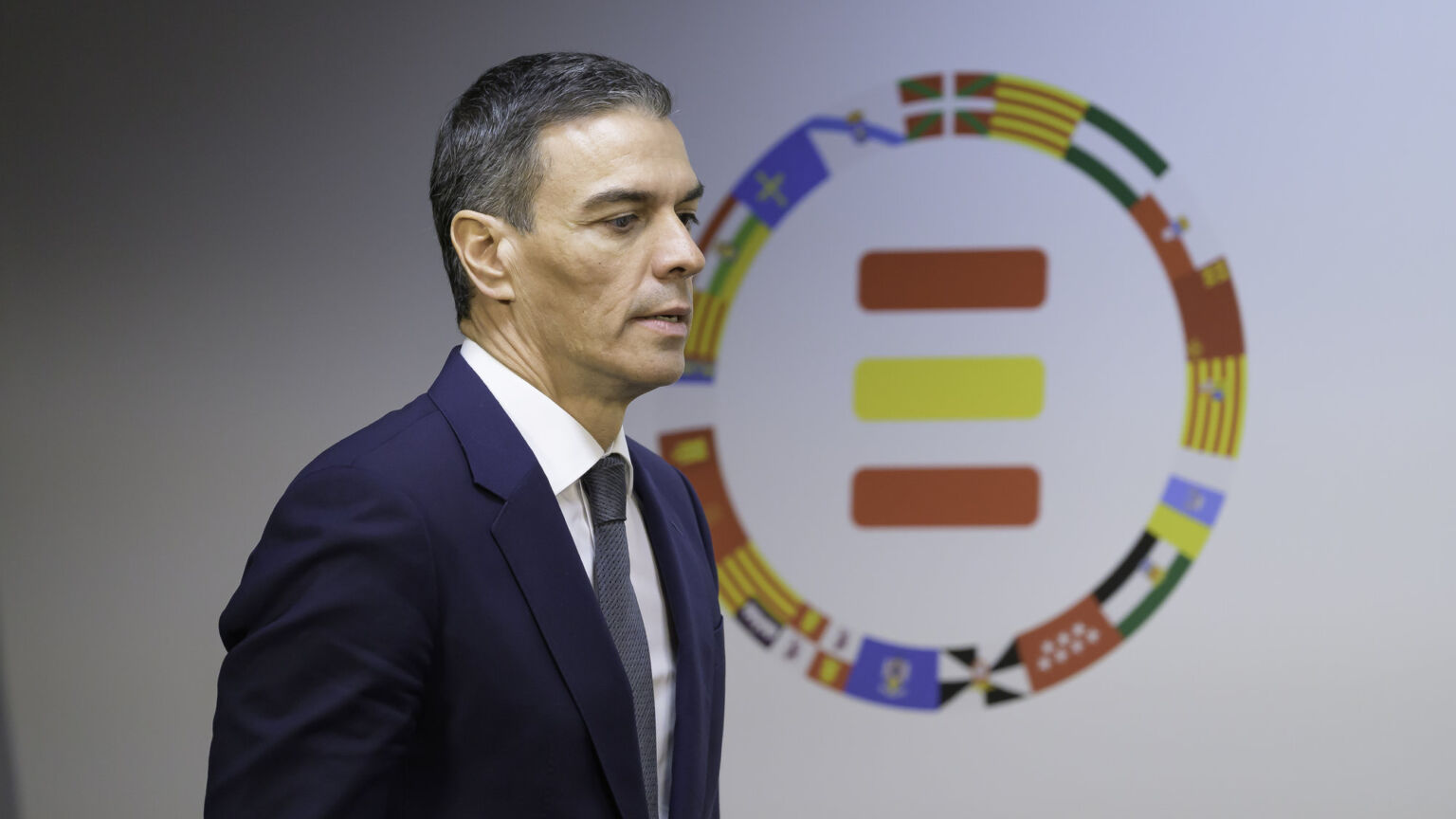
Yet even as the last crisis continues to roil Europe, even as voters across the continent are loudly demanding control over their nations’ borders, it seems we may be about to see something similar play out all over again. This time, it’s the Spanish prime minister, Pedro Sánchez, who has flung open his nation’s – and by extension Europe’s – borders, defying democracy and common sense in the process.
Last week, Sánchez used a royal decree to bypass parliament to hand legal residency status to hundreds of thousands of illegal migrants. Migrants who can prove they have lived in Spain for at least five months, and arrived before the end of last year, will be able to regularise their status. The government expects that 500,000 of the 840,000 illegal migrants it estimates are already living in Spain will apply for the amnesty, which will run between April and June. Other analysts, including those supportive of the move, suggest the number could be significantly higher.
Who is allowed to enter Spain and why ought to be a simple matter of Spanish sovereignty. But as Spain is a member of the European Union, decisions made in Madrid can suddenly matter in Malmo or Marseille. Indeed, once issued with residency cards by the Spanish government, any newly regularised migrant will enjoy freedom of movement across the EU’s Schengen area, which allows for passport-free travel across 29 signatory states (Ireland and Cyprus are exempt, while some non-EU countries are part of the border-free zone). This is why Sánchez’s shock announcement could be another Merkel moment for Europe: one leader’s decision to open the borders could easily ripple across the continent.
Even domestically, Sánchez’s gambit can hardly be said to be democratic. A public petition for an amnesty may have drawn the support of the Catholic church, trade unions and a host of charities and NGOs, but the broader public is unlikely to consent. According to the Spanish research institute, Centro de Investigaciones Sociológicas, immigration is set to be the No1 concern for voters at the next General Election, which is likely to be held next year.
Immigration was also a major factor at the last election. In 2023, Sánchez’s party, the centre-left PSOE, actually won fewer seats than its centre-right rival, the PP, which campaigned for tighter border controls. Nevertheless, Sánchez managed to cling on to power, cobbling together enough support from smaller leftist groupings and parties to form a coalition that governs as a minority. Even this has still not been enough to pass key legislation – his government has not managed to pass a budget since 2022, and did not even bother drafting one last year. Hence, his decision to bypass parliament entirely – imposing his migration policy undemocratically, using a royal decree.
Sánchez is well aware of the backlash he is potentially courting, but he is also betting that the impact of his reforms will be far less than his opponents fear. His defenders point out that this isn’t the first time Spain has granted amnesty to illegal migrants – it also did so in 1986 and 2005. The sky didn’t fall in, they say. Others note that a large proportion of migrants to Spain – both legal and illegal – are from Latin America. They arrive speaking Spanish and from relatively similar cultures, making assimilation far easier. This may also mean they’ll have little interest in migrating beyond Spain, to parts of Europe where they don’t speak the language, even if they are given the right to.

But that is far from the full picture. The Spanish government had already aimed to regularise 300,000 undocumented migrants per year until the end of its term. In November, a bill was passed that will cut the time needed for migrants to obtain residence permits and will extend the duration of visas for foreign job seekers. Indeed, even before last week, the Spanish government was regularly earning plaudits from the international media for its open-door approach.
What’s more, the migration that has been fuelling public alarm is not that from Latin America, but from northern Africa and the Middle East, which would also be covered by Sánchez’s plan. People smuggling from those parts of the world, via the Canary Islands or the African enclave of Ceuta, has become a booming industry. In 2024, around 64,000 migrants were trafficked into Spanish territory, a jump of 12.5 per cent on the previous year. Yet rather than cracking down on this illegal trade, the government is effectively rewarding it with an automatic path to residency.
Tragically, public anger at the government has, at times, boiled over into something far uglier. Last year, the small town of Torre Pacheco in southern Spain was rocked by days of violent unrest, after a pensioner was filmed being beaten by a group of men of North African origin. This was a small town, whose population had doubled in the past 30 years. A third of its residents are now foreign born, and half of those migrants are Moroccan. Spain is already experiencing demographic change at breakneck speed, in ways which are clearly making integration harder and adding to social tensions.
Pedro Sánchez’s plan has widely been portrayed as a huge gamble – as an attempt to appeal to a small but noisy activist left, which may prove key to him retaining power. But he is not just gambling with his own future. He’s gambling with Europe’s, too. Even as voters across the continent are pushing back against limitless mass migration, their demands and aspirations could be thwarted by one man they have no power over. Rarely has the disconnect between the demos and the anti-borders elites been so starkly illustrated.

Fraser Myers is deputy editor at spiked and host of the spiked podcast. Follow him on X: @FraserMyers.
You’ve hit your monthly free article limit.
Support spiked and get unlimited access.
Support spiked and get unlimited access
spiked is funded by readers like you. Only 0.1% of regular readers currently support us. If just 1% did, we could grow our team and step up the fight for free speech and democracy.
Become a spiked supporter and enjoy unlimited, ad-free access, bonus content and exclusive events – while helping to keep independent journalism alive.
Monthly support makes the biggest difference. Thank you.




Comments
Want to join the conversation?
Only spiked supporters and patrons, who donate regularly to us, can comment on our articles.