Why has Xi gone nuclear on his most senior generals?
The purge of Zhang Youxia and other military leaders suggests Xi may be fearful of losing his grip on power.
Want unlimited, ad-free access? Become a spiked supporter.
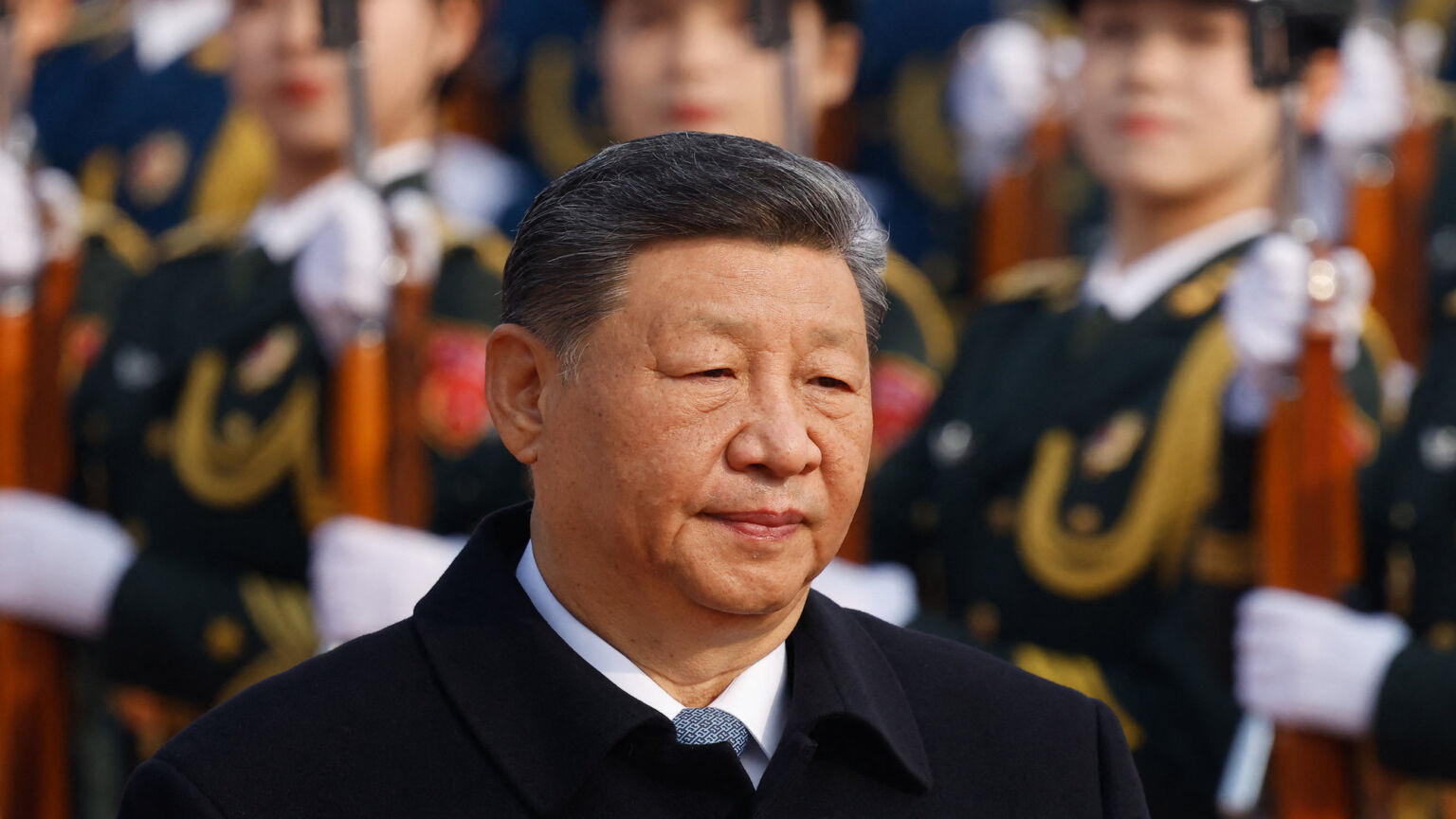
More heads than usual are rolling in China’s two-million-strong People’s Liberation Army (PLA). As has been widely reported, Chinese president Xi Jinping last week arrested his top general, Zhang Youxia. Liu Zhenli, the army’s chief of staff, was also taken into custody.
What is remarkable about this purge is not only the seniority of those it has claimed. It’s also that the charges go further than the usual allegations of corruption or bribery so often levelled at those out of the regime’s favour or seen as growing too powerful. Indeed, they include the much graver accusation of ‘serious violations of discipline and law’, which in CCP-speak is code for undermining the very regime itself. Most explosive of all, Zhang has even been accused of leaking nuclear secrets to America.
Before the dramatic events of last week, Zhang was considered to be untouchable, and nearly as powerful as President Xi himself. Zhang is a war hero with ‘princeling’ status, owing to the fact that his father was Communist general in the Chinese Civil War. He is part of Xi’s generation, and for decades has been a trusted intimate of the president.
Zhang was also number two to Xi in the all-powerful Central Military Commission (CMC). As one of the few Chinese generals to have fought in a real war (the Sino-Vietnamese War of 1979), he has been a central pillar in the Chinese military. The seriousness of his arrest can hardly be overstated.
Nobody in the upper echelons of the PLA can now feel safe. Indeed, more ructions among China’s generals and in the Chinese Communist Party (CCP) look likely to follow. Since Zhang’s detention, it has been announced that two other senior party members are also under investigation. Apart from Xi, only one member of the traditionally seven-man CMC remains. Its military command has been gutted.
It is all very serious, then. But how has this turn of events come about? At one level, it is fruitless to try to apply the old Cold War art of Kremlinology to Beijing. Penetrating the inner machinations of the Chinese leadership is notoriously difficult. Yet, if we rise above the personal feuds and take a longer and broader view, a clearer picture begins to emerge.
Xi’s campaign against corruption goes back a long way. After taking office in 2012, he made anti-corruption a defining mission. Caught in his net were hundreds of officials not just in the PLA, but also senior members of the CCP and businessmen involved in state-owned enterprises. With the arrests of Zhang and Liu, it is clear that Xi has still not got the clean sheet of ultra-loyal, PLA yes-men he would like.

It’s been evident for a while that the purges know few limits. Last year, they claimed Miao Hua – a navy admiral, member of the CMC and long-term protégé of Xi’s. In 2023, Xi arrested two generals in charge of the PLA’s missile force, Li Yuchao and Liu Guangbin. Between them, they were responsible for the world’s biggest fleet of land-based ballistic missiles.
Yet, for all their relentlessness, these purges do not compare with the downfall of Zhang Youxia. In fact, there’s been nothing like this since 1989, when general Xu Qinxian was jailed after he defied orders to lead troops against Tiananmen Square protesters. Even that was not as significant as Zhang’s incarceration last week.
There may be a reason for this. Experts have speculated that Zhang was plotting a coup against Xi, and had sent more than 100 soldiers to Xi’s hotel in western Beijing to arrest him. Xi, according to reports, was alerted to the threat. Members of Xi’s Central Guards Bureau ambushed Zhang’s troops and defeated them in a gunfight that killed dozens.
Like all accounts of Zhang’s downfall, this must be taken with more than a pinch of salt. However, it isn’t necessary to believe all of it to recognise the scale of problems now afflicting Xi.

On paper, the Chinese economy looks to be going gangbusters. Its AI company, DeepSeek, has recorded extraordinary results with limited investment compared with Western counterparts. China has upped local production of chipmaking equipment from 10 per cent of global supply three years ago to up to 30 per cent today. It is also building infrastructure at pace, something the West no longer seems able to do. In May, China is set to open the giant Pinglu Canal, a $10 billion waterway that, by linking freighters in its interior heartlands to south-east Asia, will allow Beijing to speed up the diversification of its exports, away from the US and Donald Trump’s tariff regime.
Yet as I noted on spiked in 2024, serious doubts persist about the economic prowess on which so much of Xi’s standing depends. Joblessness among 16- to 24-year-olds has long been high, currently running at around 17 per cent, a source of significant tension. Xi is also facing increasing unease about his Taiwan policy.
Despite its ever-tightening encirclement of Taiwan, the PLA may be in no position to invade by Xi’s public deadline of 2027, thanks to the military’s manifest defects. Given the political capital Xi has invested in Chinese reunification, this is a real blow. This may be another explanation as to why he concluded that Zhang had to go.
Xi is caught between a rock and a hard place. If his promises to annex Taiwan come to nothing, he will be discredited. At the same time, the CCP regards the Taiwanese as Chinese – so what would killing millions of them, even in a successful battle, do for Xi’s image? Lastly, any war between China and the US over Taiwan is likely to involve Japan and South Korea, where tens of thousands of US troops are based. Indeed, despite the historic animosity toward each other, Japan and South Korea have begun to move toward greater cooperation in military matters.
The downfall of Zhang Youxia suggests that Xi is worried. It reveals that both the Chinese military and his own position are far weaker than they had previously appeared. Only time will tell whether the consequences will be global.
James Woudhuysen is visiting professor of forecasting and innovation at London South Bank University. He tweets at @jameswoudhuysen.
You’ve hit your monthly free article limit.
Support spiked and get unlimited access.
Support spiked and get unlimited access
spiked is funded by readers like you. Only 0.1% of regular readers currently support us. If just 1% did, we could grow our team and step up the fight for free speech and democracy.
Become a spiked supporter and enjoy unlimited, ad-free access, bonus content and exclusive events – while helping to keep independent journalism alive.
Monthly support makes the biggest difference. Thank you.

Comments
Want to join the conversation?
Only spiked supporters and patrons, who donate regularly to us, can comment on our articles.