Why class must not become a ‘protected characteristic’
Working-class people ought to reject the victim identity that the elites are keen to assign to them.
Want unlimited, ad-free access? Become a spiked supporter.
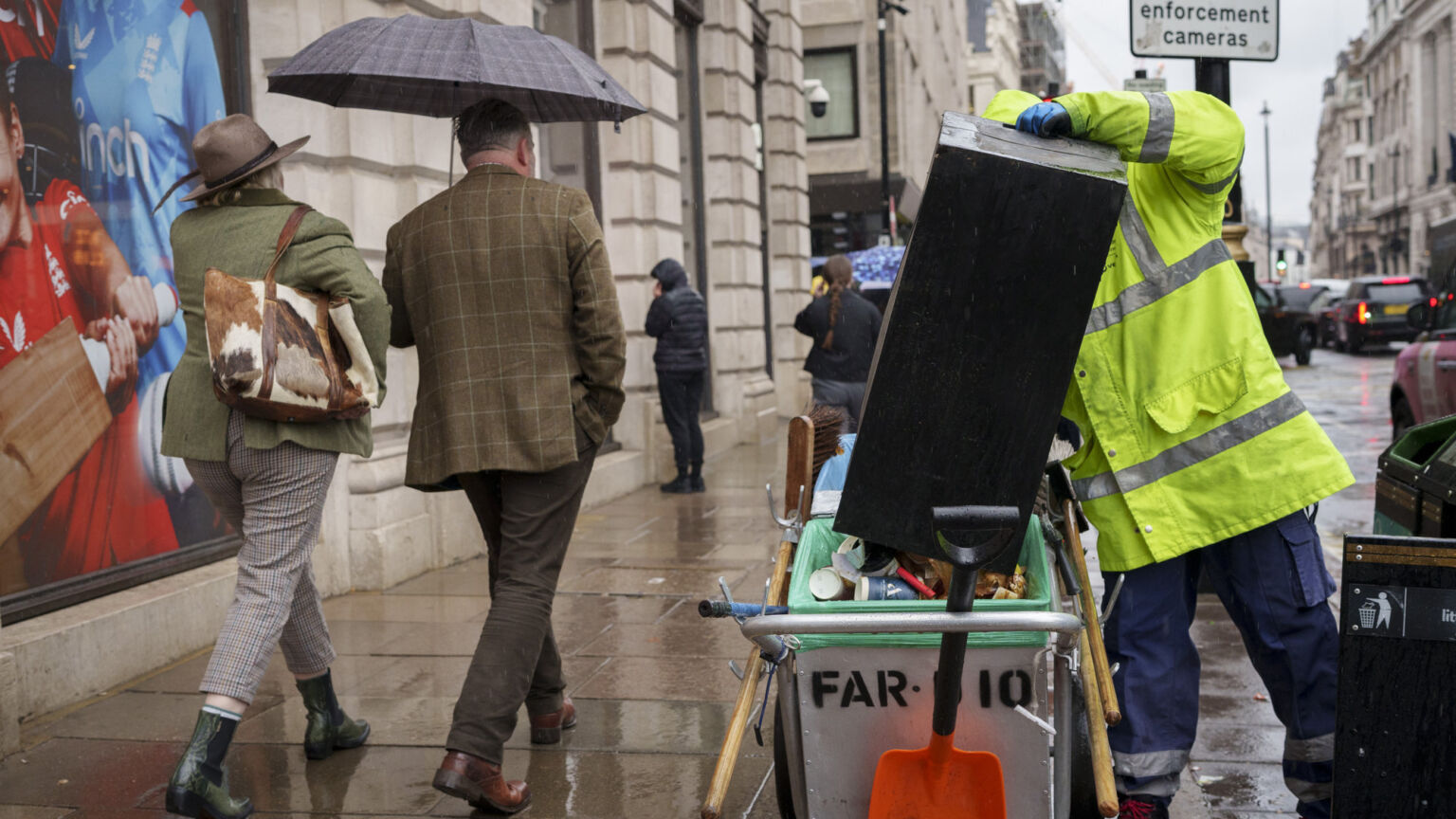
There is a new push to make social class a ‘protected characteristic’ under UK law. A report by Manchester organisation Class Ceiling has claimed that ‘more than 50 per cent’ of respondents who worked in the arts said they had been discriminated against on the basis of their background – treatment that involved ‘harassment’ and ‘bias’. The Trade Union Congress, Co-op and University of Manchester chancellor Nazir Afsal – who led the report – have called for class to become the 10th protected characteristic under the 2010 Equality Act.
The report certainly paints a bleak picture. It describes working-class people who have been called ‘thick’ and ‘poor’, who were ‘laughed at’ because of their accents. Classism, it seems, remains one of the few last ‘acceptable’ prejudices in modern Britain. But we should nevertheless be wary of demands for protections under equality law.
The argument that class should be a protected characteristic has been around for some time. A 2024 report by Creative Access and FleishmanHillard UK argued that the arts world is too posh and that people of working-class origins should enjoy what would, in effect, amount to a form of positive discrimination. The authors call for ‘urgent radical reform in the creative industries’. Like other policies introduced to promote diversity, the Creative Access proposal demands that people from working-class origins be treated according to a special standard.
The legal definition of a protected characteristic is provided by the Equality Act, which makes it illegal to discriminate against certain people on the basis of things such as race and sex. In fact, the act encompasses nine areas: age, disability, gender reassignment, marriage and civil partnership, pregnancy and maternity, race, religion or belief, sex, and sexual orientation.
The justification for special treatment based on those protected personal attributes is that these are historically linked to prejudice, discrimination and systemic disadvantage. Regrettably, prejudice and discrimination are, by definition, subjective acts that are difficult to capture legally. This means that decisions taken by courts and tribunals rest heavily on the feelings and testimony of the person who believes they have been discriminated against. Increasingly, such claims are made on the grounds of ‘unconscious bias’, which can only ever be in the eye of the beholder.
Another problem with the institutionalisation of protected characteristics – and arguably the biggest – is that it cultivates a sense of vulnerability. It endows those with protected characteristics with a victim identity. Invariably, they begin to see the world through the lens of victims and oppressors.
The victim plays a central role in contemporary Western society. Almost nobody is prepared to question the claims made either by a ‘victim’ or on his or her behalf. Victim movements possess unquestioned moral authority. Victimhood and suffering provide a warrant for public recognition and special treatment. That is why public figures of all shades of political opinion are keen to associate themselves with victims – it is a proxy for moral integrity.
Inevitably, victim culture has spread like wildfire. In recent years, we have witnessed ever more groups demanding to be admitted into the protected-characteristic family. Carers UK campaigns for unpaid caring responsibilities to become a 10th protected characteristic. There are demands to make menopause a standalone protected characteristic. In 2024, the Scottish Green Party argued that women, despite already being protected against sex discrimination, should get additional protections under the Equality Act whenever they are on their period.
Other activists, including those involved in the World Afro Day campaign, have urged the UK to make afro hair a protected characteristic, to prevent hair-based discrimination in schools and workplaces. Labour MP Paulette Hamilton and singer Mel B are among prominent black Britons urging parliament to make the UK the first Western country to introduce a law explicitly ending afro-hair discrimination.
It is a sign of the times that there is so little pushback against the concept of protected characteristics, even as it quite clearly cuts against the grain of democratic ideals like equality before the law and equality of opportunity. Once, it was assumed that citizens should enjoy the same rights regardless of identity. Today, we increasingly have two categories of citizen: those who are ‘protected’ and those who are not.
What’s more, there is now considerable evidence that the rise of victim culture is having the opposite effect of what its advocates intend. An atomised public feels more alienated and powerless, rather than empowered, by their armour of protected characteristics. Relations between groups are made more fractious, rather than harmonious.
The quest for victim status has been one of the most pernicious consequences of identity politics. When ‘oppressors’ are said to be everywhere, it becomes all too easy to conclude that we all need to be protected. Almost imperceptibly, the ethos of child protection has enveloped adulthood. We are all ultimately infantilised.
Frank Furedi is the executive director of the think-tank, MCC-Brussels.
£1 a month for 3 months
You’ve hit your monthly free article limit.
Support spiked and get unlimited access.
Support spiked – £1 a month for 3 months
spiked is funded by readers like you. Only 0.1% of regular readers currently support us. If just 1% did, we could grow our team and step up the fight for free speech and democracy.
Become a spiked supporter and enjoy unlimited, ad-free access, bonus content and exclusive events – while helping to keep independent journalism alive.
———————————————————————————————————————————–
Exclusive January offer: join today for £1 a month for 3 months. Then £5 a month, cancel anytime.
———————————————————————————————————————————–
Monthly support makes the biggest difference. Thank you.


Comments
Want to join the conversation?
Only spiked supporters and patrons, who donate regularly to us, can comment on our articles.