Brigitte Bardot: from sex kitten to speechcriminal
She broke free of the jail of bourgeois morality only to be re-muzzled by the hate-speech regime.
Want unlimited, ad-free access? Become a spiked supporter.
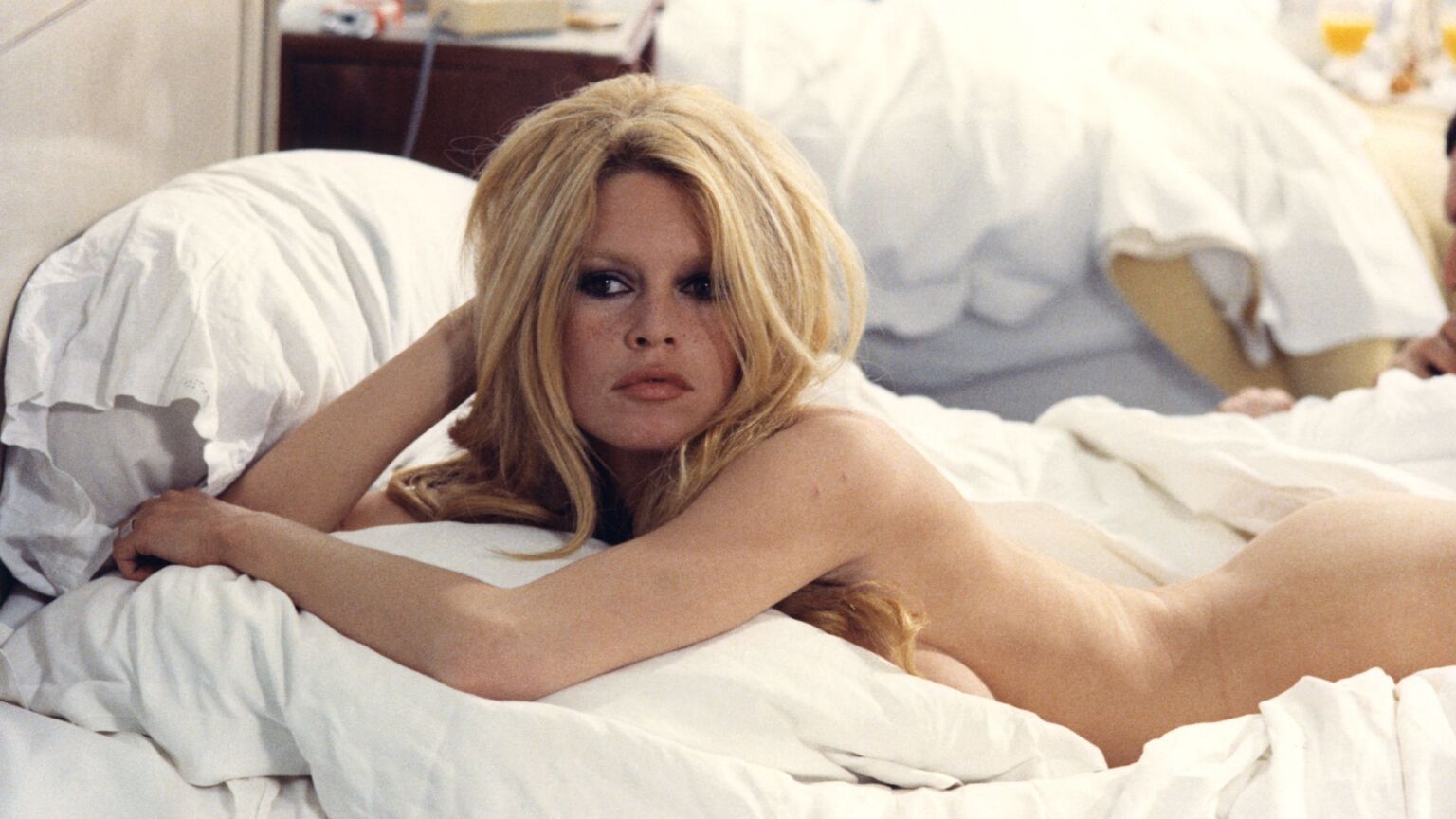
Brigitte Bardot – sex kitten, movie star, speechcriminal – has died. Her life was long – 91 years – and well-lived. She was the first sex symbol and the last truly free Frenchwoman. With her body, she outraged the censors of the 1950s, and with her mind the censors of the 2000s. She dragged the West by the scruff of its neck into the era of sexual liberation, only to find herself re-muzzled by the hate-speech police 50 years later. Through it all she was an icon of self-government, the Fifth Republic made flesh.
‘She was worse than beautiful: she was free’, writes Agnès Poirier. It’s her beauty people remember. ‘Her ass is a song’, says a bus passenger in And God Created Woman (1956) as Bardot walks by. Who writes lines like that now? It was her breakthrough role, and the directorial debut of her then husband, Roger Vadim. She played Juliette, a voluptuous teenage orphan in Saint-Tropez who rode a bike, sunbathed nude and didn’t give a fuck about older people’s opinions. Seventy years on, it still feels scandalous.
She became an overnight sensation. Vadim summed up her screen style – ‘She doesn’t act, she exists’. That existence was enough to outrage the stiffs of the Fifties. The eyes of the French film censors ‘began to fill with fog and outrage’ when they glimpsed the tousle-haired temptress. Such a creature had never been seen on screen before. In America, too, the ‘Countess of Come-Hither’, as Time christened her, startled the powerful. In 1958, the assistant district attorney of Philadelphia banned And God Created Woman on grounds of obscenity. The state supreme court overruled him, reprimanding him for ‘overstepping his jurisdiction’. Bardot-ism was winning.
That film catapulted her into a kind of fame it’s hard to imagine now. It shook Hollywood, where actresses and their public personas were then tightly controlled by the studio system. It revolutionised the cultural depiction of women. She showed that ‘a woman could live as freely as a man without being labelled a whore’, says Poirier. She was going bra-less long before women in America burnt theirs. She embodied an ‘unapologetic sexual and moral freedom’ a decade before these new liberties swept the West. Not for nothing did Simone de Beauvoir call her a ‘locomotive of women’s history’.
She made nearly 50 films, and cut albums too. She duetted with Serge Gainsbourg on his brilliant howling death-ballad, ‘Bonnie and Clyde’. But she grew weary of fame. She felt imprisoned by the sex-bomb shtick. So she jacked it all in for her true love – animal welfare. She went from sex kitten to irascible agitator for animal rights. And surely it is the right of every woman of a certain age to be irascible, if she so chooses?
This led to her second great clash with the self-styled guardians of morality. Only this time Bardot-ism came out the worst. Where her youthful pouting against social convention won out against the men in suits who were clinging by their nicotine-stained fingernails to the prim moralism of the Fifties, her middle-aged rage against minority groups that mistreat animals was not so fortunate. She was dragged to court, charged and convicted, and fined thousands of euros, this time not for outraging public decency, but for hurting Muslims’ feelings. The bourgeois morality of the Fifties didn’t get her, but the neo-blasphemy laws of our era did.
She said bigoted things, there’s no question of that. Under France’s strict laws on inciting hatred against racial or religious groups, she was fined €15,000 for a 2006 letter to Nicolas Sarkozy – then the interior minister, later the president – in which she fumed over Muslims’ slaughter of sheep during Eid ul-Adha (Festival of Sacrifice). ‘I’m sick of being led by the nose by this whole population which is… destroying our country by imposing their ways’, she said. Oof. She’d earlier been fined for lamenting the ‘Islamisation’ of France and for calling Muslim migrants ‘invaders’. She went from the coquettish girl of every teen boy’s dreams to a kind of Houellebecqian Miss Havisham.

Yet the fining of her for giving voice to her tempestuous views on Islam was as outrageous as the failed efforts to shroud her temptress body. One mob wanted to cloak her devilish flesh, the other to gag her outré utterances. ‘Silence, woman!’, was the cry of both the trad authoritarians of the Fifties and the woke authoritarians of the 2000s. Yes, her comments confirmed that love of animals can curdle into wariness of human beings, and in some cases into suspicion of foreigners, whether sheep-sacrificing Arabs or whale-hunting ‘Japs’. But there’s this thing, you might have heard of it, it’s called freedom of speech.
One of the ‘progressive’ outfits that sued Bardot for ‘hate speech’ – the Movement Against Racism – gloated when she was convicted. ‘Islamophobia’, it said, ‘is a crime, not an opinion’. That’s a far more scandalous statement than any uttered by Bardot. It should never be a crime to mock a religion or its adherents. Revolutionary France abolished blasphemy way back in 1791. Modern France has effectively rehabilitated it under the guise of tackling ‘hate’. I’m sure the French revolutionaries in their cravats and pantaloons would have been startled by Bardot’s bike-riding nymphet in And God Created Woman – but they’d have been far more outraged by her later public shaming for blasphemy.
In 1967, Charles de Gaulle, then president of France, chose Bardot to be the new face of Marianne, the breast-baring, flag-waving female symbol of the French Revolution. Busts of Bardot’s likeness were erected in every town hall in France. She became France. Nothing better captures the crisis of liberty in the French republic, and across modern Europe, than the fact that Marianne herself, the face of French Enlightenment with a twist of Bardot’s beauty, was being grilled in court for daring to talk shit about religion. Robespierre rolls in his grave.
Bardot was branded a fascist for her flirtation with far-right parties like Front National (now the National Rally). In truth, all she cared about was animals. She once reached out to legendary leftist Jean-Luc Melenchon, ‘congratulating him for being a vegetarian’ and saying she would happily vote for a communist if he took up her animal-welfare proposals. Some French leftists cheered her death – ‘the death of a fascist’ – yet as her biographer Marie-Dominique Lelièvre says, she was politically undefinable. ‘Bardot is Bardot, she defies definition.’
She was herself, from beginning to end. ‘[Her] sense of freedom was absolute’, says Poirier, whether she was strutting with that song-like ass on the streets of Saint-Tropez or laying into Islam seven decades later. The tributes to her feel tortured. ‘The uncomfortable truth about Brigitte Bardot’ is the headline in one countercultural mag. The uncomfortable truth is that it was you who changed, not her. It was you who ditched the old liberal belief that a woman should live and speak as she sees fit, free from public shaming. Bardot didn’t flinch. She refused to hide either her body or her views. It matters not one jot whether you were offended by her or in love with her – there’s something stirring in such steadfastness. RIP, Brigitte.
Brendan O’Neill is spiked’s chief political writer and host of the spiked podcast, The Brendan O’Neill Show. Subscribe to the podcast here. His latest book – After the Pogrom: 7 October, Israel and the Crisis of Civilisation – is available to order on Amazon UK and Amazon US now. And find Brendan on Instagram: @burntoakboy.
You’ve hit your monthly free article limit.
Support spiked and get unlimited access.
Support spiked and get unlimited access
spiked is funded by readers like you. Only 0.1% of regular readers currently support us. If just 1% did, we could grow our team and step up the fight for free speech and democracy.
Become a spiked supporter and enjoy unlimited, ad-free access, bonus content and exclusive events – while helping to keep independent journalism alive.
Monthly support makes the biggest difference. Thank you.





Comments
Want to join the conversation?
Only spiked supporters and patrons, who donate regularly to us, can comment on our articles.