Is Reform about to shatter the uniparty?
A populist yearning for change is transforming Britain's political landscape.

Want unlimited, ad-free access? Become a spiked supporter.
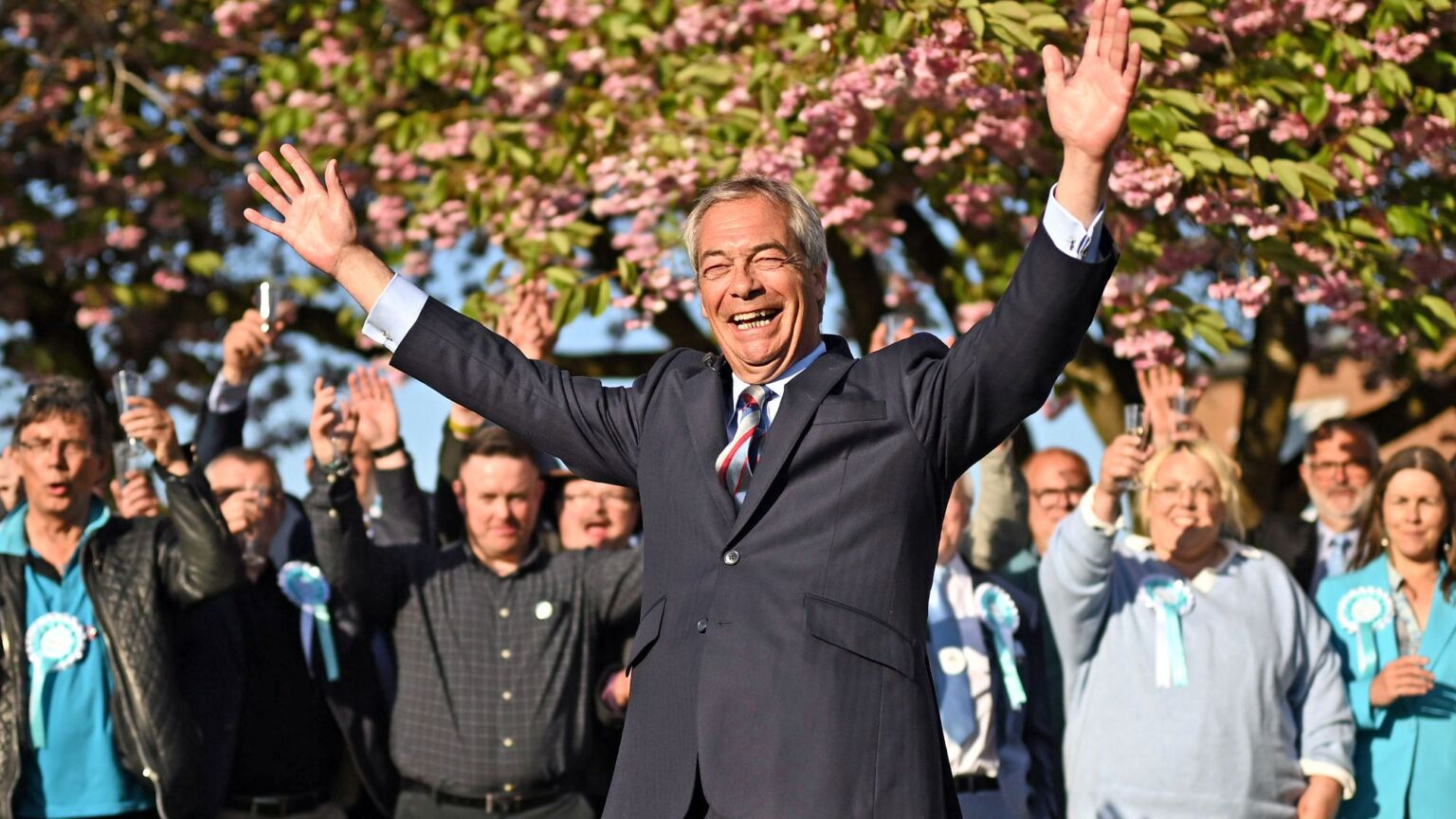
This year, we have seen the unravelling of the UK’s legacy political parties and the emergence of Reform UK as a credible contender to win the next General Election.
This is not a flash in the pan. Reform has consistently led in the polls for much of 2025. It may have been level-pegging with Labour and the Tories at the start of the year, but since May’s stunning local-elections success, where it won control of 10 local authorities in England, Reform has been regularly polling in the lead at around or above 30 per cent. Meanwhile, Labour and the Tories have been trailing way behind, often polling at below 20 per cent.
Reform has consolidated its local-elections performance with successes in recent council by-elections. In November, it won control of Chapel St Leonard’s in Lincolnshire from the Tories, and took Hetton in Sunderland from Labour. This month, it won in Middlesborough, taking Nunthorpe off the Lib Dems.
Reform’s unflagging momentum has recently prompted the Labour government to delay four new mayoral elections, pushing them back from next year until 2028. Labour may have officially blamed the decision, taken earlier this month, on the need to reorganise local government in the areas in question. But the real reason is clear enough – Labour knows that Reform would probably win in every single one of the four mayoral races. This was a desperate act of a legacy political order under threat.
This turn against the Tory-Labour duopoly has been a long time coming. Ever since the public voted to leave the EU in 2016, against the wishes of the entire establishment, it has been clear that there is a widespread appetite for a populist challenge to the status quo. In many ways, then, Reform owes its success less to the efforts of the party itself – or even to the performance of its leader, Nigel Farage – than to this widespread, popular demand for change. A lot of people have been yearning for a movement that finally gives them a voice.
While I was interviewing Reform voters in Kent recently, it became clear many of them had not made a strong emotional investment in the party. They were hopeful that Reform would stand up for them. But at this stage, their loyalty was far from assured. Reform has still to earn their commitment and trust.
The rise of Reform in the UK is mirrored by the rise of other populist parties across Europe. These European parties likewise give voice to concerns that the legacy parties demonise, reject or ignore. This pattern of populist success is evident in many European nations, from Portugal to Austria to Germany to France to Italy.
The rise of populist parties in Europe and the West more broadly is clearly fuelled by a pre-existing public hunger for change. As a survey carried out by the Timbro Authoritarian Populism Index 2024 concludes: ‘Populist parties have grown in tandem with an increasing demand for their ideas – on immigration, Europe, multiculturalism, globalisation.’

Unlike left-wing protest movements, these national-populist parties are responding not just to an issue of social or economic injustice, but also to a broader demand for a people’s values and way of life to be respected and affirmed. People want their voices to be heard, they want sovereignty and, above all, they want control, particularly in relation to matters of culture.
People’s experience of cultural loss, amid mass migration, multiculturalist policymaking and the elite devaluation of the nation, has played a key role in the rise of populism. That’s why, right at the heart of the populist revolt, is a call for community solidarity and a connection with the traditions of the past.
It is important to note that there is no guarantee that Reform or any of the other challenger parties will convert the public yearning for change into a winning movement or a successful governing programme. In the UK, Reform faces a powerful and increasingly intolerant centrist opposition in politics and the media. Indeed, in an attempt to survive the challenge posed by Reform, the legacy parties and their outriders are uniting against them. They are prepared not just to form opportunist tactical alliances at election time to keep Reform out of power. They are also willing to use state power to keep Farage’s party down. The government’s postponement of mayoral elections provides a foretaste of what’s to come.
But the opportunity is there for Reform. It needs to consolidate its support base, professionalise its party machinery and develop policies and a communication strategy capable of inspiring the majority of citizens. Perhaps then it really will be capable of becoming a genuine party of the people.

Frank Furedi is the executive director of the think-tank, MCC-Brussels.
£1 a month for 3 months
You’ve hit your monthly free article limit.
Support spiked and get unlimited access.
Support spiked – £1 a month for 3 months
spiked is funded by readers like you. Only 0.1% of regular readers currently support us. If just 1% did, we could grow our team and step up the fight for free speech and democracy.
Become a spiked supporter and enjoy unlimited, ad-free access, bonus content and exclusive events – while helping to keep independent journalism alive.
———————————————————————————————————————————–
Exclusive January offer: join today for £1 a month for 3 months. Then £5 a month, cancel anytime.
———————————————————————————————————————————–
Monthly support makes the biggest difference. Thank you.






Comments
Want to join the conversation?
Only spiked supporters and patrons, who donate regularly to us, can comment on our articles.