Terror now stalks Germany’s Christmas markets
Islamists are waging a low-level holy war against ordinary Germans and their traditions.
Want unlimited, ad-free access? Become a spiked supporter.
The ‘fact checkers’ have been busy in Germany. For weeks, they have been working overtime to dismiss claims about the slow death of the German Christmas market. ‘No, Christmas markets are not being cancelled en masse’, writes the fact-checking team at public broadcaster ZDF. Another ZDF article warns that ‘fake news about Christmas markets is going viral’. The message is clear: move along, nothing to see here.
Yet many ordinary Germans see things differently. While millions still visit Christmas markets, a recent YouGov survey tells a less comforting story. Around 62 per cent of respondents said they worry about their safety at Christmas markets – 22 per cent are very worried, 40 per cent slightly worried.
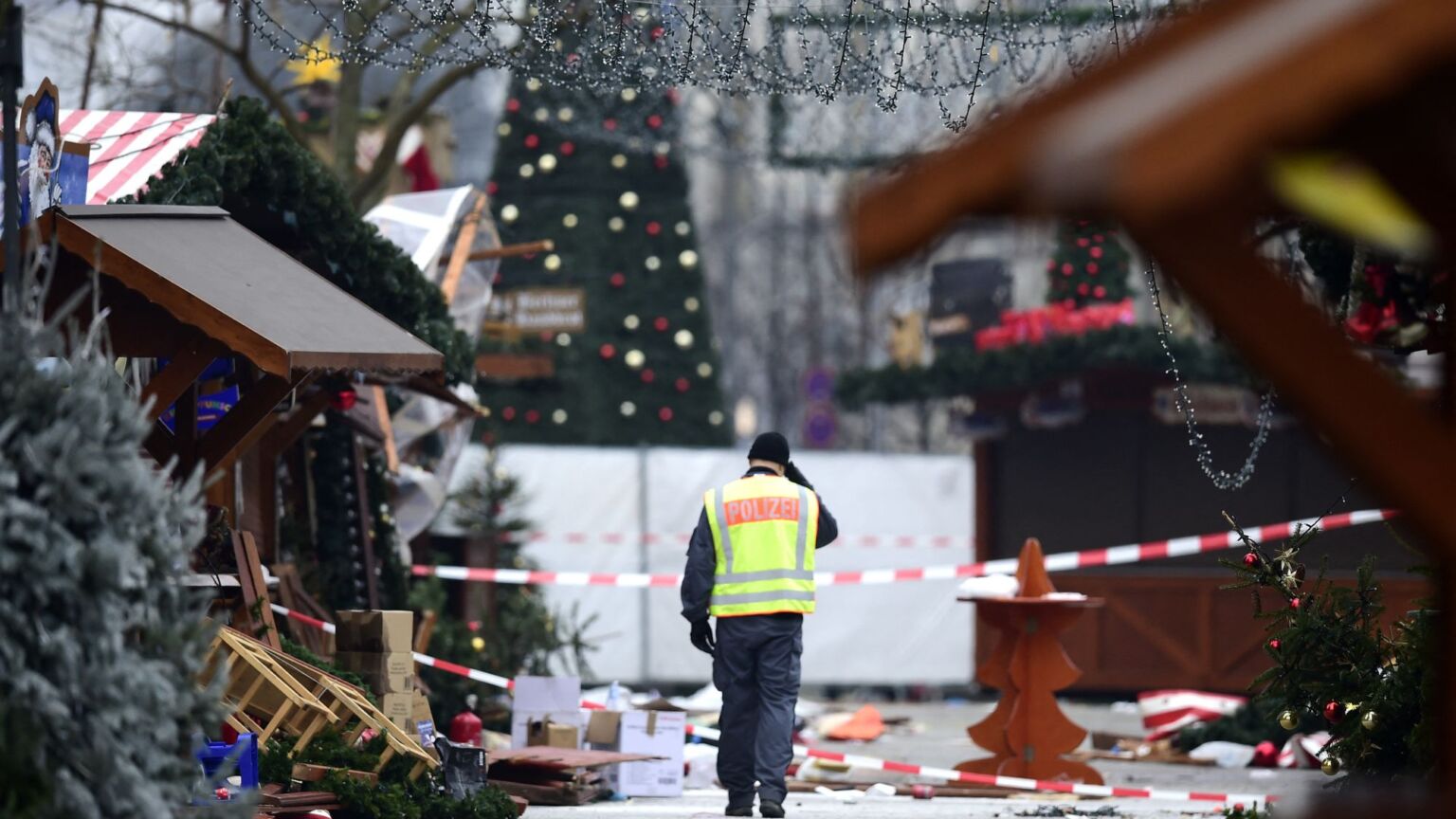
These fears are not unfounded. In recent weeks alone, German police have arrested several alleged Islamist terrorists accused of planning attacks on Christmas markets. In Bavaria, five men – three Moroccans, an Egyptian and a Syrian – were arrested for planning an Islamist-motivated vehicle attack on a market in the Dingolfing-Landau area. On the same day, a 21-year-old from Central Asia was arrested in Magdeburg for planning a similar attack.
Nor are these isolated incidents. In 2023, an Iraqi man allegedly planned a knife attack on the Hanover Christmas market. In November last year, a 17-year-old Islamist was arrested near Hamburg, with a Christmas market among his suspected targets. The pattern is unmistakable.
There have also been real, deadly attacks that were not stopped in time. In Berlin in 2016 and in Magdeburg last year, Christmas markets were hit by terrorist violence committed by migrants from the Middle East. Together, those attacks killed 19 people and severely injured more than 200.
‘You love life, we love death’ – a phrase the French scholar Olivier Roy uses to describe the worldview of radical Islamists – captures the logic behind these attacks. Christmas markets have become symbolic targets in what can only be described as a form of holy war against ordinary people: families, couples, colleagues and friends enjoying a tradition with deep historical roots.
Yet authorities and much of the political and media elite have tried to downplay the scale and meaning of this threat. Anyone who raises the issue risks being branded a far-right ‘Islamophobe’. As the failed attempts to ‘fact check’ the public’s fears show, denial has become the preferred response.

There is another irony in this debate. It is not only terrorists who have sought to undermine Christmas markets. For decades, the traditional Christmas market has also been despised by sections of the cultural and political elite. Multiculturalists, environmental activists and lifestyle moralists have long treated it as something vulgar or backward – a ‘dodgy’ tradition enjoyed by the ‘wrong’ kind of people.
The criticisms are familiar: they feature too much drinking, too much meat, too much waste, too much carbon. Or worse, the markets are said to be too ‘German’, too rooted in old traditions. In short, Germany’s green-left elite has often treated Christmas markets as something in need of reforming, taming or replacing.
A recent example illustrates this mindset well. Der Spiegel published a comment piece last month titled ‘Christmas markets are hell’, illustrated – almost cynically – with an image of Berlin’s Memorial Church, the site of the deadliest Islamist attack on a Christmas market so far. The author describes Christmas markets as ‘kitschy, gluttonous, drunken carnivals’.
This attitude is even reflected in local government. In Potsdam, just outside of Berlin, members of the Green Party and their allies demanded that an ‘expert committee’ take control of the local Christmas market to ensure it is sufficiently ‘sustainable’ and ‘inclusive’.
This criticism is particularly striking given the current security situation. Notably, there was little outrage from these same circles last year, when thousands of Syrians gathered at the Christmas market in Stuttgart to celebrate the overthrow of the Assad regime by chanting ‘Allahu Akbar’. Once again, fact checkers rushed to dismiss reports of Islamists at Christmas markets as ‘fake news’.
To be fair, the other side of the culture war is not entirely innocent either. Claims that Christmas markets are being widely renamed ‘winter markets’ for reasons of political correctness are exaggerated. In most cases, the explanation is technical: ‘winter markets’ can open before Advent begins.
Still, it would be naive to deny a broader attempt to loosen ties to the Christian tradition. ‘Queer’ and ‘multicultural’ Christmas markets have appeared in several German cities. Though presented as inclusive, they often signal a form of exclusivity of their own, implicitly excluding those ‘normal’ visitors who do not share the elite’s ideological fashions.
None of this suggests a direct link between Islamist terror and elite snobbery. But in both cases there is a barely concealed disdain for ordinary Germans – their habits, pleasures and attachment to tradition.
Many critics of Islamism argue that Christmas markets must be defended as Christian traditions. But that is not the full picture. German Christmas markets have never been purely religious.
Nor have they ever been just about consumerism. Yes, they are critical economic institutions – around 3,000 are held each year – generating billions of euros in revenue and supporting small businesses and craftspeople. Famous markets such as Nuremberg’s Christkindlesmarkt attract tourists from around the world.
But more importantly, they are social spaces. They bring people together during the darkest months of the year. Families visit them, colleagues meet there after work, sports clubs and choirs gather there. They evoke childhood memories and create a sense of belonging.
Elite moralising alone was never a serious threat to Christmas markets. Ordinary people largely ignored it, and the markets thrived anyway, even spreading abroad. In Germany, they are also popular with immigrants – a fact underscored by the migrant backgrounds of some recent terror-attack victims.
What has truly changed their character is terrorism, combined with an elite unwilling to confront the reality of Islamist violence and its failed immigration policy. Concrete blocks, armed police and security guards are now standard features of almost all markets.
Most have still opened this year, though some have been cancelled. Many operate under intense security pressure, with an uncertain future. It says something about public resilience that terrorists have not broken morale completely. If fact checkers are right about one thing, it is that the markets are still full this year. Many visitors seem to be sending a message – not just to elite bores, but also to the Islamists who worship death.
Sabine Beppler-Spahl is spiked’s Germany correspondent.
£1 a month for 3 months
You’ve hit your monthly free article limit.
Support spiked and get unlimited access.
Support spiked – £1 a month for 3 months
spiked is funded by readers like you. Only 0.1% of regular readers currently support us. If just 1% did, we could grow our team and step up the fight for free speech and democracy.
Become a spiked supporter and enjoy unlimited, ad-free access, bonus content and exclusive events – while helping to keep independent journalism alive.
———————————————————————————————————————————–
Exclusive January offer: join today for £1 a month for 3 months. Then £5 a month, cancel anytime.
———————————————————————————————————————————–
Monthly support makes the biggest difference. Thank you.

Comments
Want to join the conversation?
Only spiked supporters and patrons, who donate regularly to us, can comment on our articles.