This talk of imminent war with Russia is deluded and dangerous
The relentless sabre-rattling from Europe’s securocrats is doing nothing to keep us safe.
Want unlimited, ad-free access? Become a spiked supporter.
Another day and another warning to the UK and to Europe that the Russians are coming to get us and that, as a country and a continent, we should be preparing for war.
At the start of this week, the new head of MI6, Blaise Metreweli, and the head of the UK armed forces, Air Chief Marshal Sir Richard Knighton, took to public podiums to sound twin alarms about the threat, as they see it, presented by Russia, and the need for the country to be prepared – including being prepared to lose lives. Last week, a similar warning came from NATO secretary-general Mark Rutte, addressing a meeting in Berlin.
Here’s a flavour of what they had to say. Metreweli made no apology for focussing on Russia, because, as she went on: ‘We all continue to face the menace of an aggressive, expansionist and revisionist Russia, seeking to subjugate Ukraine and harass NATO.’ She accused Russia of ‘testing us in the grey zone’, listing cyberattacks, drones buzzing near airports and bases, ‘state-sponsored’ arson and sabotage, as well as information warfare, all of which added up to Russia ‘exporting chaos’.
The chief of the defence staff said that the threat was more dangerous than he had ever known it, and called for a ‘whole-of-nation response’. Directly countering the view of his predecessor from a year before that ‘the chance of a significant direct attack or invasion by Russia on the UK’ would be ‘remote’, he said that ‘other than proximity’, the threat in the UK ‘isn’t really any different to the threat in Germany’. He warned that we ‘will all have a part to play… [and] if necessary, to fight’, with more families coming to know ‘what sacrifice for our nation means’.
And so to Rutte, who warned: ‘Russia has brought war back to Europe. And we must be prepared for the scale of war our grandparents or great-grandparents endured.’ To prevent this, he said, we need to be crystal clear about the threat. ‘We are Russia’s next target. And we are already in harm’s way.’ What is happening in Ukraine ‘could happen to Allied countries, too’, he said, making it imperative to ‘shift to a wartime mindset’.
Amid all this alarm, we are still not quite at the point where schoolchildren are practising hiding under their desks for fear of a nuclear strike (as many of a certain age may remember from the height of the Cold War). And the British public, for one, seems largely unmoved by this supposedly imminent Russian threat. After all, Russia’s advances in Ukraine have been distinctly limited over the best part of four years. There is a noticeable mismatch between the claims that Russia is too weak to win in Ukraine yet also strong enough to threaten London or Berlin.
Public responses to similar alarms in France and Germany have been – a little – more vocal, though no more cooperative. In France, Knighton’s opposite number, Fabien Mandon, found himself facing a storm of objection when he warned that all of France was at risk if it was not ready ‘to accept losing its children’. In Germany meanwhile, government plans to reintroduce conscription on a voluntary basis have prompted big street protests by young people raised on the evils of militarism and the benefits of peace.
Responses in the UK and Europe have spanned a scale from apathy to opposition (which has been condemned, of course, by those sounding the alarms as reflecting the complacency of the ignorant masses). But one country has certainly been paying attention – and that is Russia. Now it may be that these warnings were directed also at the Russians, as another strand of Western deterrence, although they seemed to be primarily intended for the home audiences.

Whatever the intent, however, the warnings, and calls for a new military readiness on the part of Europeans, are being heard loud and clear in Moscow – which presents a big risk. If, as I would argue, Russia views NATO as a bigger, more powerful enemy poised on its western flank and supporting Ukraine as a proxy, how might it interpret this sort of Western war talk, with all its appeals to citizens to prepare for an armed conflict with Russia within, well, five years or less?
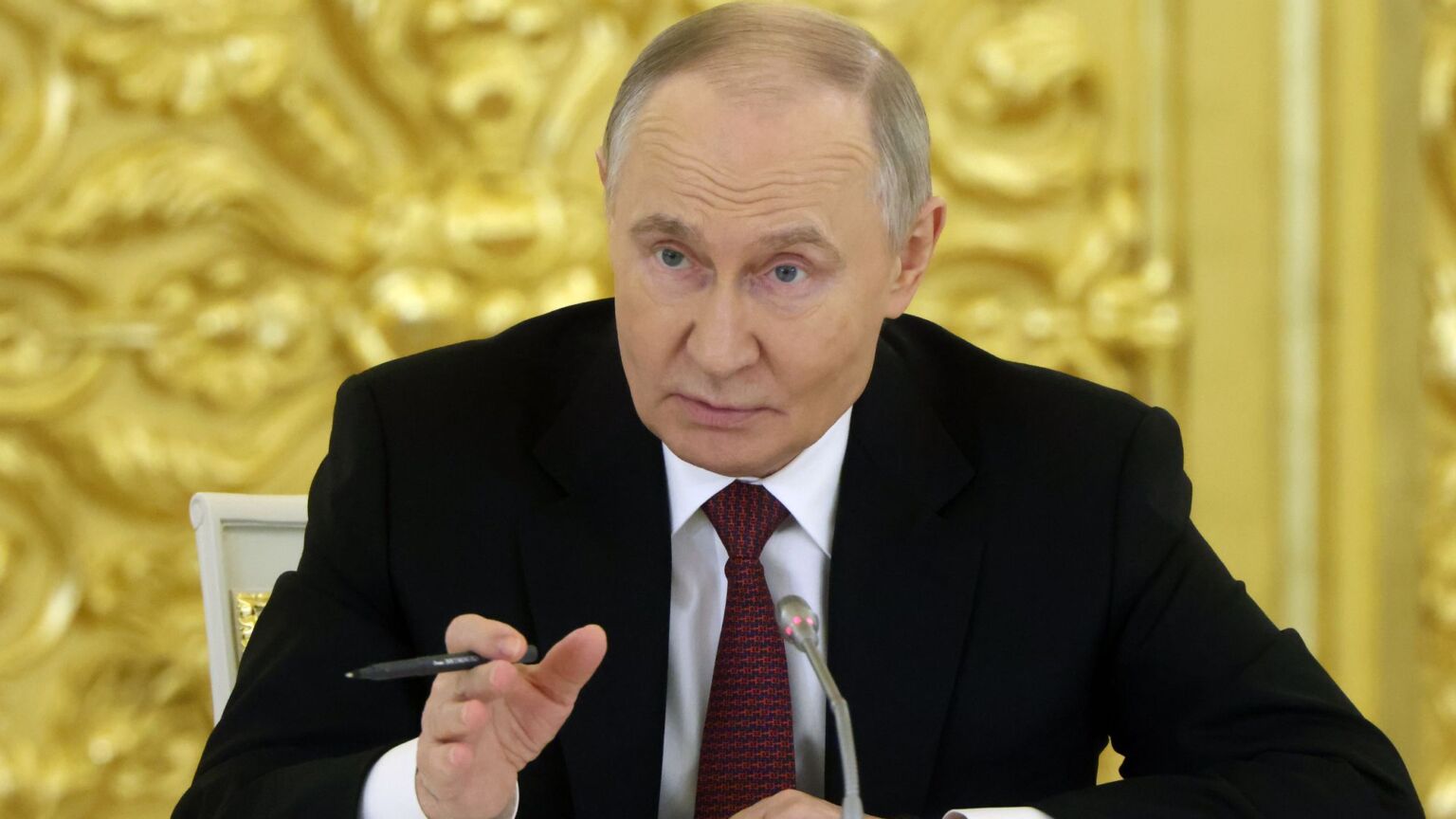
Russia’s president, Vladimir Putin, gave a clue when he said recently that, ‘We are not going to fight with Europe, I have said this a hundred times already’. He also added that, ‘If Europe suddenly wants to fight and starts, we’ll be ready at a moment’s notice’. What then happened, of course, was that much of the UK and other English-language media headlined only the second part – about Russia’s preparedness for war – relegating the non-intention of fighting with Europe to the small print.
What Putin’s response showed, however, was that the notion of one or more European countries picking a military fight with Russia is in the Kremlin’s sights, and that the various European alarms about Russia’s current actions and intentions are mirrored in Russia. Trepidation is not only on the European side.
It should additionally be noted that, while Putin appears secure in his position, any internal political pressure on Ukraine policy comes not from doves wanting the war to end, but from hawks, such as former prime minister and president Dmitry Medvedev, who heads the Security Council of the Russian Federation.

And there is a risk here that needs to be recognised and taken a lot more seriously than it appears to be at present. If Russia becomes convinced that the Europeans, together or separately, are mobilising their citizens for a war with Russia, then it could conclude that its best prospects – as the weaker party, as it sees itself – lie in pre-emptive action. If it is not careful, NATO and the more vocal of its member states run the risk of provoking the very outcome they profess to want to deter.
As to the reasons for the current spate of anti-Russia alarmism from NATO and European states, there are many to choose from. In the UK, the spies and the top brass want more money from a cash-strapped government that gave them nothing in the latest budget and seems nowhere near likely to reach the Trump-ordained five per cent of GDP by 2035. Across Europe there is widely shared emotional sympathy for Ukraine which professional policymakers have allowed to cloud their judgement of the national interest. There is also an underlying paranoia about Russia left over from the Cold War and rekindled by the invasion of Ukraine. Regardless of motivation, however, this sort of war talk risks being highly inflammatory, and wise political leaders would do well to start reining it back before it is too late.
The UK and Europe face many threats to their security, of which Russia is but one. For the UK alone, you could list the daily border breaches by unauthorised Channel crossings, the penetration of Chinese technology into critical infrastructure, costly mistakes in military procurement, and continuing dependence on complex supply lines for strategic goods. To narrow the focus to Russia carries the risk both of an insecure, nuclear-armed state lashing out, in the mistaken belief that it faces a threat to its survival, and of ignoring a host of other, perhaps even graver, threats that loom on the near horizon.
Mary Dejevsky is a writer and broadcaster. She was Moscow correspondent for The Times between 1988 and 1992. She has also been a correspondent from Paris, Washington and China.
£1 a month for 3 months
You’ve hit your monthly free article limit.
Support spiked and get unlimited access.
Support spiked – £1 a month for 3 months
spiked is funded by readers like you. Only 0.1% of regular readers currently support us. If just 1% did, we could grow our team and step up the fight for free speech and democracy.
Become a spiked supporter and enjoy unlimited, ad-free access, bonus content and exclusive events – while helping to keep independent journalism alive.
———————————————————————————————————————————–
Exclusive January offer: join today for £1 a month for 3 months. Then £5 a month, cancel anytime.
———————————————————————————————————————————–
Monthly support makes the biggest difference. Thank you.

Comments
Want to join the conversation?
Only spiked supporters and patrons, who donate regularly to us, can comment on our articles.