The Ajax tank scandal shames the British Army
The defence ‘blob’ is sacrificing national security and soldiers’ safety in order to silence its critics.
Want unlimited, ad-free access? Become a spiked supporter.
By any normal logic, the FillYourBoots forum should never have become a problem for the Ministry of Defence (MoD). The Facebook page started as little more than a digital gossip corner: a place where soldiers shared banter, memes and humour too dark, too sharp and too truthful for civilian audiences. It was the army in its most unfiltered form. Harmless, rowdy, even charming.
This banter page has now grown into something remarkable: the British Army’s unofficial trade union. Trusted by the troops, it has become a whistleblowing platform more influential and feared than any formal complaints system the MoD has ever established.
At the core of this evolution is Alfie Usher, a former paratrooper, whose instincts for mischief and moral courage have combined to create a uniquely powerful force. Usher never set out to challenge the army hierarchy. But when serving soldiers began passing him information that could no longer be ignored, he did what too few in defence are willing to do: he listened and then told the truth. Nothing demonstrated this more vividly than his reporting in the last week on the Ajax armoured-vehicle scandal.
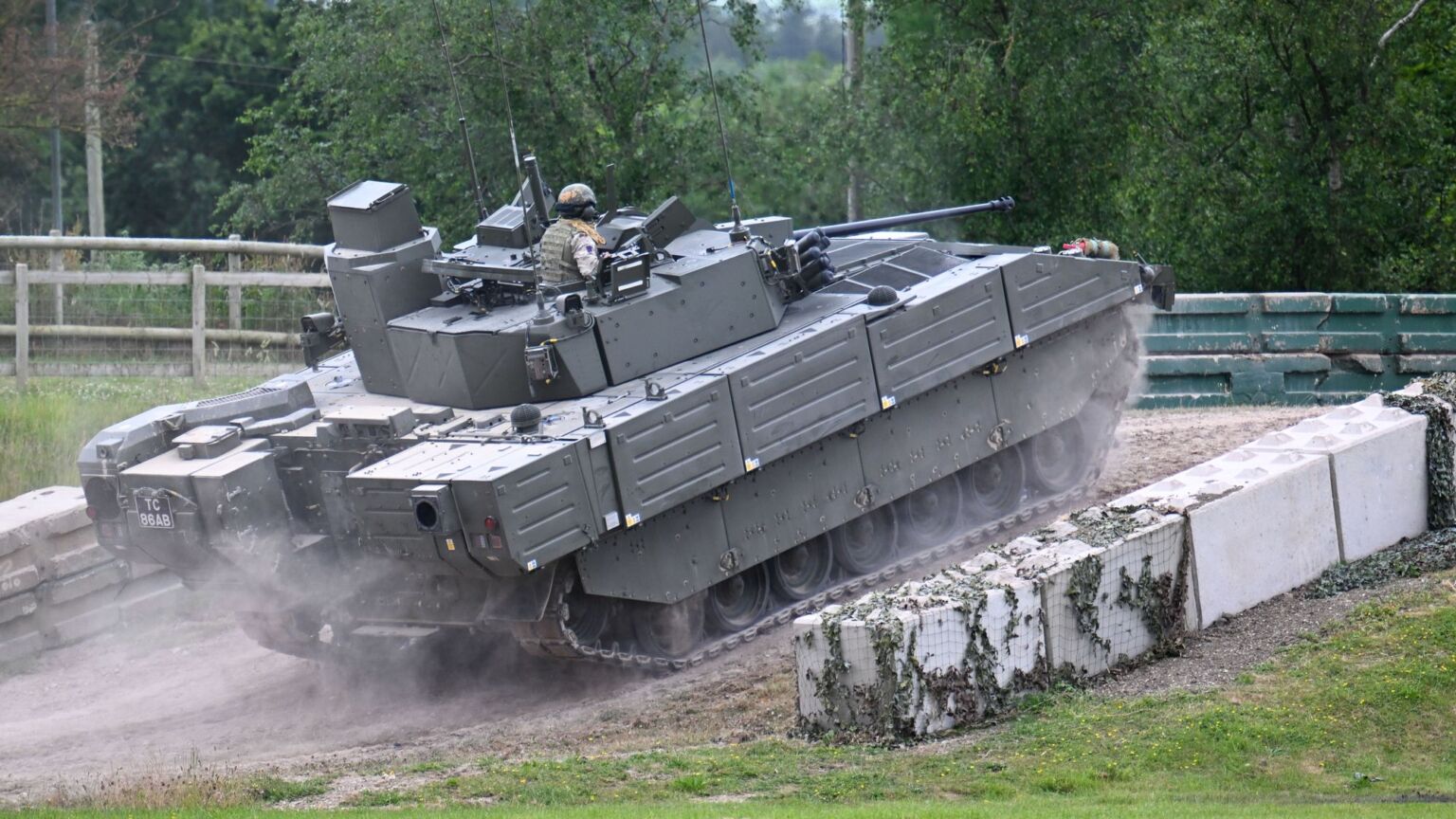
Ajax tanks were meant to be the future of Britain’s armoured force. Costing roughly £10million each, these were supposed to be high-tech vehicles fit for modern conflicts, and a long-overdue replacement for the army’s aged fleet of Scorpions and Scimitars – some of which are up to 50 years old.
Yet in late November, in a war-game exercise involving the Ajax tanks on Salisbury Plains, something went dramatically wrong. Soldiers reported unbearable vibrations and noise, leaving crews nauseous and disorientated, and some even suffered long-term hearing damage. The exercise was abandoned. Subsequent videos – leaked to Usher – show vehicles plagued by faults. Panels flapping loose, wires hanging out exposed and water leaks. It is no understatement to say it may be one of the biggest, and costliest, procurement failures in recent British military history.
These seem to be systemic flaws, and they were overlooked by the army, Ajax manufacturer General Dynamics and the MoD, until Usher made them public. The MoD had insisted that the Ajax programme was progressing as expected. Soldiers vomiting into their helmets suggested otherwise.
What followed was neither introspection, accountability nor even embarrassment in the MoD. Instead, it responded in a manner that was both depressing and entirely predictable: it began hunting for the whistleblowers. Serving soldiers who raised safety concerns suddenly found themselves under scrutiny. Anonymous submissions to FillYourBoots were seen as acts of disloyalty rather than cries for help. Adding insult to injury, Robert Skivington, a senior manager at General Dynamics, mocked troops for supposedly not ‘sitting in the seat correctly’ in the tanks, as if the problem were posture rather than a design flaw shaking these men half-senseless.

Even now, the message to soldiers from the MoD remains something along the lines of: ‘The problem isn’t the vehicle. The problem is you – for talking about it.’ This stubborn, obdurate response is symptomatic of an army that has become more used to bureaucracy than war. A military that prides itself on bravery cannot, in the same breath, persecute those who speak out.
That is why FillYourBoots has become so incendiary. It has pierced the protective bubble of official messaging. Soldiers trust the platform more than they trust internal systems. Nothing frightens officialdom more than losing control of the narrative, which is undoubtedly what has now happened. But they only have themselves to blame.
When soldiers feel they cannot raise safety concerns with higher-ups without fear of punishment, they will seek alternative outlets. When they see colleagues discharged with life-altering injuries, while generals reassure defence ministers that all is well, they will pass their evidence to someone who will listen. When procurement failures are treated as public-relations issues rather than operational crises, platforms like Usher’s become indispensable. FillYourBoots has not undermined the army. The army’s managerialist elite – now exposed as both arrogant and incompetent – has done that all by itself.
The Ajax programme is no longer just a teething issue. Now five years overdue, it is a £6 billion failure that has delayed capabilities by years and further undermined confidence in the military. It raises serious questions about the relationship between the MoD and defence contractors, and whether they have put their own reputations ahead of soldiers and national security. An independent public inquiry is no longer optional – it is essential.

The MoD will claim lessons have been learned. General Dynamics will argue that the issues are overstated. Yet the men and women who actually rode in the Ajax tanks, and in some cases paid for it with their health or careers, are those who we should be listening to.
We are now in a surreal situation in which a meme page has done more to reveal the truth about Ajax than the MoD. Yet perhaps this should not surprise us. Real accountability rarely begins in committee rooms. It begins when ordinary people refuse to be silenced.
Alfie Usher never aimed to become the army’s unofficial shop steward. However, by giving soldiers a voice, he has highlighted something the modern forces critically need: a reminder that loyalty is a two-way street.
Criticism will not destroy the British Army. What will is a culture that punishes honesty and tolerates failure. Ajax is a scandal. The witch-hunt against its whistleblowers is even worse. And the fact that it took a private soldier running a banter page to expose it should shame the entire system.
Andrew Fox is a former British Army officer and an associate fellow at the Henry Jackson Society, specialising in defence and the Middle East.
£1 a month for 3 months
You’ve hit your monthly free article limit.
Support spiked and get unlimited access.
Support spiked – £1 a month for 3 months
spiked is funded by readers like you. Only 0.1% of regular readers currently support us. If just 1% did, we could grow our team and step up the fight for free speech and democracy.
Become a spiked supporter and enjoy unlimited, ad-free access, bonus content and exclusive events – while helping to keep independent journalism alive.
———————————————————————————————————————————–
Exclusive January offer: join today for £1 a month for 3 months. Then £5 a month, cancel anytime.
———————————————————————————————————————————–
Monthly support makes the biggest difference. Thank you.







Comments
Want to join the conversation?
Only spiked supporters and patrons, who donate regularly to us, can comment on our articles.