How did fake quotes end up in the Sandie Peggie judgement?
Serious questions must be asked of the judge who dismissed the nurse's discrimination claim.
Want unlimited, ad-free access? Become a spiked supporter.
When judges start using made-up quotes from previous rulings, something has gone badly wrong with the way justice is being administered in the UK.
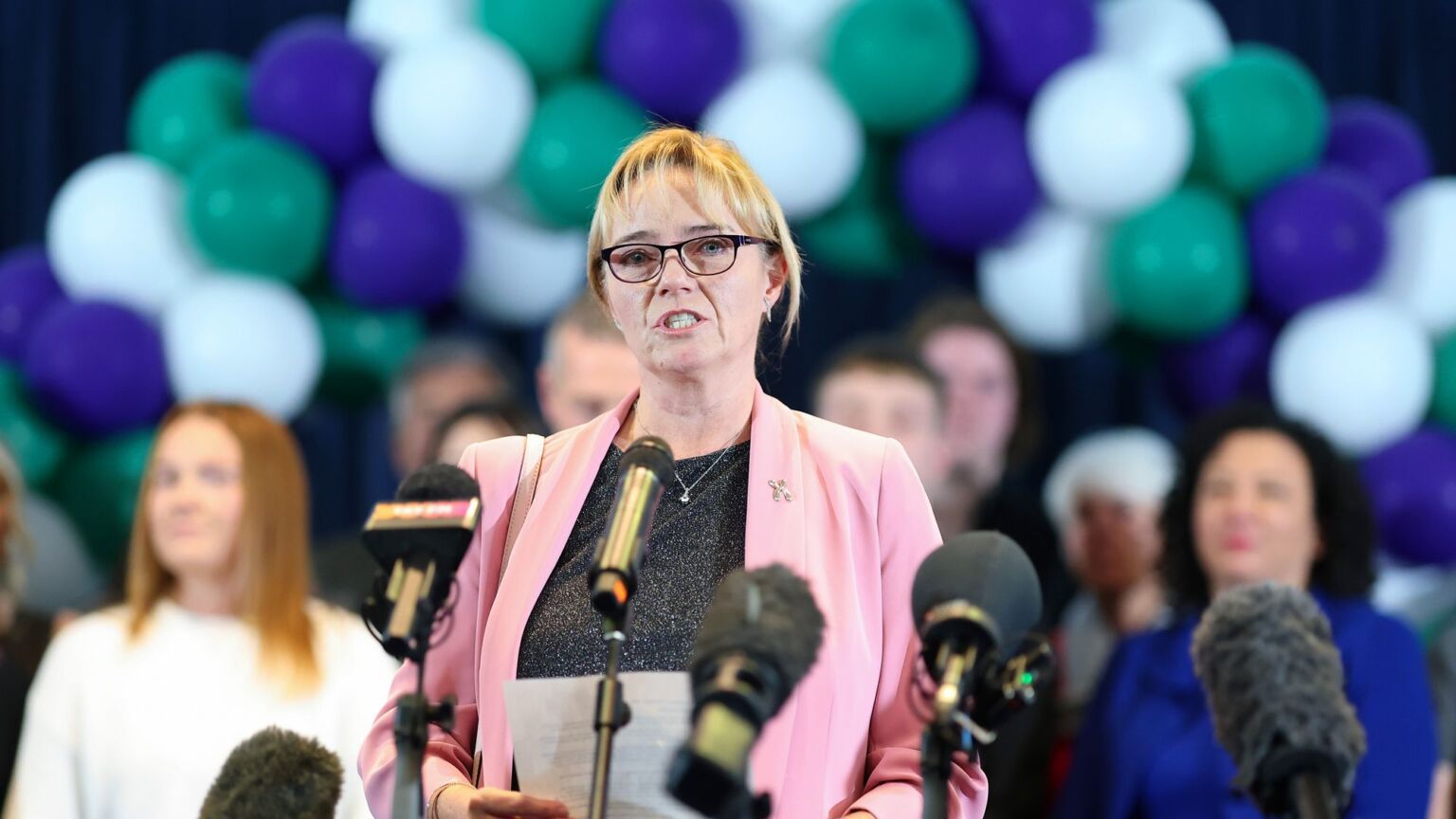
This was brought home this week after an employment tribunal handed down its decision in S Peggie vs Fife Health Board and Dr B Upton. Sandie Peggie is the Scottish nurse who objected to sharing a female-only changing room with a transgender doctor – Beth Upton – on Christmas Eve in 2023. The tribunal found in favour of Peggie, who claimed that she had been harassed by her employer, NHS Fife.
That, however, was the extent of her victory. Referencing the UK Supreme Court’s decision in April to confirm that ‘sex’ in the Equality Act means biological sex, the tribunal also claimed that it was not ‘inherently unlawful for a trans female, who is biologically male under the [Equalities] Act, to be given permission to use a female changing room at work’. On these grounds, it dismissed Peggie’s claims of discrimination, indirect discrimination and victimisation.
Whether or not that conclusion can really be reconciled with the Supreme Court’s April decision remains to be seen. But there is an even more pressing question about the judgement: how many of the panel’s citations can we even trust?
To support his reasoning, Judge Alexander Kemp quoted from the landmark 2019 tribunal case involving Maya Forstater, which granted gender-critical beliefs protected status under the law. According to Kemp, the Forstater judgement contained the following line: ‘It is important to bear in mind that the [Equality Act 2010] does not create a hierarchy of protected characteristics.’
The problem is that this line simply doesn’t exist. The judge in Forstater’s case never wrote it. When this was pointed out, the tribunal issued a revised version of the ruling and quietly removed the inaccurate line.
So that’s one made-up quotation gone. Unfortunately, the ‘corrected’ ruling is still wrong. Flick through the pages of the new version (for quite a while…) and you come to paragraph 793, which contains a lengthy, verbatim passage that the tribunal attributes to the Supreme Court in Lee vs Ashers Baking Company, better known as the ‘gay cake’ case:
‘The rights to freedom of thought, conscience and religion, and to freedom of expression, enshrined in articles nine and 10 of the European Convention on Human Rights, are protected by sections six and 13 of the Human Rights Act 1998. The rights to respect for private and family life, and to freedom from discrimination, protected by articles eight and 14, are also engaged. There is no hierarchy of rights; all are to be treated with equal respect.’

It looks authoritative. It name-checks the ECHR, the Human Rights Act, throws in a few more rights for good measure, and then delivers the ‘no hierarchy’ slogan. There’s just one small issue. This passage appears nowhere in the actual judgment, either. In other words, HM Courts and Tribunal Service may now have little choice but to revise the ruling again.
Was AI involved? What we know for sure is that the pattern of error in Peggie’s judgement fits exactly the risk the judiciary itself has just warned about. In October, the courts issued updated AI judicial guidance. It cautions that AI tools may ‘hallucinate’, including by ‘mak[ing] up fictitious cases, citations or quotes’, and stresses that ‘the accuracy of any information you have been provided by an AI tool must be checked before it is used or relied upon’. Judges are reminded that they are ‘personally responsible for material which is produced in their name’ and that they ‘must always read the underlying documents’.
Whether the errors in Sandie Peggie’s tribunal ruling originated in an AI tool, mis-remembered notes, or an incautious piece of internet cut-and-paste, the fact remains that two fictitious quotations have been smuggled into a high-profile judgment, invoking the authority of the Supreme Court.
At a certain point, when multiple corrections are required in a single judgment, it becomes reasonable to expect not just further corrections, but an explanation of how these errors arose. After all, this is only the latest in a long line of insults levelled at Sandie Peggie, a nurse who wanted nothing more than to change in a women’s changing room.

Freddie Attenborough is the communications officer for the Committee for Academic Freedom.
£1 a month for 3 months
You’ve hit your monthly free article limit.
Support spiked and get unlimited access.
Support spiked – £1 a month for 3 months
spiked is funded by readers like you. Only 0.1% of regular readers currently support us. If just 1% did, we could grow our team and step up the fight for free speech and democracy.
Become a spiked supporter and enjoy unlimited, ad-free access, bonus content and exclusive events – while helping to keep independent journalism alive.
———————————————————————————————————————————–
Exclusive January offer: join today for £1 a month for 3 months. Then £5 a month, cancel anytime.
———————————————————————————————————————————–
Monthly support makes the biggest difference. Thank you.

Comments
Want to join the conversation?
Only spiked supporters and patrons, who donate regularly to us, can comment on our articles.