Banning social media for teens is an infantile idea
Australia’s new internet age restrictions are petty, pointless and an insult to parents.
Want unlimited, ad-free access? Become a spiked supporter.
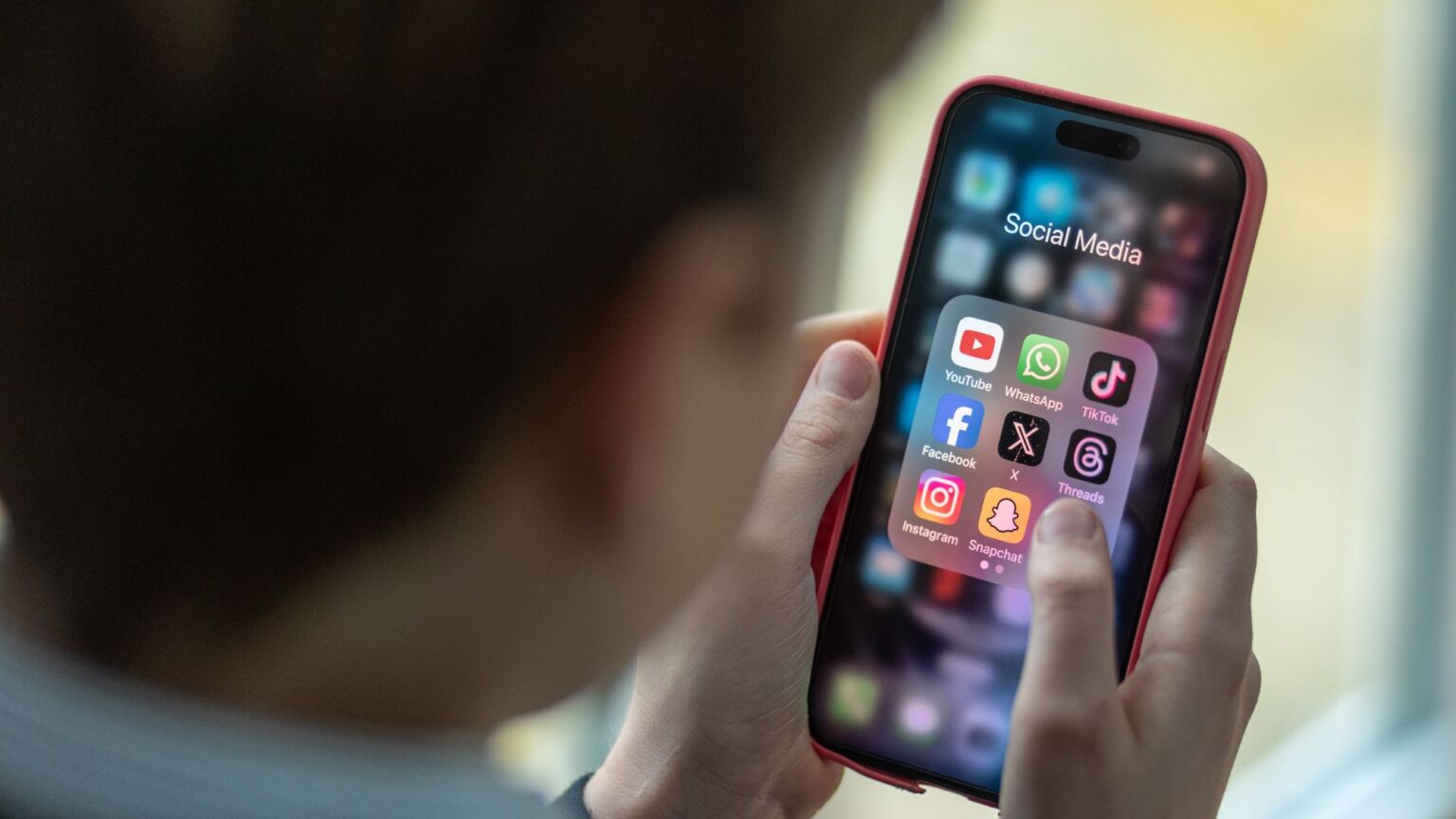
As of Wednesday, it will be illegal for Australian children and teenagers to use social media. There will be no Instagram, Facebook, Snapchat or TikTok for under 16-year-olds – who presumably instead will be forced to play outside in the sunshine, like the happy little Vegemites their parents once were.
The move by the Australian Labor government has been met with uncritical and almost unanimous praise. This is perhaps unsurprising – after all, who wants to put his head above the parapet to look as if they’re defending, say, cyber-bullying or the online grooming of children, which the bill’s backers claim they are trying to bring an end to. Communications minister Anika Wells described the law as a ‘moral imperative’. Prime minister Anthony Albanese said it is about ‘protect[ing] children’. Everyone – from the opposition Liberal Party to international media like the BBC – appears certain that this is a good thing. At last, they say, someone is thinking about the children.
While few people really think scrolling through social media is the best use of kids’ time, there are good reasons why the Labor government’s plan should and will almost certainly fail. First of all, Labor does not seem to be remotely confident in its own ability to enforce it. That is presumably why it has deftly shifted the responsibility to social-media platforms to make sure its legislation is complied with. Platforms that fail to keep kids off will face fines of up to $50million AUD.
These fines seem almost inevitable now. The Australian government is surely well aware that the main social-media companies already have their own age restrictions in place, which they are continually failing to uphold. Facebook and Instagram – two of the most popular social-media platforms – are for over-13s only. Nevertheless, an estimated 80 per cent of eight- to 12-year-olds in Australia still manage to use social media. The rise of virtual private networks (VPNs) all but ensures that Australia’s new restrictions will be easily circumvented by any teens determined to stay on social media.
A second, and more significant, problem for the Australian government is that parents are far from unified in support of the ban. In fact, some polls suggest that more than 50 per cent oppose it. Probably this is because they do not want the government telling them how to raise their children. Reasonably, many parents do not see social media as a danger on par with, say, illicit drugs. They have enough trust in their own parenting skills not to fear their children are about to be ‘addicted’, ‘radicalised’, ‘groomed’ – or all three – by the internet.
Beyond the logistical problems of enforcing a law on reluctant parents, reluctant children and reluctant social-media companies, there is another obstacle. You can’t put the genie back in the bottle. But that is what the Australian government is attempting to do. Trying to restrict the use of social media is like the attempt to ban the writings of Martin Luther in the 16th century, or outlawing alcohol in America in the 20th century – both of which were justified on the grounds of protecting the safety and morals of the public. It might work for a little while, but the authorities will soon be overwhelmed by the strength of the opposition.
It won’t be bad news if the Australian government does fail, something it does most of the time, anyway. Not least because the social-media ban, while couched in terms of compassion, is part of a broader push for internet censorship, not just for children, but for adults, too. It is part of the same censorious impulse driving the Online Safety Act in the UK and the EU’s Digital Services Act.
In fact, Australia, with its own Online Safety Act, has been leading the global charge. Last year, for example, we witnessed the strange spectacle of ‘eSafety Commissioner’ Julie Inman Grant, whose duty it is to enforce Australia’s internet laws, effectively trying to act as the chief censor for the whole world. In April, Inman Grant made an unprecedented demand for X to block footage of a Sydney terror attack in all jurisdictions, which owner Elon Musk refused to do (although he did geoblock the footage in Australia). Given that the Australian state’s censorious impulses do not even stop at its own borders, we shouldn’t be surprised if the new age restrictions expand well beyond their current scope.
None of this is to say it’s a good thing for children and teens to be constantly on social media. Only that the decision on how to manage the risks of kids going online should be left to parents. It should certainly not be in the hands of governments, who have shown, time and again, they cannot be trusted to decide what we can and can’t access online. ‘Safety’ is only ever an excuse for censorship, and a pretty poor one at that.
Hugo Timms is an editorial assistant at spiked.
£1 a month for 3 months
You’ve hit your monthly free article limit.
Support spiked and get unlimited access.
Support spiked – £1 a month for 3 months
spiked is funded by readers like you. Only 0.1% of regular readers currently support us. If just 1% did, we could grow our team and step up the fight for free speech and democracy.
Become a spiked supporter and enjoy unlimited, ad-free access, bonus content and exclusive events – while helping to keep independent journalism alive.
———————————————————————————————————————————–
Exclusive January offer: join today for £1 a month for 3 months. Then £5 a month, cancel anytime.
———————————————————————————————————————————–
Monthly support makes the biggest difference. Thank you.



Comments
Want to join the conversation?
Only spiked supporters and patrons, who donate regularly to us, can comment on our articles.