‘The Covid inquiry is a waste of time and of £200million’
Michael Simmons on how the establishment is still pushing a discredited narrative on lockdown.
Want unlimited, ad-free access? Become a spiked supporter.
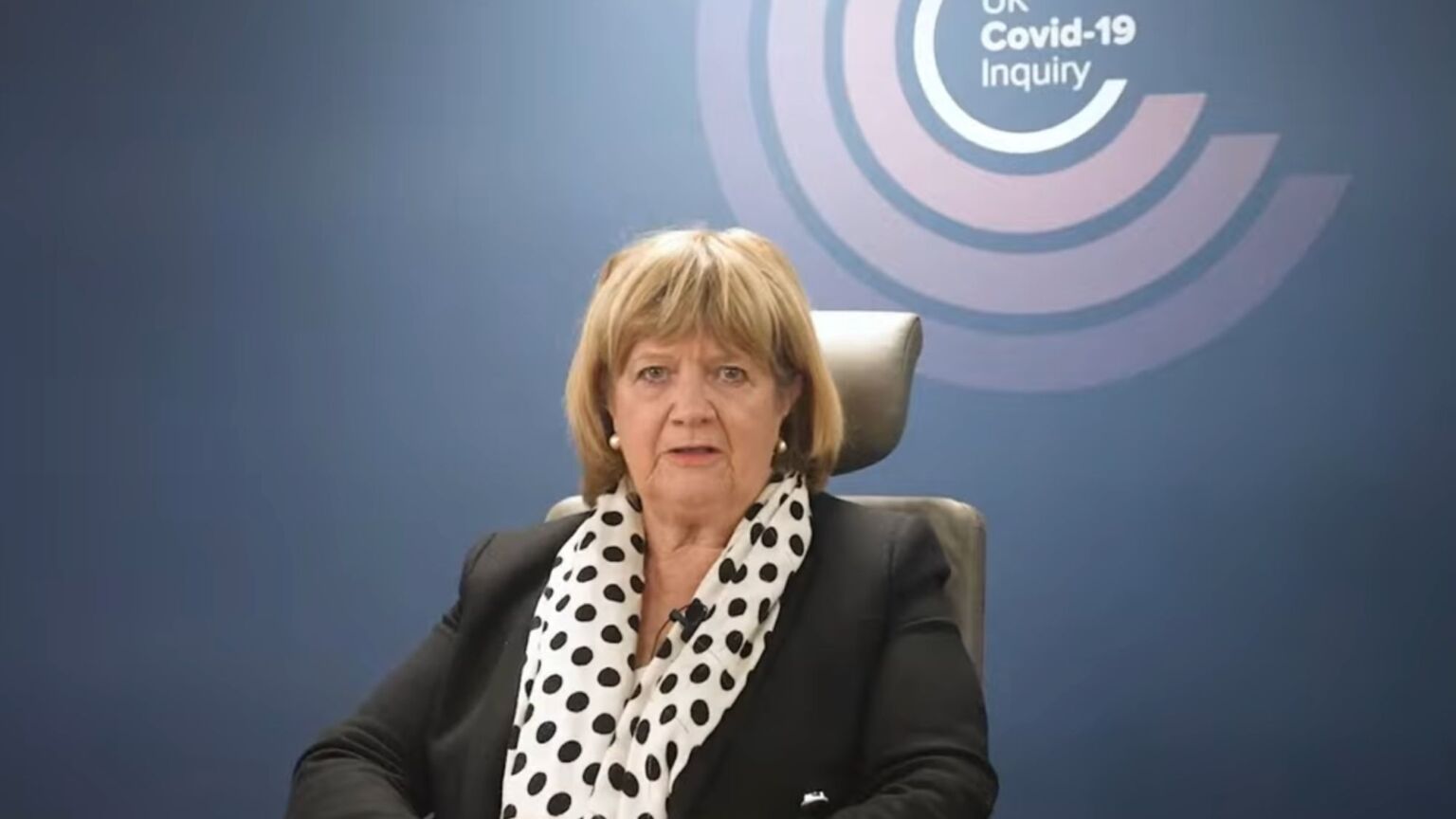
The UK’s Covid inquiry, chaired by Baroness Hallett, is now getting into its third year. With its projected cost of over £234million – or around £164,000 for each day it’s sitting – you might have expected it to tell us something useful. Instead, one of its most-anticipated reports, published last month, repeats some familiar pandemic-era myths. It declares that there was no alternative to lockdown, based on spurious statistics generated by ‘modelling’. It even makes the eyebrow-raising claim that 23,000 deaths could have been avoided in England, had the March 2020 lockdown begun a week earlier.
Michael Simmons – economics editor at the Spectator and host of the Reality Check podcast – sat down with spiked’s Fraser Myers to pull apart these claims. What follows is an edited extract from their conversation. Watch the full thing here.
Fraser Myers: Is there any truth behind this ‘23,000 deaths’ figure?
Michael Simmons: I think it’s total nonsense, and actually disastrous for any credibility the inquiry was clinging to. The figure itself is first mentioned in the introduction of this particular report. It’s prefaced with the phrase ‘modelling has established’. But that’s not how modelling works. It doesn’t ‘establish’ things. At best, with reasonable assumptions, modelling gives you an insight into a hypothetical question. But in real life there are an infinite number of variables to any event, and modelling just can’t approximate all of that.
This particular model is eventually revealed to be Neil Ferguson’s. The issue with the 23,000 figure is that Ferguson used quite far-out assumptions. Other modelling that Baroness Hallett looked at suggests the first wave of Covid had actually peaked before lockdown. We also know from Google mobility data that people had basically locked themselves down anyway by the time the official lockdown arrived. So including that 23,000 figure in the report is bizarre.
And again, that language – ‘modelling has established’ – made me chuckle. Back in my old job as data editor at the Spectator, Fraser Nelson and I were doing a lot of work showing how these models compared with the actual outcomes. We would write or say things like ‘SAGE model predicts’ or ‘SAGE model forecasts’. Every time, a press officer or a scientist would call saying we were misrepresenting what modelling is, that it’s not an attempt to predict or forecast anything. It’s funny that this now seems to have flipped on its head and modelling is held up as the established truth.
Even politically, Hallett including this so early in the report seems such a daft move, as it makes it easy to discredit the inquiry. But if you read the rest of this report, there’s a lot of sensible material, such as on how devolution could work better. Actually, toward the end, she buries the point that, looking at the pandemic as a whole, there’s not much evidence that total deaths would have been improved by any of this.
Myers: It’s interesting that the inquiry was using modelling at all, given that we have real-world examples – such as the post-vaccination Omicron wave – to show what the country would have looked like when the government ignored the calls for lockdown.
Simmons: Absolutely. This is what the inquiry seems intent on dismissing. It appears to have baked in the same mistakes that No10 made throughout the pandemic. After the initial debate about ‘flattening the curve’, it just became orthodox that lockdowns work. From then on, the debate was only about when to implement lockdowns and for how long.
The inquiry, rather than questioning that assumption, could have looked at places like Sweden, which had far fewer excess deaths over three years without a government-mandated lockdown. The inquiry could have examined why our modelling missed that, and it wouldn’t be hard. There were parliamentary select committees, and even an event at the Royal Statistical Society, where it was explained that the main issue with our models was that most assumed people wouldn’t change their behaviour unless ordered to. They didn’t account for the fact that the public would see daily reported deaths, watch clips of people in hospital wards, and adjust their behaviour accordingly – which is exactly what happened both in Sweden and here in the UK.
In my view, the inquiry should at least acknowledge that lockdowns carry massive costs – to education, to children, to the economy – which we won’t be able to fully quantify for decades. It could say that lockdown is an extreme and damaging intervention and ask whether it was really necessary. But those in charge don’t seem willing to do that. Instead, they’ve baked in the same mistake, simply accepting the modelling orthodoxy, which makes this inquiry seem like a worthless way to spend £200million.
Myers: Covid is rarely mentioned in our discussions about the economy nowadays. Do you think it’s still having an effect?
Simmons: It is, without question, still scarring us economically. I think politicians don’t talk about that because we just all want to forget about it. When you hear about events like the infected-blood inquiry, or the child-abuse inquiry in Scotland, people pay a lot of attention to those because, thankfully, the vast majority of us were not victims of these events. We have empathy from afar, and we want to see justice done. But when it comes to the Covid inquiry, literally every person in Britain experienced the pandemic. Most of us know someone who was seriously unwell or died during lockdowns. People don’t really want to relive that period.
In terms of what lockdowns have actually done to the economy, the most obvious impact has been on the labour market. We’ve seen this massive trend towards worklessness, to more people being on benefits. Before lockdown, we might have still gone to work or sent our kids to school if we were a little bit ill, but I think our national psyche has drastically changed now. It’s reached the point where people are afraid to be in work or school. This has a direct economic effect.
Between 2008 and 2020, interest rates were hovering around zero, so money had basically become free or very cheap. Our politicians got hooked on this cheap money, which financed these spending splurges. Then the whole world locks down, supply chains come under strain, and inflation comes back. In my view, the Bank of England was almost criminally late to increase interest rates. It kept saying inflation was transitory and wouldn’t be a problem. It predicted it would peak at five per cent, but it ended up peaking at 11 per cent. Effectively, the Bank of England completely lost control of inflation. It brought it back to target only briefly, and now it’s out of control again. This has huge knock-on effects for all of us, especially when it comes to cost of living.
Part of the reason debt interest is so expensive now is that about a quarter of UK gilts are ‘linkers’, meaning they’re hedged for inflation. In an era of near-zero interest rates, that wasn’t an issue, but now, with rates around four per cent, it’s a serious problem – one that is actually risking bankrupting the country. The decisions of the Bank of England during Covid will be felt for years to come. They ought to be scrutinised a lot more heavily than they have been.
Michael Simmons was talking to Fraser Myers. Watch the full conversation below:
You’ve hit your monthly free article limit.
Support spiked and get unlimited access.
Support spiked and get unlimited access
spiked is funded by readers like you. Only 0.1% of regular readers currently support us. If just 1% did, we could grow our team and step up the fight for free speech and democracy.
Become a spiked supporter and enjoy unlimited, ad-free access, bonus content and exclusive events – while helping to keep independent journalism alive.
Monthly support makes the biggest difference. Thank you.

Comments
Want to join the conversation?
Only spiked supporters and patrons, who donate regularly to us, can comment on our articles.