Are we all disabled now?
The surge in perfectly healthy youngsters claiming PIP is financially unsustainable and morally decrepit.
Want unlimited, ad-free access? Become a spiked supporter.
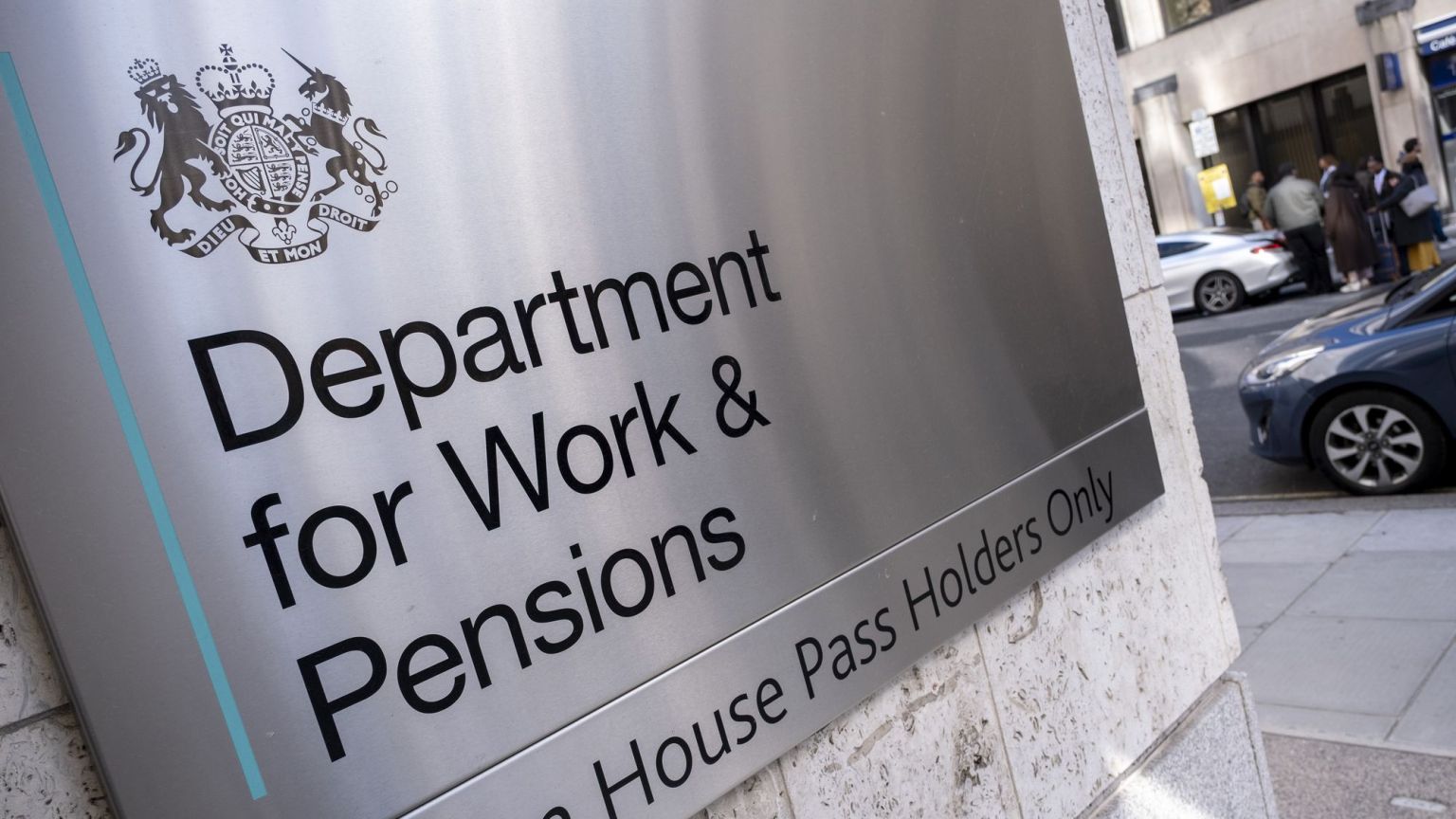
Sir Stephen Timms has concluded that the Personal Independence Payment (PIP), the disability benefit that threatens to bankrupt the British state, is ‘not fit for purpose’. He is right – although surely not for the reasons he thinks. According to the disability minister, it ought to be made even easier to claim PIP than it currently is.
The Timms review on PIP follows a similar report by former health secretary Alan Milburn, whose review into NEETs (young people not in employment, education or training) proposed a tweak to incapacity benefits that would barely save a shilling. Moving the young and inactive from PIP and Universal Credit on to an alternative ‘youth allowance’, Milburn said, would save the pitiful sum of £200million a year, but even then only in 10 years’ time – the equivalent of about five hours’ worth of Britain’s annual welfare spend. In other words, the two men tasked by the Labour government with getting a handle on Britain’s ballooning welfare bill have delivered plans that will either make no difference or inflate the costs further.
To be fair to Timms, when he says that claiming PIP ought to be easier, he has people with severe, chronic and lifelong disabilities in mind. For those who will never recover from a disability, having to reapply or be reassessed for PIP is tiresome and dehumanising. He is right to say such people should be fast-tracked through the system. He is also right that the state should be more generous in the support it offers to enable them to live as fulfilling and independent lives as is feasible.
The problem is that the word ‘disability’ no longer means what the average person thinks it does. According to the Department for Work and Pensions, one in four working-age adults in England and Wales considers themselves ‘disabled’. And the scope for who counts seems to widen by the hour. Around 800 new people sign on to PIP every day. In the past five years, claimants have increased from 2.7million to 4.1million. You might expect such a surge from a mass-disabling event like a pandemic or a war. Except that in Ukraine, where there is actually a brutal, bloody war, the rate of increase in disability claimants has been slower than in Benefits Britain.
This is largely because ‘disability’ now encompasses mental-health problems. To be clear, some mental-health conditions really can be ‘disabling’, like schizophrenia or psychosis. But many are mild and arguably not even illnesses at all. Claims for ADHD – a condition that experts have warned is being overdiagnosed or may not even exist – have surged by 40 per cent since Labour took office. Autism can range from something immaterial to a condition that renders one non-verbal, but both extremes can be grounds for claiming PIP. Young people may be physically healthier than older adults, but thanks to their supposedly poor mental health, they are turning to PIP at a faster rate. According to The Times Welfare Inquiry, the PIP bill just for teenagers with mental-health problems has now hit £1 billion per year.
As the Financial Times explains, rises and falls in welfare claims are not actually driven by the underlying health of the population. Britain has not suddenly become ‘the sick man of Europe’. Instead, the incentives have changed: ‘While the trend in most countries looks exactly as we would expect from a measure of chronic illness – a very gentle upward slope over the decades – Britain’s is a rollercoaster, climbing in the 1990s, falling in the 2010s and then surging again from 2019.’ Although PIP was introduced in the 2010s, the key change arrived in 2020. The Covid lockdowns meant that incapacity assessments could no longer be conducted face-to-face and in person, so were carried out online or on the phone instead, vastly increasing the scope for exaggeration, if not outright fakery.
The PIP eligibility criteria offer some especially perverse incentives. Rather than helping those with the most severe ailments live independently, the system rewards those who know the correct language to use to gain enough points on a checklist. The Times gives the example of a blind man who, because he has learnt to safely prepare food on his own, scores nil points on that particular box. Whereas an alcoholic or a gambling addict who says he cannot possibly be expected to manage his addiction or control his finances may be approved for PIP. Almost 18,000 people are claiming PIP with substance or alcohol abuse as their main ‘disabling condition’. Under this scheme, self-improvement is punished and self-pity is rewarded.

Timms’s understandable sympathy for the genuinely disabled clouds his judgement here. His review sensibly proposes that benefits should be based on daily costs and occasional larger expenses, rather than a fixed weekly payment as is currently the case. Yet he also argues that no one should have to provide ‘proof’ of those additional costs. To make it easier to claim incapacity benefits, he says applicants should be able to choose whether their assessment takes place in person, online or on the phone – ignoring the obvious fact that people are more likely to embellish on a form or on the phone than face to face. He even proposes making information available in foreign languages, essentially opening up the welfare state to the world. As if the 180,000 foreign nationals claiming PIP – at the cost of £1.4 billion – were somehow not high enough.
Labour has shown it is simply not up to the task of getting a handle on this crisis. In fact, no government will, unless it is prepared to say that not every difficulty is a disability. That not every condition deserves the state’s assistance. And that it is shameful to seek welfare for nothing more than a mild mental illness. There is nothing ‘kind’ or ‘compassionate’ about declaring one in four of us disabled.
Fraser Myers is deputy editor of spiked and host of the spiked podcast.
You’ve hit your monthly free article limit.
Support spiked and get unlimited access.
spiked is even better on the app
Read, watch and listen to spiked wherever you are. Our brand-new app brings everything together, with ad-free reading, audio articles and offline access.
Become a spiked supporter to unlock exclusive app access, unlimited articles, bonus podcasts, discounts and special events.
Monthly support makes the biggest difference. Thank you.







Comments
Want to join the conversation?
Only spiked supporters and patrons, who donate regularly to us, can comment on our articles.