King Charles shouldn’t apologise for Britain’s role in the slave trade
The elite war on Britain’s past is turning it into an international punching bag.

Want unlimited, ad-free access? Become a spiked supporter.
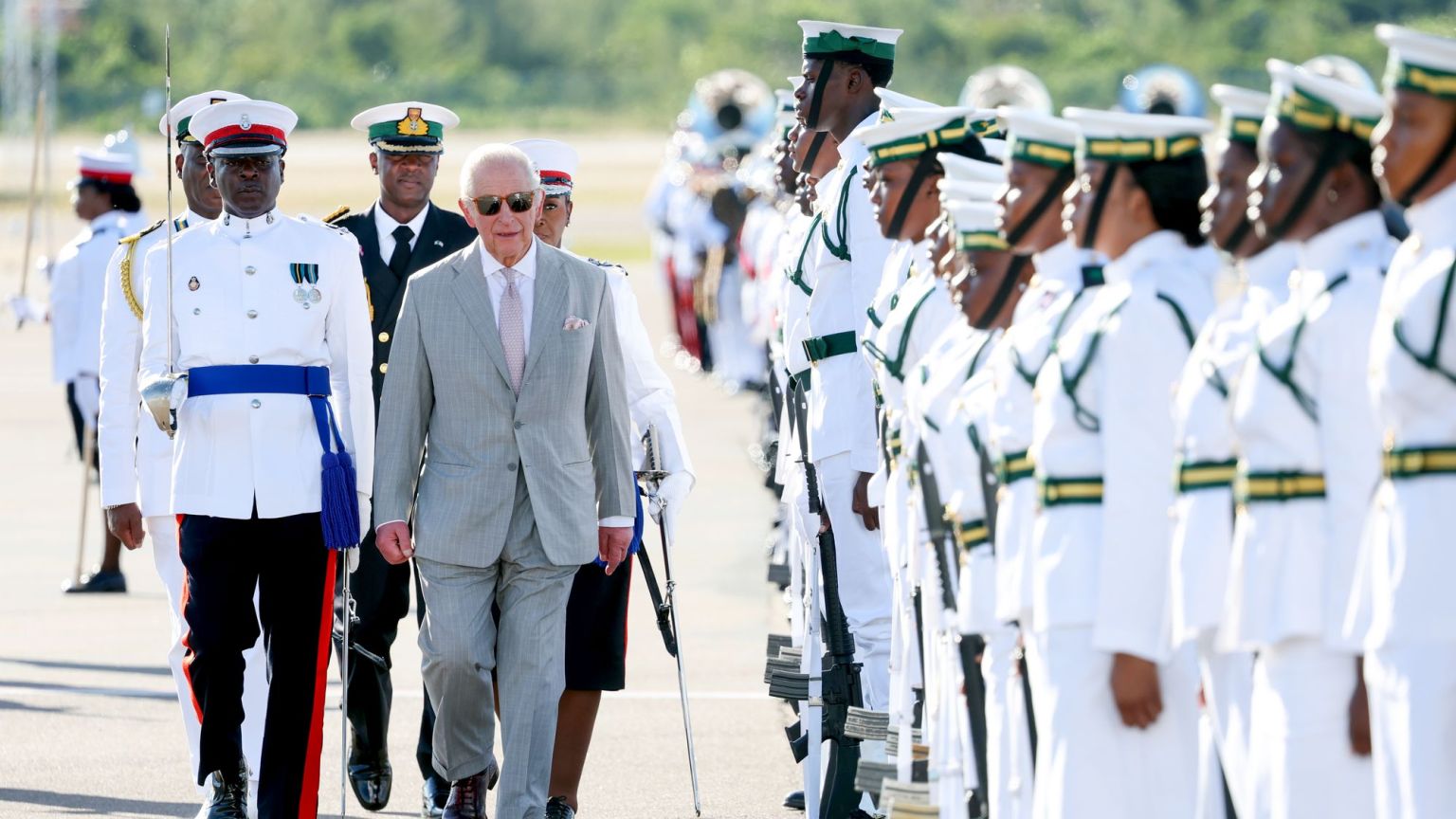
Britain’s political and cultural elites’ bottomless capacity for hating their nation’s past is catching on. So much so that it has been hard to tell if King Charles has been a visiting monarch or a captured fugitive on his tour of the Caribbean this week. It might be the longstanding policy of the British government and the royal family not to apologise for or pay reparations for slavery, but Britain’s former colonies and current Commonwealth partners smell blood.
Speaking in the Bahamas last Tuesday, the King tried to hold the line by referring to the ‘great suffering of the past’. When he formally opens the meeting between the Commonwealth heads of government in Antigua on Tuesday, he is expected to address the UK’s role in the slave trade with ‘unflinching honesty and sincere sorrow’. Writing in the Guardian on Friday, UK prime minister Andy Burnham went even further. ‘I want to express my sorrow and regret for the pain and suffering of so many millions and to recognise the way it still shapes our world today’, he said. The latest reports suggest that Burnham is now ‘open’ to indirect reparations, in the form of education and healthcare assistance.
Yet it is becoming increasingly clear that nothing short of financial reparations will satisfy Britain’s former colonies and the Commonwealth countries. The Bahamas National Reparations Committee urged the king to ‘speak about his role in the darkness and how he plans to atone for it actively. The royal family and the British government were responsible for the darkness.’
Every Commonwealth country the king has visited in his nine-day tour – the Bahamas, Guyana and Antigua and Barbuda – is led by governments that support reparations. Behind these governments, too, are increasingly vocal lobby groups determined to make the UK government or the royal family pay up. ‘We in Guyana say, long live the king, so he can apologise and call for reparations’, said Eric Phillips, the head of Guyana’s reparations committee. Dorbrene O’Marde, of the Antigua and Barbuda reparations commission, has threatened a ‘global reparations caravan’ unless the king changes his position. A failure to do so, he said, would ‘reek of gross insensitivity to the demands of the citizens of the Caribbean’.
As far as Caribbean nations are concerned, advancing the cause of reparations appears to be the sole purpose of the King’s visit. Hilary Beckles, head of the Caribbean Community Reparations Commission, said reparations would be the ‘No1 item on the table’ at the Commonwealth heads of government meeting. It is time, Beckles said, for the king to acknowledge the ‘enrichment that slavery has presented to his family’. Show me the money, basically, is the message of Caribbean members of the Commonwealth to the king.
Of course, the king will skirt the issue of slavery, as he does every controversial topic. And even if the British government wanted to pay reparations, it couldn’t – the UK is more than three trillion pounds in debt, and poorer than church mice. But it would still be nice to see someone tell the truth about Britain’s past, and in particular its role in the slave trade.
Two people who are prepared to do this are Nigel Biggar, a professor of moral theology at the University of Oxford, and Robert Tombs, a professor of French history at the University of Cambridge. Their new book, Our Islands’ Story: A Better Story About Britain, dismantles many of the arguments made by the growing reparations movement.
One of the central claims, repeated ad nauseum this week, is that Britain’s former wealth was derived from slavery. But this is a very weak argument. As Tombs and Biggar explain, most slaves lived in Asia, while many Muslim countries – who were significantly poorer than Britain – not only engaged in slavery, but also based their economies on it. Latin America was by far the biggest financial ‘winner’ out of slavery. Yet ‘of all these slave-owning societies, only Britain produced an Industrial Revolution’. Which is to say that it was Britain’s progress in science that begat the Industrial Revolution, in turn propelling Britain’s (and the world’s) growth for centuries. The UK’s vastly superior wealth, in other words, had nothing to do with slavery.
Judging by the sentiment of the Caribbean and African nations, it’s easy to get the impression that Britain was the only nation that had ever participated in the slave trade. But, as Our Islands’ Story points out, ‘slavery has been practised on every continent by people of every skin colour since the dawn of history’. In fact, even by modern European standards, Britain was not a major player. Between 1525 and 1866, the Portuguese Empire shipped ‘just under half’ of exported African slaves. In 1800, British slave owners held less than two per cent of the global enslaved population. Yet it seems that Britain and the royal family are the only ones who are expected to apologise for slavery, and to pay compensation for it.
Britain did play one major role in the slave trade, and that was in ending it. After 1807, the year it became the first nation to outlaw slavery, Britain expended significant resources in stamping it out around the world. In 1850, nearly 13 per cent of the Royal Navy was stationed off the west coast of Africa, in order to disrupt slave traders. The UK attacked Lagos, Nigeria, in 1851, when its ruler, Kosoka, refused to end the practice. According to Biggar and Tombs, ‘the task of estimating the cost of all the empire’s various efforts to abolish the slave trade and slavery at sea and on land, worldwide, over the course of a century and a half, is so difficult as to be, perhaps, impossible’. The cost of abolishing the slave trade, which some studies put at £1.5 billion annually in today’s terms, far outweighed any financial benefits Britain previously derived from slavery.
Clearly, Caribbean countries see the UK as a pushover. And who can blame them? Parts of Britain will try to imprison locals who fly England or Union Jack flags. School pupils are taught to view the British Empire on a par with Nazi Germany. National icons such as Winston Churchill and Jane Austen are in the process of being erased from banknotes, replaced with hedgehogs and badgers. Britain’s establishment has made the country an international punching bag and invited everyone to swing for the hills. And they have.
Everyone is getting very tired of this incessant war on Britain’s past, not least British people themselves. It’s time Britain’s political and cultural elites started telling the truth about their nation’s past, rather than endlessly running it down. Above all, the British government finally needs to show some backbone, and tell the reparations lobby where to go.
Hugo Timms is a staff writer at spiked.
You’ve hit your monthly free article limit.
Support spiked and get unlimited access.
Support spiked and get unlimited access
spiked is funded by readers like you. Only 0.1% of regular readers currently support us. If just 1% did, we could grow our team and step up the fight for free speech and democracy.
Become a spiked supporter and enjoy unlimited, ad-free access, bonus content and exclusive events – while helping to keep independent journalism alive.
Monthly support makes the biggest difference. Thank you.



Comments
Want to join the conversation?
Only spiked supporters and patrons, who donate regularly to us, can comment on our articles.