The death of Brazilian democracy?
The attempted seizure of Flávio Bolsonaro’s passports has cast a dark shadow over the presidential elections.
Want unlimited, ad-free access? Become a spiked supporter.
Seven minutes after votes were tallied up last Sunday and Brazil’s left-wing president, Luiz Inácio Lula da Silva, was declared the winner of the run-off election, his law-enforcement officials and an ally at the Supreme Court put into motion a plan to seize the passports of Flávio Nantes Bolsonaro, Lula’s defeated right-wing rival.
Flávio was anointed a political heir by his father, former president Jair Bolsonaro, who is currently serving a 27-year sentence (now under house arrest) for an attempted coup. Flávio got almost 60million votes, against Lula’s 64million.
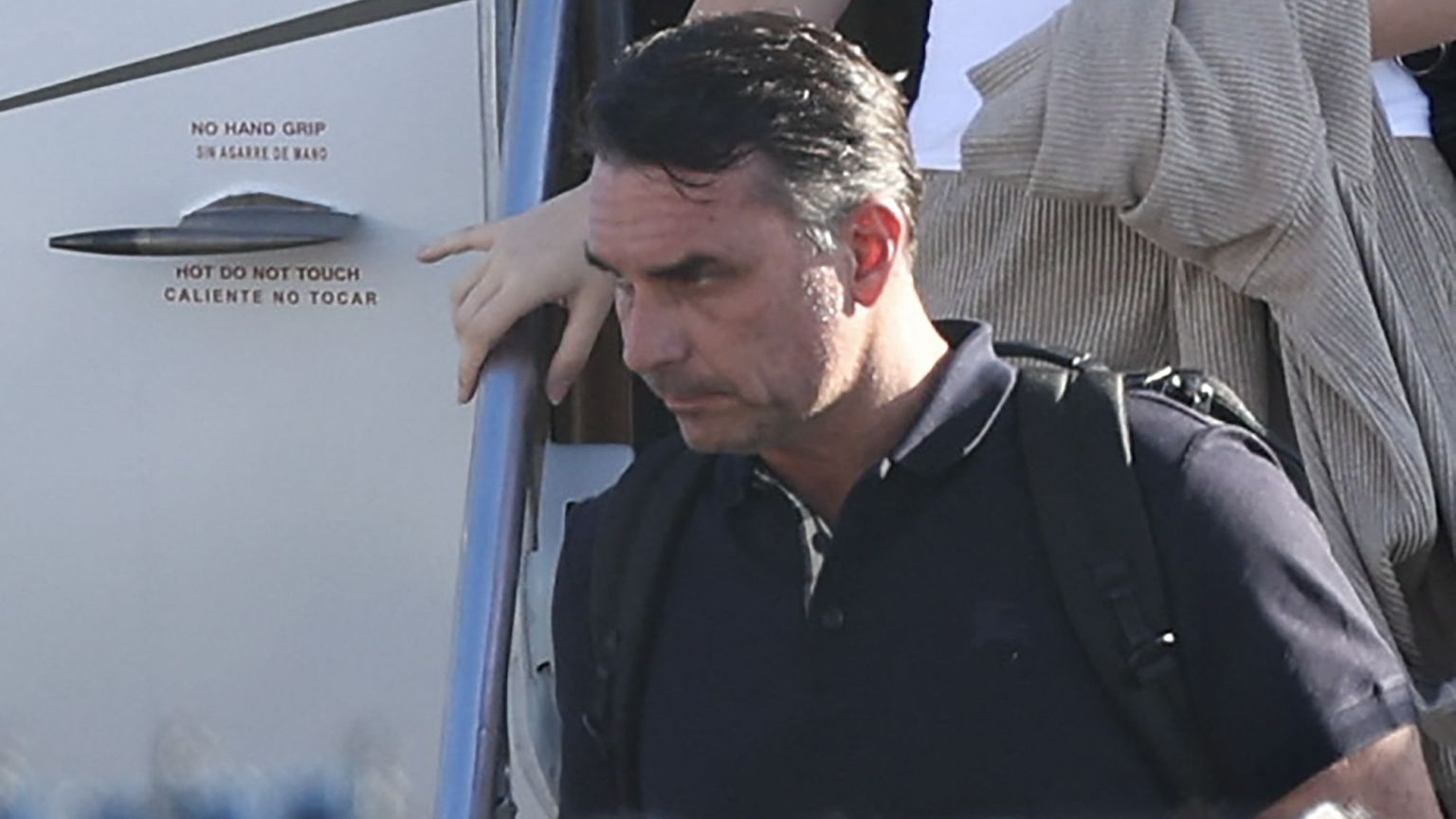
The move to quickly seize Bolsonaro Jr’s passports came from the head of Brazil’s federal police, Andrei Rodrigues, who asked Alexandre de Moraes, a judge at the Supreme Court, to order the seizure. The judge quickly granted the request. Bolsonaro Jr also reacted quickly: 42 hours later, on Wednesday morning, he was in Florida with his wife and two daughters. Close to one million people tracked his flight into Miami.
Besides being known for banning X in Brazil for almost 40 days in 2024, Moraes is the same Supreme Court judge who led the prosecution of Jair Bolsonaro last year, in what many regard as a dodgy and politicised trial. Other judges involved in the case included Cristiano Zanin, Lula’s personal lawyer when Lula himself was convicted of corruption by multiple courts in the late 2010s. Flávio Dino, a long-time political ally of Lula and former justice minister, was another. Cármen Lúcia, who was appointed by Lula in his first term two decades ago, also sat on the trial. Only one judge voted to acquit. Luiz Fux, who was appointed by Lula ally Dilma Tousseff, read his dissenting opinion for 13 hours, patiently attempting to debunk the coup-attempt case.
Why might Moraes have wanted to stop Flávio Bolsonaro from leaving Brazil? Perhaps because the judge wanted to save himself. To understand why he feels under threat, it’s important to get to know a good friend of his.
This friend is Daniel Vorcaro, a disgraced banker at the centre of one of Brazil’s biggest-ever financial scandals. Vorcaro was arrested last year and charged with fraud, and his private bank, Banco Master, was liquidated. In September, it was revealed that Vorcaro had sent a number of messages to Moraes before he was arrested last November, asking the Supreme Court judge when he ‘need[ed] to be out of the country’.
The messages were damning. Vorcaro also referenced payments made by his bank to a law firm part-owned by Moraes’s wife, which Vorcaro had hired for a $25million consulting contract. According to Brazilian police, Moraes had personally edited the contract.
Yet Vorcaro’s connections appear to span Brazil’s political divide. In May, leaked voice messages from Vorcaro’s phone revealed that Bolsonaro Jr also had a relationship with the banker. On WhatsApp, he called Vorcaro a ‘brother’ while asking for $26million to produce the film Dark Horse, a biopic of his father.
On his first day of self-exile in Florida, Bolsonaro Jr released an open letter to his millions of supporters on social media. It was a bit of an embarrassment – after calling himself the ‘true president of Brazil’, he backtracked and edited his tweet so that it read ‘the leader of Brazil’. He kept the part where he claims to have witnessed ‘electoral fraud’.
Fraud, if it took place, is very hard to prove, given Brazil’s system of voting machines with no voter-verified paper audit trails. Still, any impartial observer would have to admit that these elections were curious. Earlier in October, Bolsonaro Jr soundly defeated Lula in the first round of voting. The scale of Lula’s comeback was extraordinary. What’s more, a minute after all polls were supposed to have closed on election day, Lula’s ally, the judge Cristiano Zanin, ordered them to remain open for two more hours – an unprecedented move. However, the most likely explanation for the 10million additional votes Lula summoned at the run-off was not fraud but his campaign of fear, based on claiming his rival would slash social benefits.
Lula clearly felt insecure about where the vote was heading. He attempted to censor the country’s largest TV network by forbidding it from showing his empty chair at a debate he refused to attend. Fortunately, the network decided not to bend the knee and cancel the debate.
To commentators, especially on the left, the issue of Flávio Bolsonaro leaving Brazil is simple enough: the Bolsonaro clan represents populism, ergo doesn’t believe in democracy, ergo this was an open-and-shut case of a corrupt politician fleeing consequences for his actions. But this argument ignores the growing number of left-wing voices who view Brazil’s supposedly progressive government as a greater threat to democracy than the populists. ‘Any rational person would have fled Brazil immediately’, said American journalist Glenn Greenwald, whose work was pivotal in getting Lula out of jail in 2019.
Greenwald’s reporting back then revealed procedural improprieties in leaked conversations between the main prosecutor and Sergio Moro, the judge who put Lula in jail for corruption. Greenwald never disputed there was evidence of corruption, though. Now Greenwald, the widower of a Brazilian MP and father to Brazilian children, says Alexandre de Moraes is much worse than Moro. ‘The abuses, dangers and threats posed for years now by Moraes are in a completely different universe’, he posted on X on Wednesday.
You don’t have to be a supporter of the Bolsonaro clan to be concerned about what has happened to Brazilian democracy. The Supreme Court has become a political weapon. The political class is mired in a dizzying corruption scandal. Until Brazil cleans up its act, its elections will always leave more questions than answers.
Eli Vieira is a Brazilian freelance journalist. Follow him on X: @EliVieiraJr
You’ve hit your monthly free article limit.
Support spiked and get unlimited access.
Support spiked and get unlimited access
spiked is funded by readers like you. Only 0.1% of regular readers currently support us. If just 1% did, we could grow our team and step up the fight for free speech and democracy.
Become a spiked supporter and enjoy unlimited, ad-free access, bonus content and exclusive events – while helping to keep independent journalism alive.
Monthly support makes the biggest difference. Thank you.


Comments
Want to join the conversation?
Only spiked supporters and patrons, who donate regularly to us, can comment on our articles.