Mass immigration is fuelling support for Catalan independence
The Spanish political class is paying a high price for giving up on borders.
Want unlimited, ad-free access? Become a spiked supporter.
In Barcelona on Saturday, a youthful protest descended into violence and looting. Promoted on social media under the 'Instituts Indignats' slogan, a few hundred young people gathered in the city centre as part of an attempt to replicate the unrest that has gripped France for several weeks. Some ended up clashing with police, setting up impromptu barricades and motorbikes and smashing their way into several shops.
The shocking dénouement to this relatively small protest has certainly garnered a lot of media coverage. But there is something far more significant afoot in Catalonian politics.
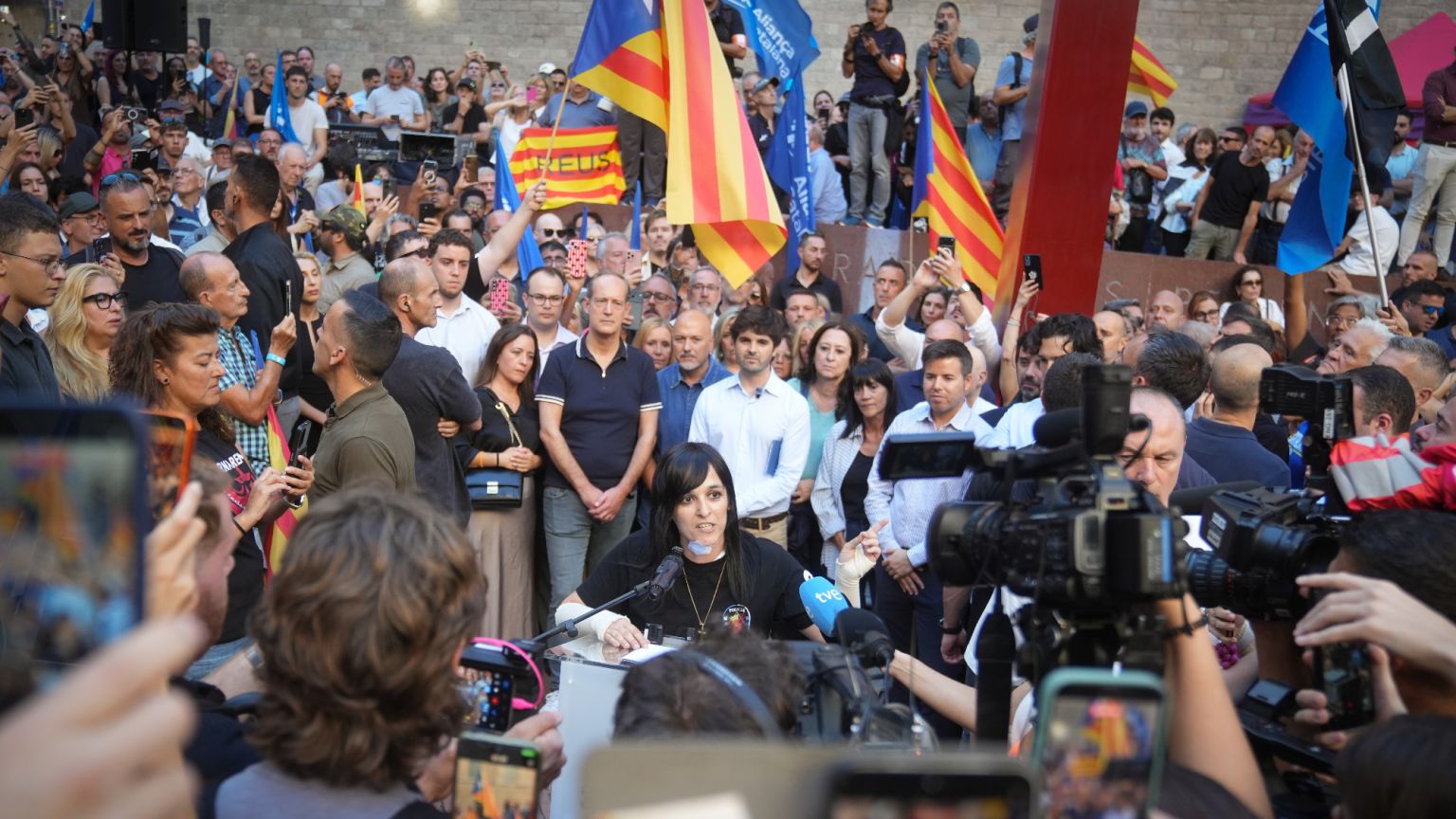
On 11 September, as the US mourned the 25th anniversary of the World Trade Centre attacks, Barcelona was hosting its anniversary of the siege of Barcelona in 1714. This marked the end of Catalan independence after a supposed British betrayal (as my Catalan friend doesn’t hesitate to remind me). But instead of the estimated one million people who joined the independence rally in 2017, this year’s attendance was just 45,000.
Yet while few took part in the independence rally, parties in favour of Catalan independence are now polling at nearly 50 per cent of the vote in the latest opinion polls. So what explains the gap?
The answer lies in the hard-line anti-immigration stance adopted by Aliança Catalana. It currently holds only two out of 135 seats in the Catalan parliament, but its support has soared in recent months. Polling at nearly 17 per cent, it is now the largest Catalan independence party.
The reason for its rise is not hard to fathom: mass immigration into Catalonia. According to the Instituto de Estadística de Cataluña, nearly one in five people living in Catalonia in 2025 was from outside Spain. Looking at the numbers from the Centre for Demographic Studies at the Autonomous University of Barcelona, we can see that nearly 50 per cent of all 30- to 34-year-olds are foreign-born.
The impact of this demographic shift is palpable. Use of Catalan as a primary language has sunk from nearly half at the turn of the millennium to barely a third. This hasn’t happened because people have chosen to forsake the language of their forebears. It is a consequence of mass immigration from South America. Open-borders progressives are finally achieving one of General Franco’s ambitions – to erase Catalan culture.
Junts per Catalunya, the second-biggest party in Catalonia’s parliament, is the biggest casualty of this populist uprising. For a long time, Junts was the poster boy of that incompatible alliance of economic liberalism and cultural conservatism. The kind of people who complained about a lack of Catalan in the streets, but bought a second home as a good investment to rent out to immigrants. Or who demanded Catalan autonomy, but only so the cheap labour they imported could toil under a Catalan flag.

Well, a generation later, the Catalan nationalists of today don’t have one home, let alone two. And they are far less likely to vote for a party that is happy to see them rent for life, so long as they take part in a little flag-waving. Reality is conservative and it has come for Junts.
So there’s the politics, but what about the personality? Aliança Catalana’s leader, Sílvia Orriols, is, for good or ill, a true Catalan nationalist. She has been in the trenches of the movement since forever and a day. She also understands the modern media and has therefore completely disregarded the conventional press. Why go via the gatekeepers when the door to the people is wide open on social media?
A telling sign of how far the debate has moved was captured by Sílvia’s response to being called racist during a recent TV debate. She wasn’t outraged or contrite. She simply said, ‘Do you have anything to defend your position or is that all you have?’.
The magic accusation of racism isn’t working any more. Not on Sílvia and not, it seems, on the voters. The Catalonian independence movement has rarely been as emboldened.
Edward Anderson is a writer based in Spain.
You’ve hit your monthly free article limit.
Support spiked and get unlimited access.
Support spiked and get unlimited access
spiked is funded by readers like you. Only 0.1% of regular readers currently support us. If just 1% did, we could grow our team and step up the fight for free speech and democracy.
Become a spiked supporter and enjoy unlimited, ad-free access, bonus content and exclusive events – while helping to keep independent journalism alive.
Monthly support makes the biggest difference. Thank you.




Comments
Want to join the conversation?
Only spiked supporters and patrons, who donate regularly to us, can comment on our articles.