Israel’s existential election
Despite the cries of ‘apartheid’, both Israel’s Jewish and Arab citizens will have the chance to decide their nation’s future.
Want unlimited, ad-free access? Become a spiked supporter.
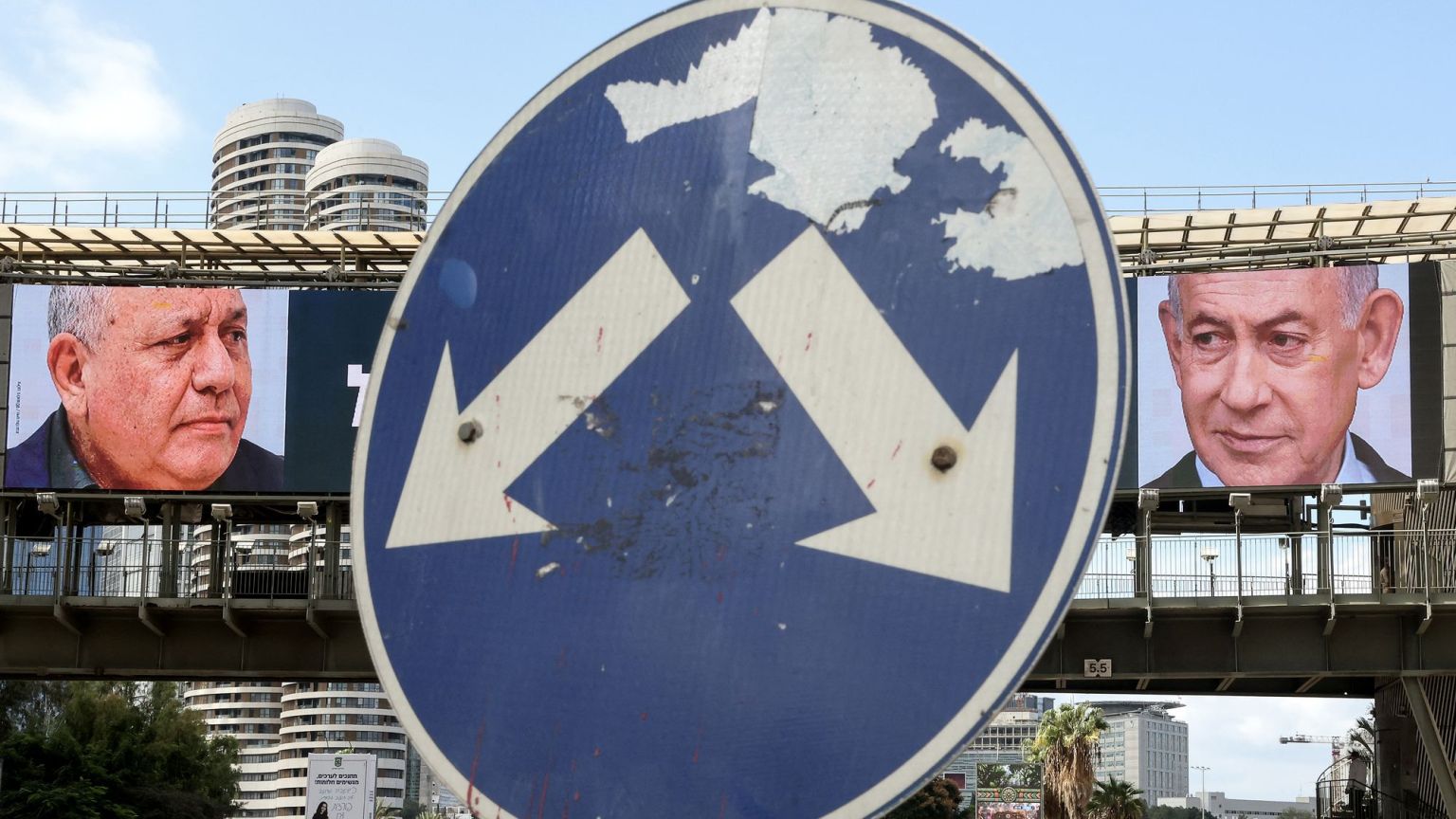
Tomorrow, the outcome of Israel’s most consequential election in a generation may be decided not in Tel Aviv or the settlements, but in the largely Arab cities of Nazareth, Umm al-Fahm and the Bedouin towns of the Negev. Pollsters expect turnout among Israel’s two million Arab citizens to jump from 56 per cent in 2022 to more than 60 per cent this time, and some predict it could approach 70 per cent. With the final polls giving Arab-led parties around 14 of the Knesset’s 120 seats, and neither Benjamin Netanyahu nor his opponents within reach of a majority, the Arab vote could well tip the balance.
This is how it will look tomorrow. Arab voters will file into polling stations, many of them staffed by Arab officials, to choose between Arab parties with Arab leaders, one of which, Ra’am, sat in Israel’s governing coalition only four years ago. Ra’am’s leader, Mansour Abbas, has placed Yoav Segalovitz, a Jewish former senior police officer and one-time deputy minister, at number two on his slate. Last month, when the Central Elections Committee tried to bar the main Arab parties from standing, Israel’s Supreme Court overturned the ban unanimously.
Is anybody still crying ‘apartheid’? Let’s put what will happen tomorrow into perspective. Try to find a meaningful election anywhere else in Israel’s neighbourhood. Syria, Egypt, Jordan and Lebanon offer, respectively, a post-Assad transitional regime, a military strongman, an absolute monarchy and a sectarian carve-up held hostage by Hezbollah. In Gaza, the last election was in 2006; Hamas won it, then murdered its rivals and never held another.
Then there is the West Bank. Palestinian leader Mahmoud Abbas, now more than two decades into a supposedly four-year presidential term, promised Emmanuel Macron in June 2025 that he would hold elections, a pledge that played a significant part in France’s decision to recognise a Palestinian state. Britain’s recognition came with similar assurances of reform and elections. This month, less than two weeks after Hamas and other rivals formed an alliance to defeat him, Abbas’s deputy wrote to Paris to say that the vote scheduled for 28 November would be postponed, probably until next year. Britain and France, in other words, had had their trousers pulled down, their buttocks spanked, and their trousers pulled up again. But free, free Palestine, amirite?
The basic truth is that the only Arabs in the region who will ever cast a free and meaningful vote in their lives are the ones living in the country routinely accused of apartheid. Many of them will vote against the government and nobody will stop them. Try to imagine the equivalent in Ramallah.
But look a little closer and this election is hardly a simple story of Israeli democratic virtue; deep and troubling problems, even existential ones, stalk the vote, some of which have been worsened by Netanyahu, the very man seeking to rule the country for life. To understand why this election is crucial for Israel, you need to look at the difficult story of what has happened to relations between Jews and Arabs since the morning of 7 October 2023.
In the immediate aftermath of Hamas’s atrocities, Israel came together as perhaps never before. Hamas made no distinction between Jews and Arabs; Bedouin citizens were among the dead and the kidnapped, and Bedouin men drove into the killing fields to rescue Jewish festivalgoers under fire. For a few months, the Arab Israeli who saved Jewish lives was a national hero. Three years of war, grief and exhaustion, however, together with a coalition in which the far right sets the tone – Netanyahu has never visited an Arab family bereaved in the violence – have led to that moment being squandered. As the Arab-Israeli analyst Mohammad Darawshe depressingly put it, ‘this government provides the ecosystem for racism’.

In recent weeks, Netanyahu’s campaign has been playing an old and ugly tune. A vote for the opposition, his supporters warn, means a government propped up by the Arab parties, as happened under Naftali Bennett and Yair Lapid in 2021. Likud has circulated doctored images and AI-generated videos showing his rivals ‘embracing Arab leaders’. Likud and Bezalel Smotrich’s Religious Zionist Party have announced plans to send nearly 2,000 activists to polling stations in Arab towns on the strength of unsubstantiated claims of fraud. Smotrich himself has floated a plan to ‘Judaise’ the areas around Nazareth.
The message is a clear dog whistle: Arab citizens may vote, but their votes must never count.
What has been most dispiriting, though, is the response from the other side. Rather than offering a confident, tolerant alternative, the opposition has accepted Netanyahu’s premise in its riposte. Gadi Eisenkot, the frontrunner, a former IDF chief of staff who lost his son in the fighting in Gaza, has declared unequivocally: ‘I will not align myself with any Arab party.’ Yair Lapid, who previously sat in government with Ra’am, has vowed that he will not do so again. Granted, they cite the Arab parties’ refusal to label Hamas a terrorist organisation, which is a genuine and serious objection. But that argument has been lost in the heat. An opposition that cannot bring itself to say that Arab citizens are legitimate partners in Israeli democracy has already ceded half the argument.
Meanwhile, Arab voters are going to the polls with something more immediate on their minds: staying alive. Last year, a record 252 people were murdered in Arab communities, according to the Abraham Initiatives. In the early weeks of this year, the killing continued at roughly one a day. The homicide rate among Arab citizens is more than 22 times that among Jews, and fewer than one in five killings in Arab towns ends in an indictment, against 60 to 70 per cent in Jewish society. President Isaac Herzog has called it a ‘national emergency’. The police, overseen since 2022 by the radical rightist Itamar Ben-Gvir, have seemed far keener on policing Arab protest than on dismantling the crime families terrorising Arab neighbourhoods. In the West Bank, too, the government has largely turned a blind eye as the hilltop thugs torch Palestinian homes and olive groves. If Arab turnout surges tomorrow, these will be some of the reasons behind it.
This is indeed an existential election, but not for the reasons the West thinks. In Britain, the assumption is that Netanyahu’s crime lies in his supposed disregard for civilians as he conducted the war in Gaza. In Israel, his critics generally argue the opposite: that he moved too slowly, stopped too soon and left the job unfinished. Eisenkot’s charge on Iran is that Netanyahu failed to destroy its nuclear programme. After Hamas’s pogrom, nobody serious is offering Israelis a dovish future. As for the two-state solution that has become an article of faith in the West, it is clearly not going to happen any time soon – not only have the Palestinians rejected it repeatedly in favour of terror, but, well, 7 October.

No, the real danger for Israel is domestic, and it lies less with Netanyahu himself than with the people on whom his power would once again rest. Because the parties of the centre and left refuse to sit with him, a Netanyahu victory would leave him dependent, as before, on Ben-Gvir, Smotrich and the ultra-Orthodox parties. That would very likely mean more violence on the West Bank. There would still be no conscription for the ultra-Orthodox, whose refusal to serve while other people’s sons die in Gaza and Lebanon is, in my view, an offence against the state. There would be a renewed attempt to neuter the Supreme Court, the same body that has just restored the Arab parties to the ballot. We would see an acceleration of a creeping theocratic culture and more of the anti-Arab racism that has crept into the mainstream since the war.
For those reasons, it may very well be best for Israel’s future if Netanyahu loses tomorrow. As I have long argued, Israel should be treated as a normal country with normal faults, criticised where it deserves it and defended where it does not. And that means judging it by the standards of Western democracies – consider Britain’s past conduct in wartime! – not by the standards of the region in which it sits.
That, in the end, is the point the ‘apartheid’ crowd will never grasp. Israeli voters are concerned about coalition arithmetic, court reform, conscription and the treatment of its Arab minority, and its Arab citizens may decide the outcome of this fiercely contested national election tomorrow. In the West Bank, Gaza and the surrounding region, meanwhile, nobody gets to decide anything at all.
Israel is a democracy in trauma, flawed and frightened, but a democracy all the same. For all its faults, far from being the worst country in the Middle East, it is the best.
Jake Wallis Simons is co-host of The Brink, with former parachute-regiment officer Andrew Fox. It is available on all platforms now.
You’ve hit your monthly free article limit.
Support spiked and get unlimited access.
Support spiked and get unlimited access
spiked is funded by readers like you. Only 0.1% of regular readers currently support us. If just 1% did, we could grow our team and step up the fight for free speech and democracy.
Become a spiked supporter and enjoy unlimited, ad-free access, bonus content and exclusive events – while helping to keep independent journalism alive.
Monthly support makes the biggest difference. Thank you.


Comments
Want to join the conversation?
Only spiked supporters and patrons, who donate regularly to us, can comment on our articles.