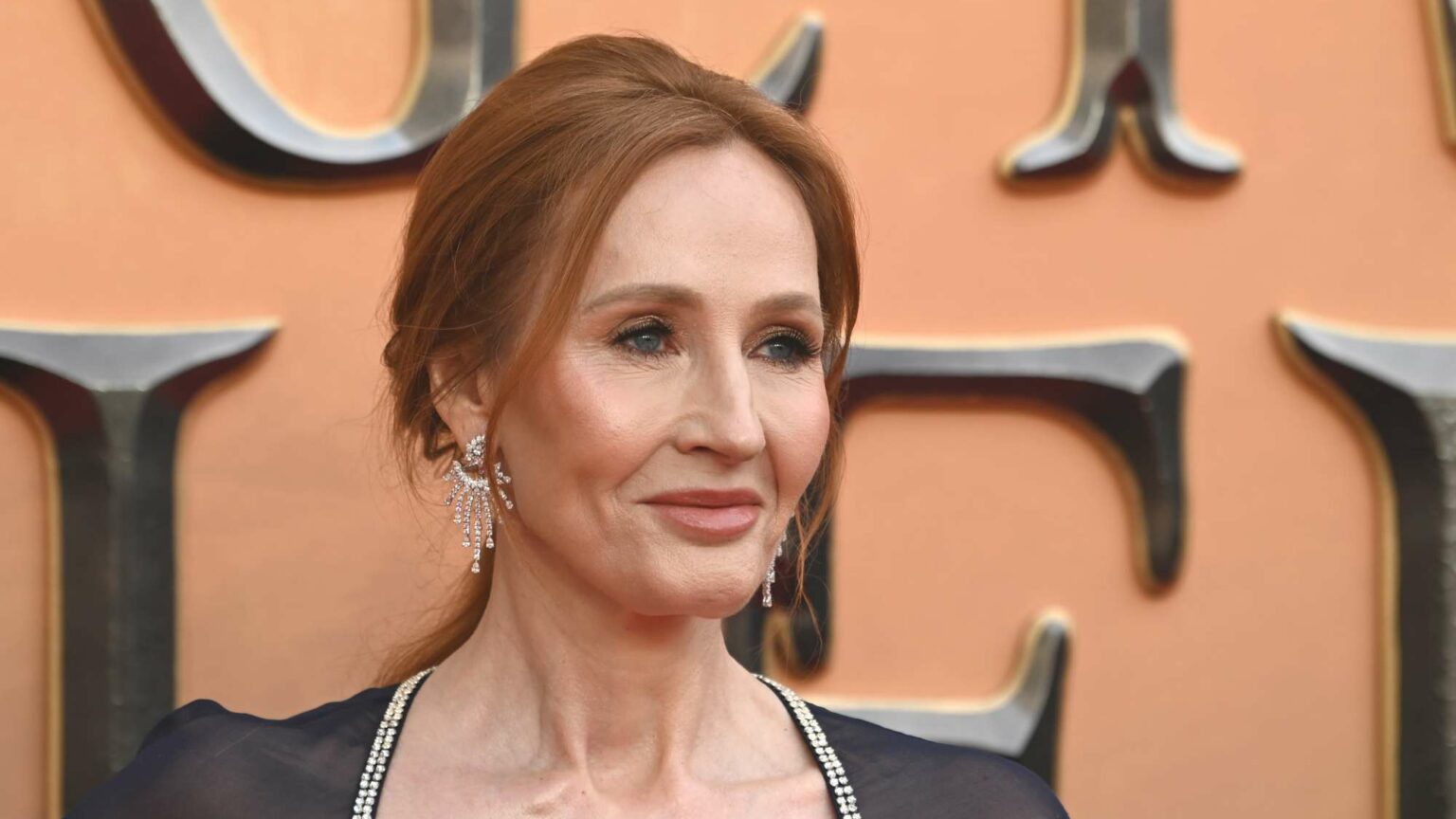
No wonder JK Rowling wants nothing to do with the BBC
Has the Beeb’s trans activism cost it access to Britain’s most successful living writer?
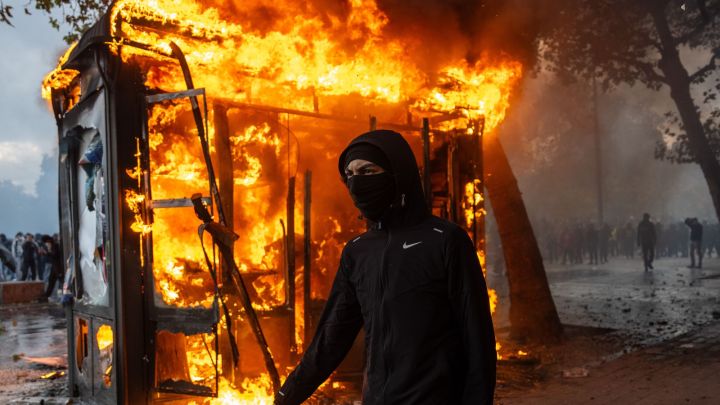
Read our latest coverage of the French riots here – paywall-free all of this week..
When the BBC announced last week it was making a two-part documentary series about JK Rowling, trans activists reacted with all the finely modulated restraint we’ve come to expect from them. On Bluesky, the social-media equivalent of Hades, comments ranged from ‘Fuck the UK’s anti-trans hag’ to ‘can someone please just nuke us already’. One cheery soul warned, ‘I want to do things I can’t voice’, which wasn’t exactly reassuring.
Some keyboard warriors claimed to detect a pattern, linking the BBC’s decision to commission the series with its digital erasure a few days earlier of a pro-trans, ‘Protect the Dolls’ slogan on a Strictly Come Dancing contestant’s t-shirt. These two entirely unrelated events proved, or so fever dreamers insisted, that the Beeb was part of a giant, right-wing conspiracy. If only…
In truth, everything we know about the Rowling series so far suggests the corporation has failed to take seriously last year’s leaked internal memo warning that its output is unduly influenced by trans ideologues.
Take the press release for a start. This describes Rowling as ‘one of Britain’s most polarising public figures’, which implies some kind of equivalence between her mass popularity and the anger felt towards her by a tiny, if vocal, group of hysterical activists. Yet she has many magnitudes more fans than haters.
Lest we need reminding, JK Rowling has sold more than 600million Harry Potter books. Films based on Harry Potter have grossed $7.7 billion. Polarising? Sure, if you imagine the enthusiasm of millions of fans equates to the hurt feelings of a shrill, self-obsessed minority who want the world to revolve around them.
The only justification for the BBC throwing shade on Rowling is, of course, that she defends the factual reality of biological sex – something taken for granted by the overwhelming majority of the public. This was even the case for the BBC once, until it began shelling out licence-fee payers’ money to Stonewall, a pro-trans charity, to brainwash its staff. If those are the rules now, the BBC might as well call its science presenters polarising because they insist the Earth isn’t flat.
Yet the arrogance of the BBC in pontificating about Rowling wasn’t the most remarkable thing about its press release. Notably absent was any reference to her participation. Had she agreed to take part, you can be sure the publicity would have led with that announcement. After all, nothing matters more to television producers right now than signing up celebrities. As ratings for public-service broadcasters have dwindled, the competition to attract famous names has become positively existential. Bosses know stars are one of the few ways they have left to keep their channels afloat. Nigella Lawson’s arrival on Great British Bake Off delivered its highest ratings for six years. The success of The Celebrity Traitors further proves this point.
By exploiting Rowling’s name, the BBC no doubt hopes to pull in punters and turn a profit from international sales. But it will win only a fraction of the audience and the lucre that it might have done had Rowling agreed to take part. That’s because viewers crave the kind of unmediated access to celebrities that only comes with their participation.
Channel 4 marketed the blue blazes out of its muck-raking documentary, Beckham: Family at War, but it was a flop. By comparison, Beckham, an anodyne fly-on-the-wall doc, was Netflix’s most popular show in the UK in 2023. The magic ingredient? Posh and Becks’s participation. Audiences, it turns out, are desperate to hear from the horse’s mouth. So to speak.
To be fair, Rowling is a hard catch. Unlike the Beckhams, she is intensely private. On the other hand, she can be convinced to let the drawbridge down, as her involvement in the Free Press’s 2023 podcast, The Witch Trials of JK Rowling, attests. The obvious question is how the producers of a podcast, working for what was then a start-up, managed to persuade one of the world’s cultural icons to be interviewed, when Britain’s national broadcaster could not do the same.
It’s hard to imagine the producers would ever have been able to convince Rowling that she would be treated fairly. That’s because Auntie long ago gave up even trying to feign impartiality when it comes to issues around sex and gender. The Beeb may have been forced to sever its relationship with Stonewall, but the lobby group’s fingerprints remain smeared all over its editorial policy and corporate culture. After a decade of DEI brainwashing, the attitudes of many BBC staff towards JK Rowling are now closer to those of swivel-eyed, online trans activists than to those of the ordinary public.
When historians come to write the story of the long, slow death of the BBC, the moment it lost the trust of Britain’s most successful living writer should loom large.
Malcolm Clark was LGB Alliance’s head of research from 2019 to 2022. Visit his Substack, The Secret Gender Files, here.
You’ve hit your monthly free article limit.
Support spiked and get unlimited access.
Support spiked and get unlimited access
spiked is funded by readers like you. Only 0.1% of regular readers currently support us. If just 1% did, we could grow our team and step up the fight for free speech and democracy.
Become a spiked supporter and enjoy unlimited, ad-free access, bonus content and exclusive events – while helping to keep independent journalism alive.
Monthly support makes the biggest difference. Thank you.
Comments
Want to join the conversation?
Only spiked supporters and patrons, who donate regularly to us, can comment on our articles.