The West’s childish games over Ukraine
From Trump’s attacks on Zelensky to Europe’s phoney sanctions against Russia, Ukraine is being hung out to dry.
Want unlimited, ad-free access? Become a spiked supporter.
Ever since Russia invaded Ukraine in February 2022, I have been struck by the irresponsible, almost casual manner with which Western governments have treated this conflict.
It seems as if deals and ceasefires between Russia and Ukraine are concocted by Western leaders on the spur of the moment. Often neither Russia nor Ukraine seems to be aware that a ceasefire is supposed to be in effect.
We have arguably just witnessed the most grotesque illustration of this new species of fantasy ceasefire. Just over a week ago, US president Donald Trump announced on Truth Social that both parties had agreed not to attack each other’s energy infrastructure. ‘Do not break it!’, Trump warned Ukraine and Russia.
But what was there to break? Trump’s declaration of an ‘energy ceasefire’ caught everyone, from NATO members to Russia and Ukraine, unaware. Volodymyr Zelensky, the president of Ukraine, said the truce was ‘news’ to him, although he pledged Ukraine would adhere to it for as long as Russia did. Which wasn’t long at all. Just a few hours after Trump announced the ceasefire, Russia began dropping bombs on Ukrainian power plants, leading to widespread blackouts.
Washington’s attempt to impose a specific energy ceasefire on Ukraine and Russia is motivated by a broad concern with the rapidly rising cost of fuel in the US. It’s not alone in this regard. Western governments as a whole seem more worried about oil prices than with defending Ukraine’s sovereign integrity. That is why they have conducted their charade of a sanctions regime against Moscow – a sanctions regime that invariably exempts large parts of Russia’s lucrative energy sector.
So it was hardly a surprise when Trump, having announced a deal to purchase millions of tonnes of diesel from Moscow earlier this month, issued an executive order last week pausing a new sanctions package targeting the Russian economy.
The truth is that despite Western nations’ much-publicised sanctions regime against Moscow, they have continued to allow Russian oil and gas to flow into their countries. This was something Trump drew attention to last week, in response to criticism of his diesel deal with Russia. He pointed out that since the war began, the European Union has paid Russia well over $200 billion in return for oil and gas.
Trump is not wrong. Despite continually boasting about the strength of the sanctions regime imposed on Russia, European governments have continued to pour billions of euros into Russian coffers in return for energy resources. Indeed, France, Belgium and the Netherlands continue to this day to purchase billions of euros of Russian liquefied natural gas (LNG). Russian crude oil also enters European fuel supplies after being refined in third countries.

As Times columnist Matthew Syed pointed out recently, Europe has spent €8 billion on Russian LNG this year alone. Since the outbreak of the war, ‘Europe has spent more on Russian fossil fuels (€231 billion) than we have given in total aid (€200.7 billion)’.
Looking back over the course of this conflict, it is difficult to avoid asking the question: Did Western leaders really want Ukraine to win against Russia?
Ever since the outbreak of the war, the attitude of the West towards it has been opportunist and pragmatic. In The Road To Ukraine: How the West Lost Its Way (2022), I drew attention to the geopolitical illiteracy prevailing among NATO member states. In the first instance, they failed to recognise how their ill-thought-out behaviour, expanding NATO membership eastwards in the years before the war, was provoking a deep sense of insecurity among the Moscow oligarchy. Then, once the war had broken out, they opportunistically embraced the cause of Ukraine as their own, associating themselves with Ukrainians’ courageous resistance to the Russian invasion in order to rescue NATO from irrelevancy.
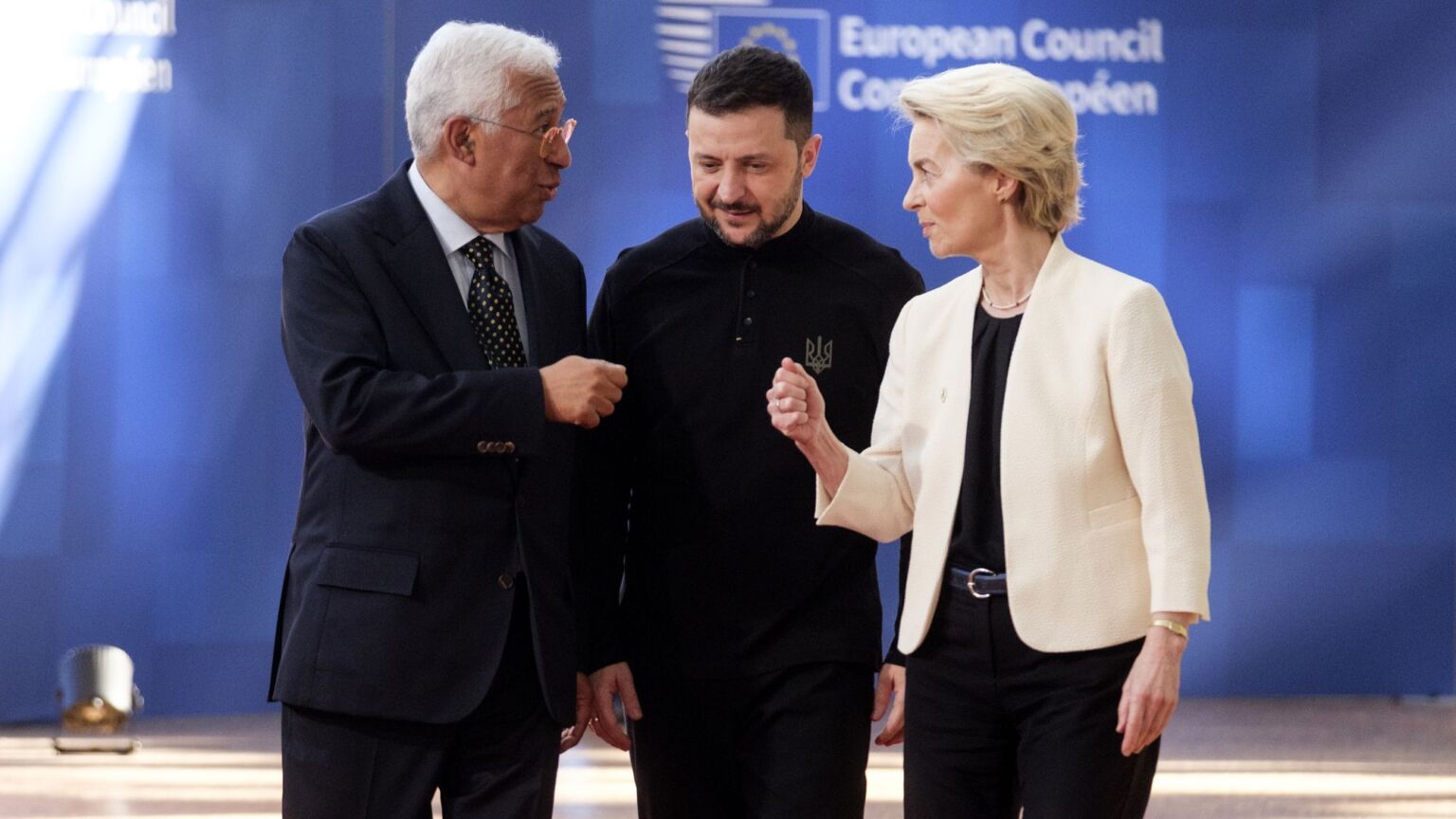
Almost from the moment the war started, one Western leader after another has made a pilgrimage to Kyiv to have their picture taken standing next to Zelensky. Getting that all-important photo-op with the Ukrainian leader highlights the fragile state of their own moral authority. As the veteran business and economics columnist for the New York Times, Peter Coy, noted, ‘Courage seemed to be dead. Then came Zelensky.’ What sections of the media described as Zelensky-washing was a tawdry attempt by Western politicians to compensate for their lack of statesmanship and domestic legitimacy by standing next to a celebrity leader.
Zelensky-washing continues to appeal to European leaders, desperate as they are to strike a statesmanlike pose on the world stage. In contrast, Trump has never been interested in playing this game. Rather than deferring to the moral authority enjoyed by Zelensky, Trump has used every opportunity to show that he is the boss.

Ever since the highly public Oval Office spat between Trump and Zelensky in February 2025, the behaviour of Washington has often verged on the infantile. The unprecedented humiliation of Zelensky in front of a global audience had little to do with geopolitical strategising or diplomacy. It was personalised and childish.
This infantile approach towards diplomatic affairs has continued to this day. Trump has continued to attack Zelensky as a person, claiming last week that he is ‘more difficult to deal with than Putin’ and calling for his replacement.
No doubt this latest attack on Zelensky is designed to send a signal to Moscow, indicating that Washington is ready to do business with Putin. But geopolitical realities dictate that it is premature for the White House to try to forge a rapprochement with Moscow.
Indeed, the geopolitical situation is far more volatile and confusing now than it was when Russia invaded Ukraine in 2022. The war in the Middle East, which is reinforcing a pragmatic alliance between Iran, China and Russia, means that Washington can no longer dictate terms – a geopolitical reality compounded by the fact that Russia remains suspicious of any diplomatic initiative that emanates from the West. And far too much blood has been spilled for Ukraine to simply roll over and accept a new order imposed on it by the US.
However, we should perhaps thank Trump for one thing this past week. He has exposed the hypocrisy of the Western sanctions regime against Russia. There will likely be continued talk about ceasefires over the coming months. But given the geopolitical illiteracy and immaturity of Western elites, and the brutal facts on the ground, it’s unlikely this war will end anytime soon.
Frank Furedi is president of the Freedom and Sovereignty Initiative Europe.
You’ve hit your monthly free article limit.
Support spiked and get unlimited access.
Support spiked and get unlimited access
spiked is funded by readers like you. Only 0.1% of regular readers currently support us. If just 1% did, we could grow our team and step up the fight for free speech and democracy.
Become a spiked supporter and enjoy unlimited, ad-free access, bonus content and exclusive events – while helping to keep independent journalism alive.
Monthly support makes the biggest difference. Thank you.


Comments
Want to join the conversation?
Only spiked supporters and patrons, who donate regularly to us, can comment on our articles.