No one should feel ‘empathy’ for the killer tiger
After a man was mauled to death in a Yorkshire zoo, let us never forget that an animal’s life is never worth as much as a human’s.

Want unlimited, ad-free access? Become a spiked supporter.
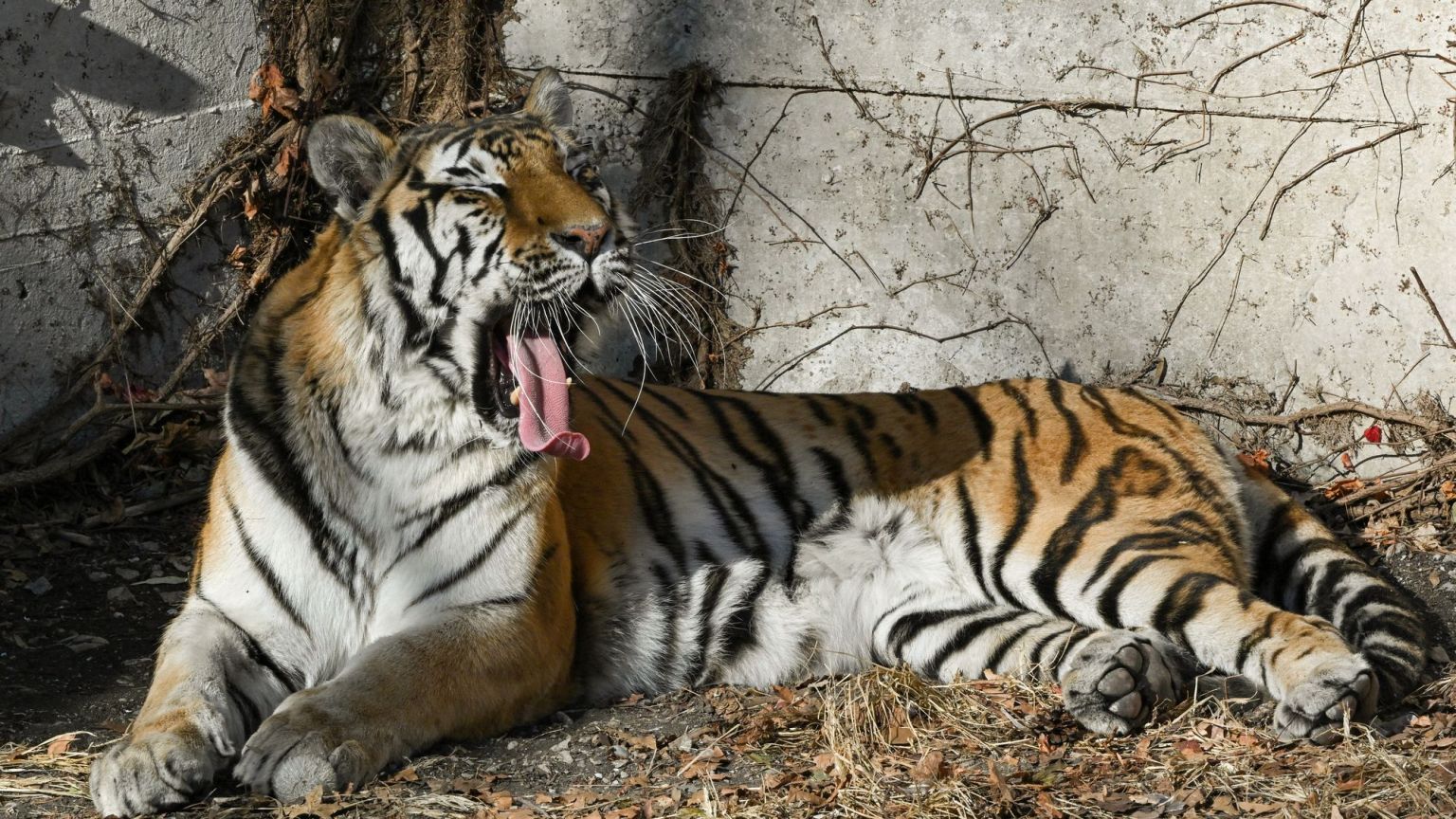
Last weekend, footage began circulating online of a man being mauled by a tiger. The attack took place on Saturday 10 October at Yorkshire Wildlife Park, near Doncaster. The man, who has since been identified as William Chapman, tragically died of his injuries.
Online sleuths quickly began to examine the footage for evidence of his motivations. Some claimed he was autistic and non-verbal, while others claimed he had asked for a photograph with the animal before climbing in.
You would have thought that news of the man’s tragic death would have calmed online speculation. Instead, it fuelled debate about what might happen next to the tiger and whether it would be punished. News outlets later reported that there were no plans to put the tiger down. The animal, an endangered Amur tiger named Altai, was confirmed to be ‘safe and well’ by the wildlife park.
This, bizarrely, prompted a rush of online support for the big cat, with many arguing that it would have been wrong to shoot the animal, given that Chapman had climbed into its territory. What is extremely worrying is that there is some suggestion that the zoo fired ‘warning shots’ to distract the tiger, but didn’t actually shoot it during the attack.
I am all for animal welfare. Naturally, I was weirded out by the documentary series, Tiger King, in which eccentric Americans are shown keeping tigers in private zoos, often in terrible conditions. As human beings, we should obviously do everything we can to keep tigers alive and healthy.
Unless, of course, they are eating a human. That is where we should probably draw the line. If it turns out that this zoo has prioritised a tiger’s life over that of a man, that deserves a criminal investigation.
There are many on social media who seem conflicted about this. Some people seem to believe that a tiger’s life is worth so much that it might be worth letting it live rather than saving a human being. One widely shared tweet argued that the tiger did nothing ‘wrong’, and in mauling a man to death, was only doing what came naturally to it.

Let’s be clear. Animals never do anything ‘wrong’. They don’t make moral decisions. When they choose to attack something or someone, they are not weighing up differing moral considerations and forming a judgment. They are trying to eat. Or play. Or defend themselves. They are driven by biology, not moral reasoning. Of course, the Yorkshire tiger did nothing ‘wrong’ because the decision it made was in no sense moral.
That is why our decision about what happens to the tiger should not be driven by empathy or sympathy, either. These are emotional responses that should be confined to our treatment of humans. Why? Because you can’t be empathetic towards a tiger. To have empathy, we have to have some understanding of what it’s like to be a tiger. No amount of watching Tiger King is going to change that.
We keep tigers alive because it is good for tigers to be in the world. In normal situations, they are great to have around (albeit not too close). They are part of the richness of our universe, worth protecting to study and to marvel at. But they are not part of our moral community. It would make no sense to put the tiger down as ‘punishment’, because no animal is ever deserving of judgment for its actions.
In this particular tiger’s case, it might nevertheless be sensible to put it down. The zoo could reasonably conclude that punters might not want to stand and take photos with a tiger that has mauled a man to death. This would not be the same as ‘punishing’ the tiger for its actions.

We seem to have lost sight of the essential moral difference between human life and animal life. Human beings have hopes and aspirations. They make plans. They love. Who knows why Chapman climbed into that enclosure, but his life was worth infinitely more than his attacker’s.
If, as has been suggested, those working at the zoo had the chance to kill the tiger and did not take it, this demands an explanation. There can be no justification for preferring the life of an animal above that of a human. Whatever happens to the tiger now should be based on respect for the dead man, not on misplaced empathy for a wild animal.
Luke Gittos is a spiked columnist and author of Human Rights – Illusory Freedom: Why We Should Repeal the Human Rights Act.
You’ve hit your monthly free article limit.
Support spiked and get unlimited access.
Support spiked and get unlimited access
spiked is funded by readers like you. Only 0.1% of regular readers currently support us. If just 1% did, we could grow our team and step up the fight for free speech and democracy.
Become a spiked supporter and enjoy unlimited, ad-free access, bonus content and exclusive events – while helping to keep independent journalism alive.
Monthly support makes the biggest difference. Thank you.

Comments
Want to join the conversation?
Only spiked supporters and patrons, who donate regularly to us, can comment on our articles.