Why was a male flasher allowed on a women’s psychiatric ward?
The NHS is putting vulnerable women at risk by refusing to stand up to transgender bullies.
Want unlimited, ad-free access? Become a spiked supporter.
Back in the day, if a male hospital patient wanted to show his willy to female patients, he had to be cunning about it. First, he’d have to get past the nursing sisters. If caught, he’d be back on the male ward – under a stern matron – before you could say: ‘Put that away, sir.’ Probably flanked by a couple of burly hospital porters.
Today, a man need only say he is a woman to access a female ward – and even showing his fellow patients his crown jewels may not be enough to get him removed.
Think I’m exaggerating? A doctor is bringing legal action against Greater Manchester Mental Health NHS Foundation Trust after a bearded male patient with ‘full male genitalia’ was admitted to one of its women’s psychiatric wards. When women complained that he had exposed himself, he was moved to a male ward – only for trust managers allegedly to intervene and send him back.
Many of the women there had been detained against their will under the Mental Health Act 1983. This meant they couldn’t simply leave if they felt unsafe. Some were also victims of sexual violence.
Sadly, none of this surprises me. Having interviewed more than a dozen NHS employees for a recent Telegraph investigation, I’ve learned just how spineless their bosses can be.
One nurse raised concerns about a male colleague using the women’s changing room years before the Supreme Court ruled, in 2025, that ‘man’, ‘woman’ and ‘sex’ in the Equality Act refer to biological sex. After the ruling, the nurse’s trust instructed staff to use facilities corresponding to their sex. Yet even now the same man is still undressing alongside female colleagues. Apparently, his managers are still too gutless to tell him to get the hell out of the ladies’ changing room.
Elsewhere, a hospital receptionist I spoke to was subjected to an 18-month investigation after saying she did not believe transwomen were women. Cue months of Big Brother-style monitoring – including an allegation that she had been caught on CCTV removing ‘Introduction to Pronouns’ posters from hospital walls.
The internal documents that had been drawn up about the receptionist read like an ideological re-education programme. They describe her views as ‘worrying for somebody working in the NHS and patient-facing’. Emails speculate that she is a ‘TERF’ – a trans-exclusionary radical feminist. A definition circulated internally at the hospital claims TERFs believe transwomen are ‘actually men who are trying to invade women’s spaces’. It also characterises TERFs as having an ‘obsession with “biology”’. Somewhat ironic in a healthcare setting.

Even the Suffragette colours on her email profile were treated with suspicion. An LGBT network lead described them as ‘the TERF logo’ and demanded ‘immediate action’ to have them removed.
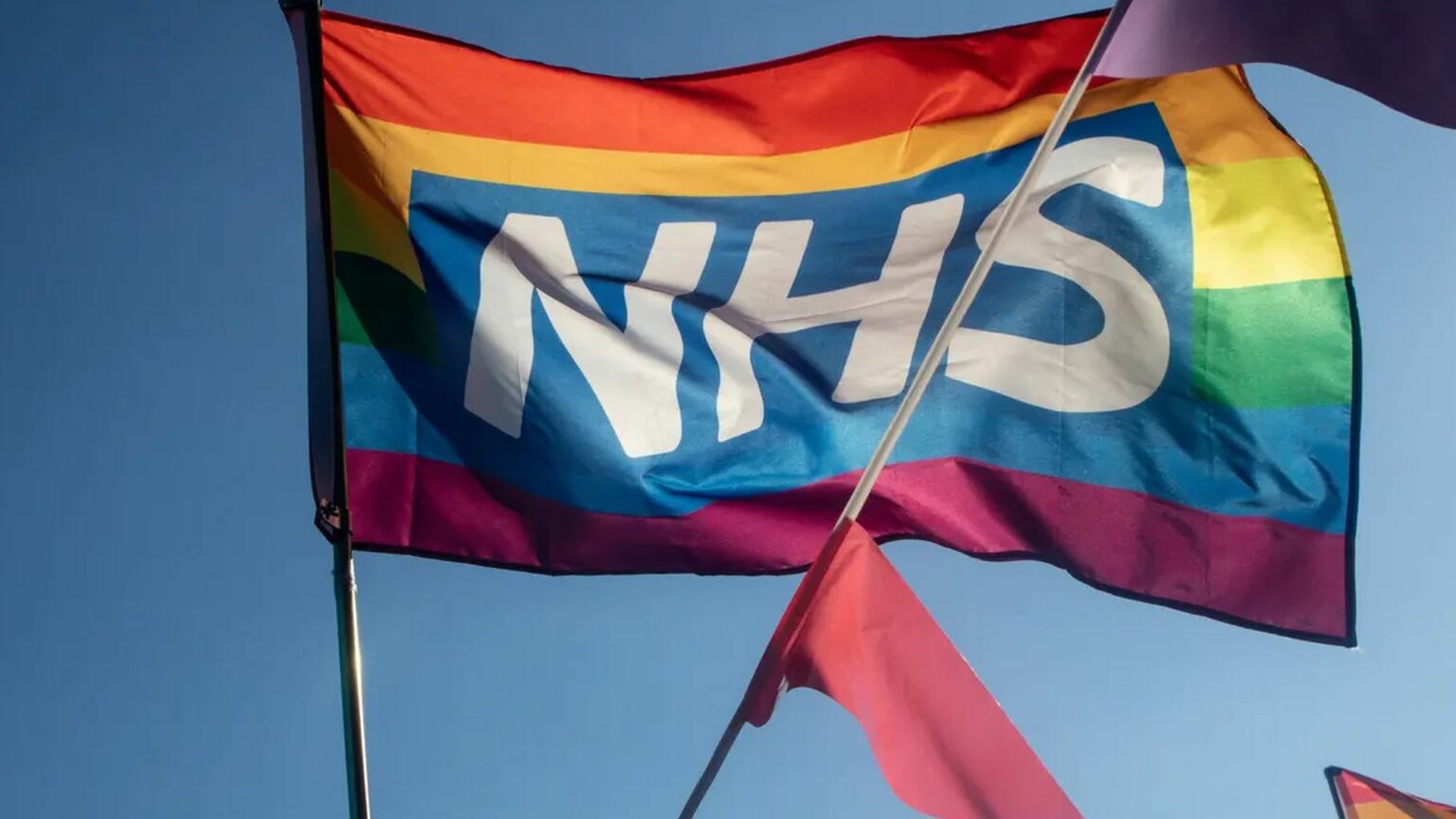
Many other NHS employees describe a ‘culture of fear’, wondering which colleagues it is safe to speak honestly around. A Pride lanyard or rainbow badge prompts caution, they say: might this be someone who objects to what they say – or to the basic truth that men cannot become women?
Several have seen colleagues who challenged trans ideology being pushed out – or so ground down that they left the NHS. The process is the punishment, of course. ‘I go to work, keep my head down and just try to stay out of trouble’, one ambulance worker told me.
While this culture of fear does not excuse the response at Greater Manchester, it may help explain how a man was returned to a female ward after behaviour that could potentially constitute a criminal offence. Whatever his mental state, exposing himself to female patients should have raised serious safeguarding concerns.
A ward manager reportedly pointed out that if a man wandered through the connecting corridor from the male ward into the female ward, there would be a ‘high-level investigation’. But if the same man says he is female, he can apparently be returned to the women’s ward – even after exposing himself to the women on that ward.

The senior psychiatrist bringing the legal action also asked whether a male member of staff who identified as a woman could be allowed to observe a vulnerable female patient showering, using the lavatory or changing a tampon. She says she was told that the female patient would have to advocate for herself and explain why she wanted same-sex care.
Meanwhile, when the male patient was placed back on the ward, the consultant in charge reportedly responded: ‘But what can you do about it?’ Well, quite a lot, actually. Unless you’re the kind of organisation that places men’s feelings above the safety, privacy and dignity of women.
Nearly 17 months after the Supreme Court clarified the meaning of sex in law, NHS leaders are still behaving as if the law is optional. Trans ideology may have been defeated in the courts, but the culture that produced this madness clearly lives on.
Janet Murray is a freelance journalist and director of SEEN in Journalism.
You’ve hit your monthly free article limit.
Support spiked and get unlimited access.
Support spiked and get unlimited access
spiked is funded by readers like you. Only 0.1% of regular readers currently support us. If just 1% did, we could grow our team and step up the fight for free speech and democracy.
Become a spiked supporter and enjoy unlimited, ad-free access, bonus content and exclusive events – while helping to keep independent journalism alive.
Monthly support makes the biggest difference. Thank you.





Comments
Want to join the conversation?
Only spiked supporters and patrons, who donate regularly to us, can comment on our articles.