‘Britain is a dangerous place for anyone who thinks independently’
Peter Hitchens on why he is writing Britain’s obituary.
Want unlimited, ad-free access? Become a spiked supporter.
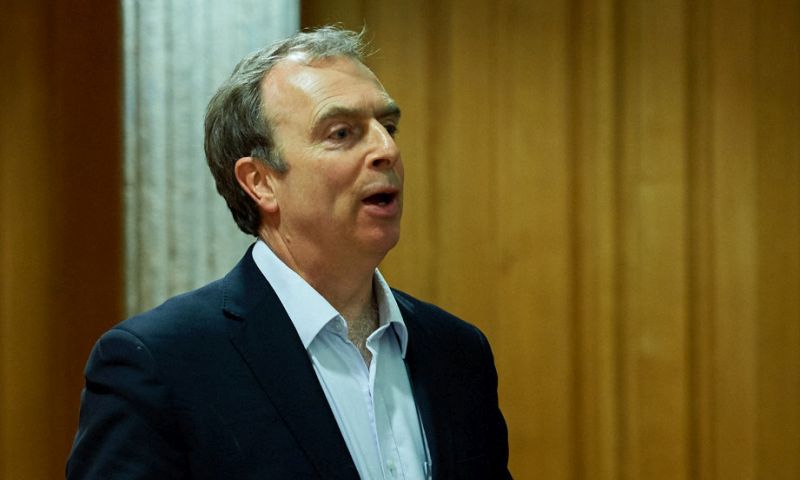
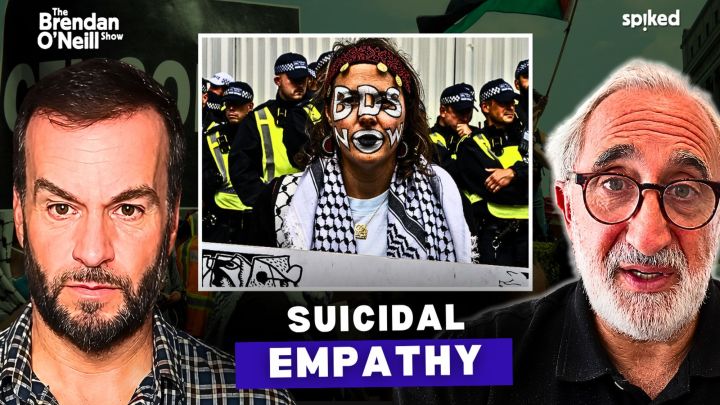
Poll after poll tells the same story: Britons are losing faith in their country, trust in their institutions and hope for the future. And no wonder. The economy is stagnant, the social fabric is fraying and politicians appear powerless to act. Mail on Sunday columnist Peter Hitchens was sounding the alarm over Britain’s decline long before it was fashionable to do so. He recently joined Brendan O’Neill on his podcast, The Brendan O’Neill Show, to discuss what has gone wrong, why and whether we might ever recover. What follows is an edited extract from the conversation. You can watch the full episode here.
Brendan O’Neill: Is there a danger that, as law and order breaks down, as Britain’s borders are no longer enforced, we will start to see more vigilante-style action, as we’ve seen in Portsmouth and Dover recently?
Peter Hitchens: If you don’t enforce the law, then people will try to enforce it themselves, and then you get chaos. I hate chaos and I am not sympathetic to chaos from whatever direction it comes because it’s terrifying. I’m marked for life by visits to Mogadishu when it was being run by the gangs some years ago. I’ve seldom been so totally abjectly terrified in my life as living in a city where there was no order and where anything could happen. If you didn’t have bodyguards with submachine guns, and if you didn’t live in a guarded compound, then you would probably be dead in the morning. This is what happens when chaos comes.
So I’m terrified by outbreaks of disorder and it really does gravely worry me. I’m also terrified of the micro-disorder that affects so many people. The sort of thing we’ve seen in Middlesbrough recently has nothing to do with politics. It is to do with the fact that authority, law, punishment, deterrence and respect for anything are just vanishing. A lot of this is driven by the drugs which have been effectively legalised for many years, after a very assiduous campaign by the liberal classes beginning in the 1960s.
O’Neill: What’s your view on the state of free speech in Britain?
Hitchens: In my first book, The Abolition of Britain, I quoted, as I often do, the editor of Oz in the 1960s, Richard Neville. He’s a very clever man and he said – and it’s always stuck in my mind – there is an inch of difference between the Labour Party and the Conservative Party, but it is in that inch of difference that we all live. The result of the Blairisation of the Conservative Party under David Cameron was that that inch closed, and one of the main features of life since the Cameron takeover has been an almost total collapse of true freedom of speech and thought.
Now, if like me you think that it’s not in Britain’s national interest to pursue war with Russia, then basically you’re treated as a traitor. There is no room for debate about this. Whereas all the previous conflicts and troubles of the post-war period – from Suez to Vietnam – it was perfectly legitimate for people who were patriots to say that they opposed these things, and they weren’t dismissed as traitors or told they were Lord Haw-Haw, or pumping out Russian propaganda, which I would never dream of doing. Now you are, and it’s quite extraordinary. Anybody who can think will find themselves very rapidly on the dangerous edge of things.
Well, that’s all right in a free society, but in a society that has almost entirely forgotten how to be free and doesn’t much want to be, it becomes increasingly alarming.
O’Neill: How much of this is down to the lingering influence of Covid authoritarianism?
Hitchens: I was accused of killing my own readers. On one occasion, I was actually specifically accused of helping to bring about the death of an individual who I had never met or heard of. It was extraordinary. I don’t know what the word really is for it, but Salem comes to Britain in many ways. Any lingering beliefs that I’d had that the British people had a special desire for liberty and a special readiness to stand up to authority were almost wholly dispelled by that period.
This is another thing about the use of what I do or say. Every few days, as it happens, somebody will approach me in Marks and Spencer or on the street and say, ‘I really wanted to say how grateful I am for what you said’ during what they still tend to call the lockdown. I call it The Panic. And I understand what they’re saying. They were really, really concerned that there was no other voice, that they were beginning to think they’d gone crazy because no one was saying anything publicly in opposition to it. By opposing it, I at least gave them some comfort and that to me is something I’m always very pleased about, because they really mean it and it obviously did make a difference. Imagine being in such a circumstance and there being no voice against it. So it is worth it, but it doesn’t achieve anything material.
Peter Hitchens was speaking to Brendan O’Neill. Watch the full episode of The Brendan O’Neill Show here:
You’ve hit your monthly free article limit.
Support spiked and get unlimited access.
Support spiked and get unlimited access
spiked is funded by readers like you. Only 0.1% of regular readers currently support us. If just 1% did, we could grow our team and step up the fight for free speech and democracy.
Become a spiked supporter and enjoy unlimited, ad-free access, bonus content and exclusive events – while helping to keep independent journalism alive.
Monthly support makes the biggest difference. Thank you.
Comments
Want to join the conversation?
Only spiked supporters and patrons, who donate regularly to us, can comment on our articles.