Starmer’s social-media ban will do huge harm to young people
Children and teenagers need more freedom, not less.
Want unlimited, ad-free access? Become a spiked supporter.
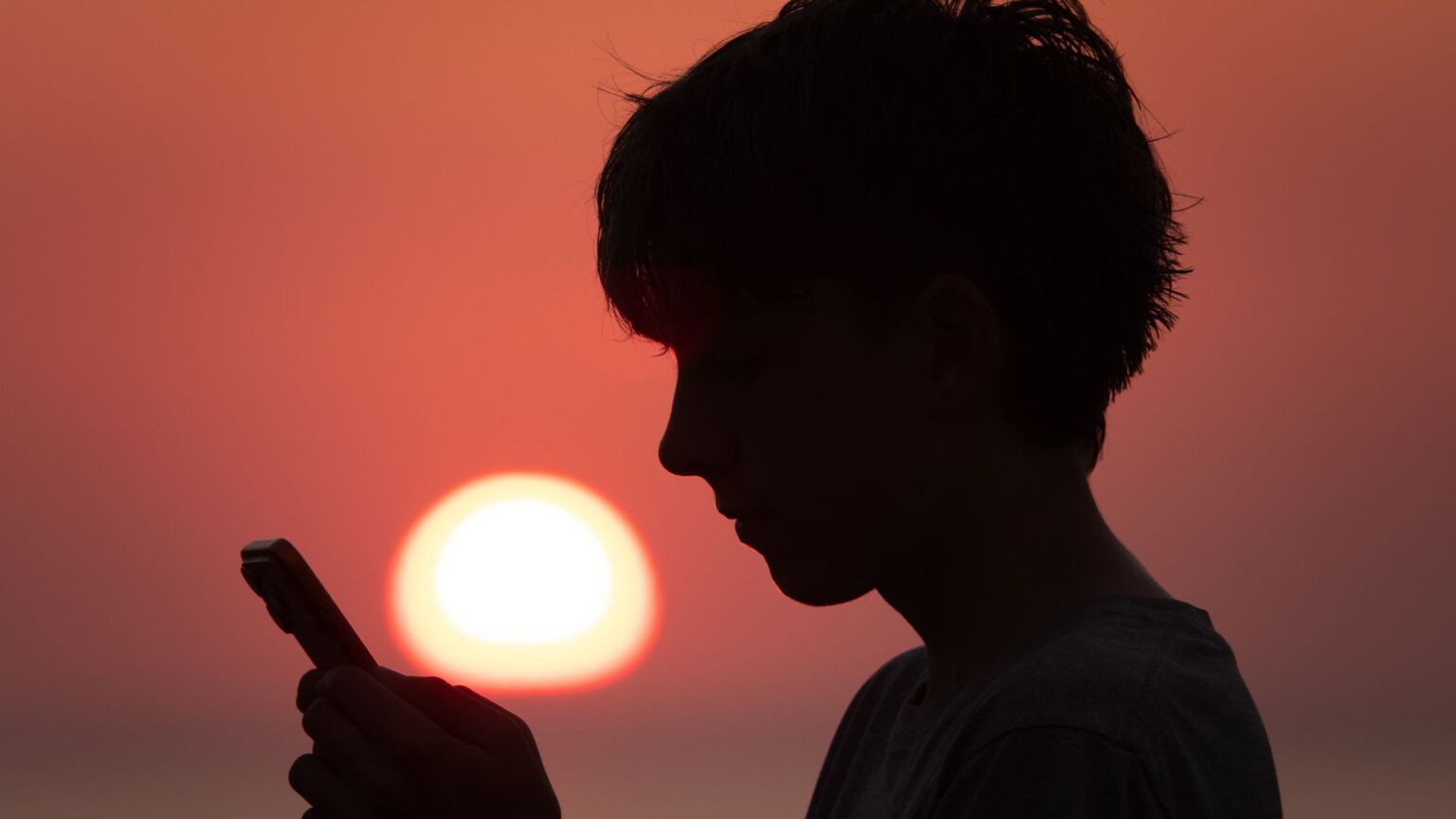
This week, the government announced a social-media ban for under-16s in the UK. It is set to come into effect by spring next year.
While UK prime minister Keir Starmer insists nine out of 10 parents support it, the ban has not met with unanimous praise. Ian Russell, whose daughter Mollie took her own life in 2017 after viewing suicide content online, has accused Starmer of ‘political opportunism’.
Given how shallow and performative Starmer’s justification for the ban has been, it’s hard to disagree with Russell. The prime minister’s claim that social-media platforms stop ‘children doing their homework, reading, playing with their friends outside, [and] going to bed at a decent hour’ betrays a profound ignorance of just how much childhood has changed in recent decades, long before the surge of social-media use in the 2010s.
In truth, much of the harm to children, from their retreat indoors to their isolation, now being attributed to social media, began with the rise of safetyist culture during the 1990s. The state was happy to sanction the portrayal of the outside world as a dangerous, risky place. The rise of ‘stranger danger’ awareness campaigns made parents reluctant to allow their children to play outside long before TikTok. As Greg Lukianoff and Jonathan Haidt argue in The Coddling of the American Mind, social-media sites are only one side of the coin. Yes, young people today are more risk-averse and, as a result, less resilient than previous generations. But society has done just as much to confine children to their bedrooms as social media.
When I was a teenager in the late 2010s, social media could indeed be a ‘Wild West’ of strange and often unwanted content. But social-media sites also gave teenagers access to things that adult society wasn’t offering. They gave a platform for children to be free, to explore new communities and outlets, to seek out others with the same interests and passions. And they did so when physical spaces were often cut off or heavily supervised. This was particularly important during the Covid lockdowns, when the same politicians now railing against social media’s impact on the young did everything they could to keep a generation of children locked in their homes.
A social-media ban will only exacerbate young teens’ frustration over their lack of independence. It will be experienced as a loss of control they felt they had over an area of their own lives. The freedom and the space to make mistakes in real life, just as much as the online world, are important for young people. Without it, they can’t learn life lessons, be held responsible or make amends. To become independent, they need to be given the space to make decisions that have consequences in the world around them – to learn that they are part of something bigger than themselves.
That isn’t to say we need to romanticise social media. For some young people, the algorithmic echo chambers can lead to spirals of insecurity. In many ways, social-media platforms have reinforced the worst aspects of modern childhood: pressures of educational achievement and expectations of conformity lead to early adultification, while opportunities, responsibilities and freedoms in the outside world decline.
But the crux of the issue for young people growing up online is not the social-media platforms themselves. Rather, it is the prevailing culture of moral relativism and weakened adult authority. Young people lack the framework, which once would have been provided by older generations, to make sense of the intensely globalised, politicised and polarised content online.

What this speaks to is not so much the dangerous power of Big Tech, but the loss of intergenerational knowledge and communication between parents and children. Parental authority has been outsourced to so-called experts, and community experience and values have been eroded by the preoccupation with cosmopolitan norms. Parents and trusted adults have been warned against giving guidance and teaching lessons to their kids due to their allegedly outdated understanding of the world and the prejudices they may have. No wonder, then, that children have become prisoners to everything they see and hear online.
For a political class bereft of principle, social-media platforms have become a convenient bogeyman. We witnessed this in April’s Clapham unrest, when hundreds of young people wreaked havoc on the streets. This was clear evidence of a profound breakdown in parenting and policing – yet social-media platforms, particularly TikTok, were blamed as the source of the problem. Young people may have wilfully broken the rules, but the bigger issue is that the adults in the room rarely try to enforce them.
Starmer’s desire to get children back to reading, sleeping and playing outside cannot be mandated. Children’s behaviour ought to be the responsibility of parents, not No10. The social-media ban will only further erode parents’ authority. After all, if the government doesn’t trust parents, why should their children?
What we need is not a ban on social media, but a conversation about how we strengthen the lives of young people. Further weakening the authority of adults is not the way to go about this.
Like everything Keir Starmer does, his social-media ban is pointless and self-defeating. Children need a strong society to help them flourish as adults – not a stronger nanny state.
Emma Gilland is event coordinator for the Academy of Ideas and author of The Corona Generation: Coming of Age in a Crisis, written with Jennie Bristow and published by Zero Books.

You’ve hit your monthly free article limit.
Support spiked and get unlimited access.
Support spiked and get unlimited access
spiked is funded by readers like you. Only 0.1% of regular readers currently support us. If just 1% did, we could grow our team and step up the fight for free speech and democracy.
Become a spiked supporter and enjoy unlimited, ad-free access, bonus content and exclusive events – while helping to keep independent journalism alive.
Monthly support makes the biggest difference. Thank you.
Comments
Want to join the conversation?
Only spiked supporters and patrons, who donate regularly to us, can comment on our articles.