The US has emboldened Iran and abandoned Israel
Trump’s war with the Islamic Republic was doomed from the beginning.
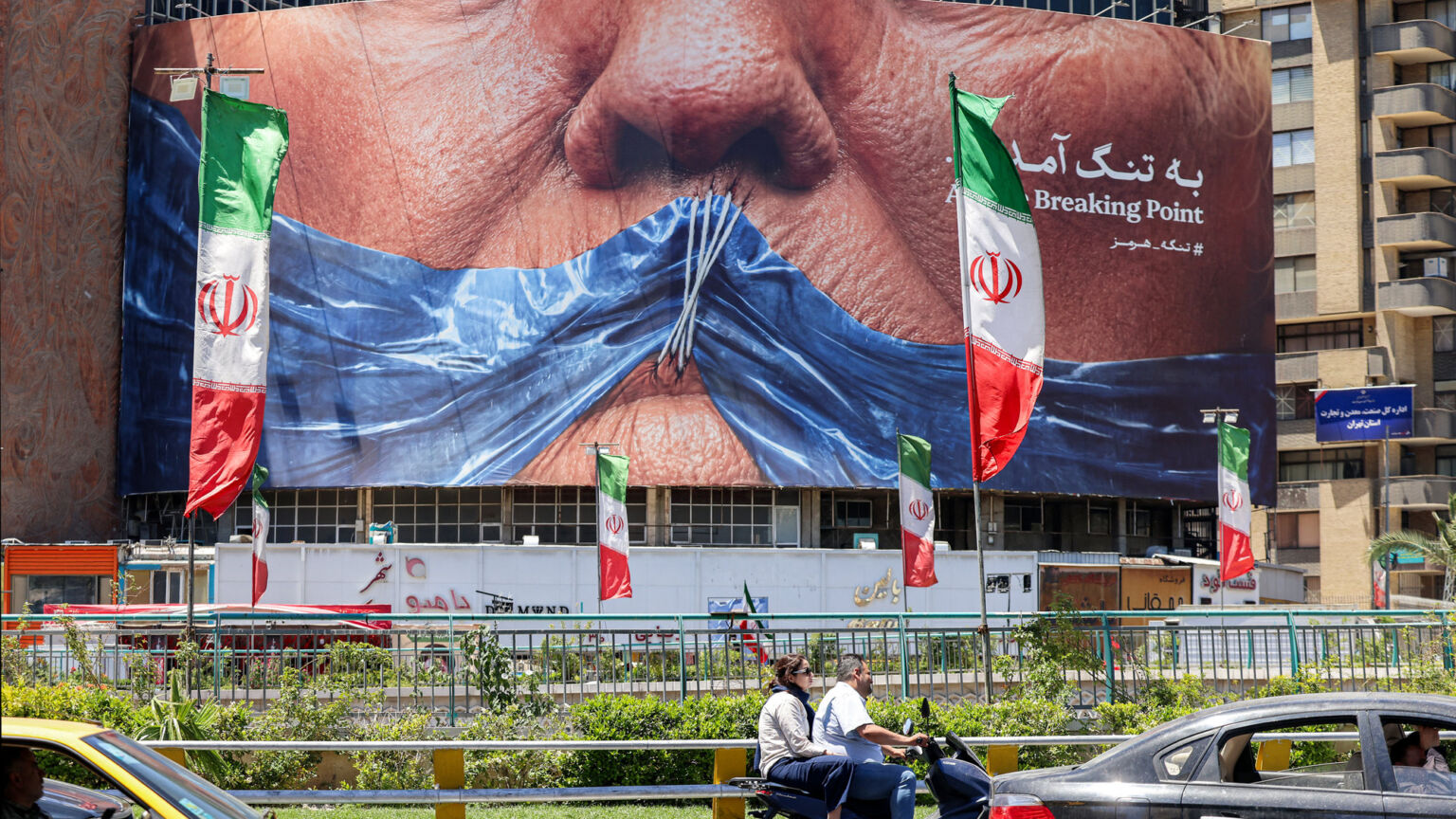
Want unlimited, ad-free access? Become a spiked supporter.
The Islamic Republic of Iran kills its own people and sponsors terrorism in Israel, Lebanon, Britain and far beyond. The world will be a better place when this brutish regime is destroyed. Unfortunately, the reckless US assault on Iran has made this prospect even less likely than it was – at least in the short to medium term.
From the start of the war to last weekend’s ‘memorandum of understanding’ with Iran, the White House has acted like a child who spies a hornets’ nest, pokes it with a big stick, kills a few of the creatures while stirring up many more, and then runs back home to leave others to deal with the ferocious after-effects. And the Islamic Republic is a thousand times more lethal than the biggest nest of hornets.
Whatever peace deal is eventually agreed between the US and Iran over the following weeks, Israel’s security is the biggest loser from what began as a joint US-Israel operation. Indeed, in recent weeks, the White House has gone silent on two of Israel’s key goals, which it originally backed: destroying Iran’s ballistic-missile capabilities, and severing Tehran’s support to its terrorist proxies in Gaza, the West Bank, Lebanon and Yemen. A third objective – disabling Iran’s nuclear capabilities – has been pushed into the future on the crazy assumption that the words of the Islamic Republic can be trusted.
Nearly six weeks of air assaults did weaken the theocracy in some military aspects, though far less than the White House hyperbole claims. But the Iranian regime has also been emboldened by the war. It has shown that it can defy the US, albeit at the expense of the struggling Iranians it rules over.
With the regime left in place, it will soon rearm and refinance itself, maybe even with the help of maritime transit fees from the Strait of Hormuz and some easing of sanctions. Moreover, President Trump’s portrayal of the Islamic Republic as people he can make a deal with has given it an international legitimacy that it previously lacked. And by accepting Tehran’s incorporation of the Lebanese conflict into any peace deal, the White House has bolstered Iran’s aim of being recognised as a regional Middle Eastern power.
It is important now to absorb the lessons of this US-led calamity because it is very unlikely to be the last such rash military venture – especially as the US struggles to manage its decline from its hegemonic, superpower status.
The first lesson is that armed operations abroad are inherently perilous and should always be a last resort. Against Iran, the lofty bar usually set for launching a war on another country wasn’t reached. That was clear from the outset in all the erratic and ambiguous messaging coming from the White House. After the war started, some commentators tried to provide a rationale for disregarding Iranian national sovereignty. They hoped there was a clever White House plot to aid the Iranian people that couldn’t be publicly disclosed. Even today, some argue that the current peace negotiations are another cunning plan to lull the Islamic Revolutionary Guard Corps into a false sense of security.
When the US-Israeli assault began in February, many supporters of the beleaguered Jewish State were hopeful. This was understandable given years of rising anti-Semitism, anti-Zionism and Israelophobia around the world. But hoping that the US could, even accidentally, further the cause of freedom and Israel’s security was never justified. This was illustrated by Washington’s breezy abandonment of its pledges about forever ending Iran’s military capabilities.
Other backers of America’s war suggested the Islamic Republic’s pursuit of nuclear capabilities forfeited Iran’s right to self-determination. That was similar to the fateful arguments made in 2003 to justify the US-UK invasion of Iraq: that its government had developed non-conventional weapons of mass destruction.
Trump’s focus on Iran’s nuclear capability poses a vital question: who decides which countries should have, or should be prevented from having nuclear bombs? Another US president might decide other non-Western nuclear powers should be denuclearised, be they North Korea, Pakistan or India. Would invasions of those countries be just? Why doesn’t the possession of nuclear weapons justify the West invading Russia, or China, or maybe Israel – say, if anti-Semites took control of a Western government?
Moreover, backing the US assault ignored a repeated lesson of history: that entrenched reactionary regimes like Iran’s rarely self-destruct – they have to be destroyed, not battered. There is only one feasible way to destroy an embedded authoritarian state and that is through war.
The preferable route is by civil war. In Iran’s case, this would likely be a popular uprising that secures the backing of enough regular army soldiers to defeat the regime loyalists. This war would be destructive, but it would also pave the way for the construction of a new nation. A country’s own citizens, not outsiders, are the most informed and most incentivised to further their own liberty and pursue it through to victory.
The other option is an external military invasion. This route requires justifying the violation of another nation’s sovereignty – a principle that has been prized by champions of freedom for centuries. Indeed, ever since Thomas Paine elevated national self-determination as vital to the cause of freedom in the late 18th century, internationalist supporters of liberty have made clear that national sovereignty resides fundamentally in a country’s people. External interference, whatever its stated objectives, has been understood to change the internal balance of power, usually to the detriment of the local people.
In the case of Iran, the US seemed to want to have it both ways. In early January, President Trump urged Iranian anti-government protesters to ‘keep protesting’, telling them that ‘help is on its way’. Yet no help was provided at the time, and up to 20,000 protesters may have been killed or executed by the Iranian regime.
The regime crackdown in January was certainly a huge blow to the Iranian people. But that should have necessitated even greater care being taken in assessing whether an external intervention would help the interests of the Iranian people. That didn’t happen. The screw-up played out from this point on.
Which brings us to the second lesson of this debacle: before starting a war, the protagonist needs to do as much as possible in advance to maximise the chances of success. As Carl von Clausewitz famously warned: ‘No one starts a war – or rather, no one in his senses ought to do so – without first being clear in his mind what he intends to achieve by the war and how he intends to conduct it.’ Launching an indecisive, half-way war can make matters worse, not least for those citizens living under oppression.
Preparation needs to go far beyond the military aspects. More important is the moral preparation of the people within the attacking country. Especially in democracies, the justifications for launching an interventionist war abroad need to be persuasive among the invader’s populace. A vital ingredient for strategic victory is sufficient public support at home that can withstand the inevitable casualties, privations and moral concerns that any war brings.
The last thing an invading force needs is noisy dissent at home, including from family and friends. Half a century ago, the Vietnam War showed that popular disillusion was extremely damaging to the morale of US soldiers on the ground. This didn’t cause the American defeat in 1975, but it made pursuing that war to victory all but impossible. Yet Trump’s contempt for democracy led him to launch the war with Iran, having pledged many times on the campaign trail that he would never start new foreign wars. No effort was made to explain to the American people why he was breaking his mandate and putting American – and other lives – in harm’s way. Hence the increasing disapproval of the war among Americans as it dragged on.
The final immediate lesson is that military strength is not enough. Over the first two months of war, the US military showed it remained head and shoulders above any other armed force in fighting capacity. Though a brilliant battlefield campaign can ensure short-term tactical gains, winning a war requires securing political objectives to make such successes permanent.
For all the many differences, the calamity of this Iran war again has echoes of the US record in Vietnam. American forces won most of their battles against the Vietcong and their air force carpet-bombed North Vietnam extensively. But eventually, America lost the war and had to withdraw. In Iran, the US also failed to defeat the opposition regime – one that is much more of an immediate threat to the world than Vietnam ever was.
Most military strategists will point out that starting a war but not pursuing it to victory risks the worst of outcomes. The Renaissance diplomat Niccolò Machiavelli warned against a ‘middle way’, stating that the enemy should be either completely crushed or completely conciliated. A mixture of the two simply guarantees the continuation of the original problem. In violation of the lessons from centuries of modern warfare, the White House irresponsibly took this middle way with the Islamic Republic.
The Tehran regime remains intact, minus a few senior figures, courtesy of the precision Israeli air strikes. Also, the leadership has now shown that it can control shipping through the Strait of Hormuz, giving it a new weapon to use, or to threaten to use, in its own cruel interests.
Even worse, the barbaric Islamist authorities might be emboldened further in their goals, having seen the depth of disunity and spinelessness in the old West. The Islamic Republic has confirmed that its ‘Great Satan’ opponent lacks the moral resolve to follow a war through to its end – an awareness that could encourage it to undertake future terroristic actions at home and abroad.
The repercussions of this war will extend far beyond the Middle East. America has advertised its diminished authority on the world stage. Allies will start reassessing their relationship with the US. And the West’s enemies will be emboldened.
Phil Mullan is the author of Beyond Confrontation: Globalists, Nationalists and Their Discontents.
You’ve hit your monthly free article limit.
Support spiked and get unlimited access.
Support spiked and get unlimited access
spiked is funded by readers like you. Only 0.1% of regular readers currently support us. If just 1% did, we could grow our team and step up the fight for free speech and democracy.
Become a spiked supporter and enjoy unlimited, ad-free access, bonus content and exclusive events – while helping to keep independent journalism alive.
Monthly support makes the biggest difference. Thank you.






Comments
Want to join the conversation?
Only spiked supporters and patrons, who donate regularly to us, can comment on our articles.