We need to talk about Britain’s brain drain
Young people are Britain’s most valuable and rapidly expanding export.

Want unlimited, ad-free access? Become a spiked supporter.
Somewhere in Britain right now, a young couple is sitting at a kitchen table with a calculator and ChatGPT open in a browser window, doing the arithmetic on whether to leave the country.
They have looked at the deposit they cannot save, the rent that takes more than half their pay, the tax that takes a third more, the GP appointment they cannot get, the school place they will struggle to secure, and the price of a place in Sydney or Dubai versus the price of a one-bedroom flat in Zone 4 of London. They are not without a little bit of fond feeling for this country they’ve always called home, but, after a point, they have to think about looking out for themselves.
There have been about a quarter of a million versions of this story playing out in Britain across the past 12 months – and that’s if you only count the ones that ended in the resolution, ‘Sod it, let’s get out of here’.
Two hundred and forty-six thousand – that’s the number of able Britons who’ve emigrated for pastures new in that period. At the same time, fewer Brits are returning home to live. The gap between those leaving and arriving is getting wider by the year.
People do what their incentives tell them to do. Every state in human history, functional or not, has operated on this principle. Government is essentially a feat of incentive engineering. When it works, the needs of the country and the needs of the individual are suitably harmonised, such that when the individual pursues their own vocation, the collective benefits. You will not be surprised to learn that the British political class is useless at incentive engineering. And not just recently, either – it arguably has been losing the knack for the better part of a century.
Looking around the UK right now, it is hard to see an incentive to do very much at all. Work hard, save money, buy a house? Not so fast: a first-time buyer in London now faces house prices at roughly 11 times average earnings, a ratio worse than any other major European city. Real wages, in the meantime, have not grown since 2008. In 2023, the Resolution Foundation found that the average British worker was £11,000-a-year poorer than they would have been had the pre-crisis trajectory continued. The tax burden is on course to reach 37.7 per cent of GDP by 2027-28, the highest share the UK has ever paid.
Yet the return for this crippling tax bill is increasingly meagre. Roads have potholes the size of spacehoppers. The NHS, into which your average professional will pay more than six figures over a working life, will not give you a same-week appointment. The current income tax burden doesn’t even cover welfare outlays. We are working harder not to realise our aspirations, but to fund an ever-expanding state, which rarely serves the needs of those who fund it.
Australia, for one, has noticed. Last year alone, the Australian government issued 79,000 working-holiday visas to British nationals, nearly double the number it had granted the year before. And doesn’t Australia love it! All that juicy human capital, waiting to be absorbed into a culture that matches its own just with a bit of added sun and surf wax.

And that’s where our bright young things are headed. A generation that has begun to conclude, understandably, that this is no country for young men or women.
People don’t want to stay in a country they feel is declining. There’s been a vast amount of talk in thoughtful quarters in recent years about the example of former Singaporean prime minister Lee Kuan Yew, and his philosophy that took a nation from the third world to the first. Singapore made the leap, as did South Korea and postwar Germany.
Yet Britain’s problem is that it has, wittingly or not, adopted a philosophy that can take a state from first world to third. Argentina is the canonical case, Venezuela the recent encore, while Italy is half a century into the slow-ballad version.
It works like this: Tax the productive. Subsidise whatever is politically rewarding, however destructive or insupportable. Print money. Redistribute the headline figures and declare victory before the consequences arrive. A sixth-former with half a brain and a bad attitude could absorb the entire doctrine in an afternoon. And a sixth-former with half a brain and a bad attitude is about the standard of the current British politician.
So say goodbye to your Perth-destined doctors, to your barristers bound for Dubai, to your serial entrepreneur headed Texas-ways. These people are the most expensive and the most valuable thing we produce. They are, shortly, going to become our chief export.

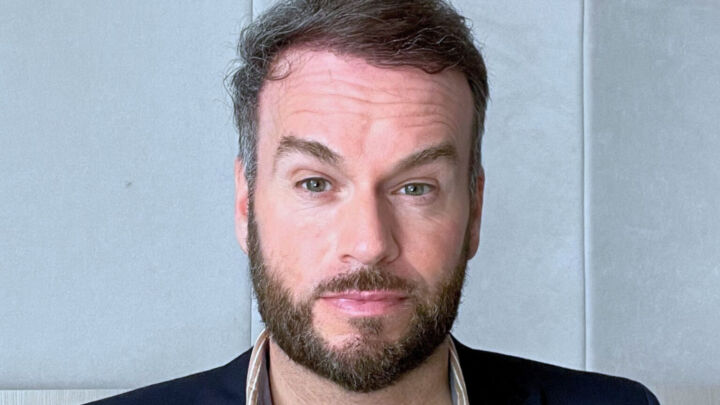
Maxi Gorynski is an engineer and founder of Progress, an organisation dedicated to a brighter future for Britain. He also maintains Heir to the Thought on Substack.

spiked summit 2026
10am-5pm, Saturday 27 June
Emmanuel Centre, London, SW1P 3DW
With Lionel Shriver, Brendan O'Neill, Katharine Birbalsingh, Toby Young, Allison Pearson, Paul Embery, Tom Slater, Andrew Doyle, Fiyaz Mughal and more
Become a spiked supporter to get a discounted ticket
£80 or £50 for supporters
You’ve hit your monthly free article limit.
Support spiked and get unlimited access.
Support spiked and get unlimited access
spiked is funded by readers like you. Only 0.1% of regular readers currently support us. If just 1% did, we could grow our team and step up the fight for free speech and democracy.
Become a spiked supporter and enjoy unlimited, ad-free access, bonus content and exclusive events – while helping to keep independent journalism alive.
Monthly support makes the biggest difference. Thank you.






Comments
Want to join the conversation?
Only spiked supporters and patrons, who donate regularly to us, can comment on our articles.