Henry Nowak’s death reveals a police force corrupted by wokeness
In 24 years in the force, I saw first-hand how racial identity politics has been prioritised over public safety.
Want unlimited, ad-free access? Become a spiked supporter.
I served for 24 years as a police officer in emergency response, public order, intelligence and counter-terrorism. I saw the best of policing, worked with devoted colleagues and took pride in work that indisputably mattered. I joined the police to make a difference. Duty, camaraderie and justice were not abstract ideals – and I believed that the force made the country safer. But, in the end, disillusionment drove me out.
Over time, I watched the mission of the police being hollowed out by ideological capture. Concern for public trust mutated into a top-down obsession with political correctness and policies that increasingly served political fashions, rather than the enforcement of the law. My personal breaking point came when I understood that the institution itself was eroding the principles I had sworn to defend.
The inevitable, tragic denouement of this ideological transformation came with the murder, in December 2025, of 18-year-old Henry Nowak. Nowak was stabbed four times by a Sikh man named Vickrum Digwa. But, when police arrived at the scene, it was Nowak who was placed in handcuffs. This callous decision was made because Digwa told officers that Nowak was a ‘racist’. Nowak told officers that he’d been stabbed. His last words were reported as, ‘Please, brother, I can’t breathe’. ‘I don’t think you have, mate’, an officer responded. Nowak died at the scene.
For a long time, British policing stood for impartiality, restraint and equal enforcement of the law. Nobody thinks that now. There has been a litany of cases, some high profile and others not so, where fear of that most career-ending of accusations – ie, of racism – has led to gross injustices.
The most infamous outrage is that of grooming gangs, which have been disproportionately comprised of Pakistani Muslim men. This was not merely a tragedy – it was a disgraceful collapse of policing and child protection. In town after town across the country – in particular areas with large Muslim populations such as Rotherham and Telford – mainly white working-class girls were subjected to appalling sexual exploitation. Police stood by, failed to act or looked the other way. Last year, a report by Baroness Louise Casey found that fear of being labelled racist was one of the primary motivators of police inaction.
We witnessed a similarly perverse obsession with race in 2021. A teacher at Batley Grammar – an independent state school in West Yorkshire – showed his pupils the same cartoons of Muhammad that were published by the French satirical magazine, Charlie Hebdo, in 2015. The teacher was subject to a terrifying campaign of abuse and intimidation from Muslim parents and organisations, until he was eventually forced into hiding and police protection. Yet again, police caved to the demands of these sectarian bigots in the name of ‘cohesion’. Not one of the teacher’s persecutors was charged.
These events did not emerge out of thin air. For years, police forces have prioritised identity politics above public safety. The death of George Floyd in America in 2020, and the resulting mania of the Black Lives Matter protests, sent this process into overdrive.
This is a corruption of purpose. Policing is now viewed through social-justice conventions about competing identity groups, producing the notorious ‘two-tier’ mindset. Senior leaders have reinforced that impression with their own bombast. They now routinely describe policing as a vehicle for inclusion and broader social reform. When police leaders sound more like activists than law enforcers, the public is more than entitled to conclude that priorities have been badly warped.
The Independent Office for Police Conduct is now investigating the behaviour of the officers in the Henry Nowak case. But one thing is obvious: responsibility cannot be dumped on frontline officers alone. Culture is set by senior leadership, and senior leadership must answer for the culture that saw its officers handcuff a teenager who was in the process of bleeding to death.
I know full well that policing is hard and that difficult judgements are unavoidable. But difficulty is not an alibi for weakness. The police are not there to placate pressure groups or manage sensitivities – they are there to uphold the law and protect people from intimidation, violence and coercion. When that mission is subordinated to ideological fashion or activist pressure, trust rots. Senior ranks deserve a disproportionate share of the blame, and they must not be spared over the death of Henry Nowak.
Britain’s policing institutions face a stark choice: continue down a path where social-justice activism eclipses law enforcement, or return to the foundational principles of equal protection under the law. Without that change, public confidence, already at its lowest ebb in memory, will not be recovered.
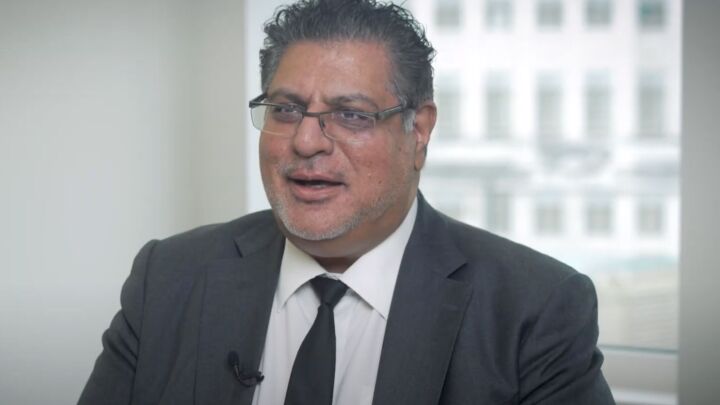
Paul Birch is a former police officer and counter-terrorism specialist. You can read his Substack here.

spiked summit 2026 – SOLD OUT
Saturday 27 June 2026
10am-6pm, Saturday 27 June
Emmanuel Centre, London, SW1P 3DW
With Lionel Shriver, Brendan O’Neill, Katharine Birbalsingh, Toby Young, Allison Pearson, Paul Embery, Tom Slater, Andrew Doyle, Fiyaz Mughal and more
The spiked summit has now SOLD OUT. To join the waitlist, email:
[email protected]
£80 or £50 for supporters
You’ve hit your monthly free article limit.
Support spiked and get unlimited access.
Support spiked and get unlimited access
spiked is funded by readers like you. Only 0.1% of regular readers currently support us. If just 1% did, we could grow our team and step up the fight for free speech and democracy.
Become a spiked supporter and enjoy unlimited, ad-free access, bonus content and exclusive events – while helping to keep independent journalism alive.
Monthly support makes the biggest difference. Thank you.
Comments
Want to join the conversation?
Only spiked supporters and patrons, who donate regularly to us, can comment on our articles.