The real Palantir scandal
A data-driven, utilitarian approach to public services could have dystopian repercussions.

Want unlimited, ad-free access? Become a spiked supporter.
Palantir, a data-analytics and logistics company, poses a challenge for its critics. ‘We make public services better’, it argues. ‘They become more efficient and productive with our technology. Which means the taxpayer’s pound is being better spent. What exactly is your problem with that?’
The company operates in a sector that is so bland the market leaders never draw much attention and rarely, if ever, feature even in the specialist IT enterprise press. But Palantir is different, attracting curiosity right from its birth in 2003.
For its first few years, its only client was the CIA – an early investor – before it added other intelligence operations. It branched out into civilian law enforcement, then military logistics. More recently, it has won policing and military contracts in the UK. And it is its largest contract of all – with the NHS – that has met the fiercest resistance. Britain is an experiment for Palantir, its first health customer, just as Palantir is an experiment for the NHS. Earlier this month, London mayor Sadiq Khan blocked a £50million deal the Metropolitan Police had struck with Palantir, claiming process issues. Palantir says the decision was political.
We may presume that Palantir executives are not too dismayed by the quality of much of the criticism that they have received so far. This includes the protests that take place outside its Soho Square offices at 4pm every Thursday, led by Piers Corbyn (brother of former Labour leader Jeremy) and his companion, ‘Bongo Nick’. And the executives are probably not too concerned by the criticism from Jolyon Maugham’s Good Law Project, where scattergun accusations and even Gaza feature prominently in its anti-Palantir material.
These critics allow Palantir to defend itself on territory where it has an appealing story. Which is that the public is losing out by maintaining disparate databases and siloed information, a problem Palantir solves by pooling data and adding analytic capabilities. This is what Palantir is doing by applying its Foundry platform to NHS England. The contract to create the Federated Data Platform (FDP) for the NHS will be worth over £1 billion if it runs its full course.
According to NHS England, using data supplied by Palantir, 110,000 additional patients have undergone procedures thanks to the FDP. Little wonder it has drawn praise. Palantir’s volatile co-founder, Alex Karp, emerges from a recent biography as a thoughtful and empathetic character – a contrast to the sociopathic obsessives that typically run tech companies, such as Bill Gates and Mark Zuckerberg, or venture capitalists such as Marc Andreessen. The temptation to see Palantir as a force for good is strong.
However, politicians are strangely reluctant to take a gift horse to the veterinary dentist before accepting it. There are costs to any relationship, and some of these are quite subtle.
This is what I noted in a recent feature for the Telegraph, in which I was shown dozens of applications running on Palantir’s platforms. None would be remarkable in the private sector. For example, an application to book an operating theatre could have been handled with officeware from 35 years ago. The only novelty is that Palantir is operating with multiple data sources, which for confidentiality reasons, other contractors have not been permitted to do.

This then raises the question of whether an expensive software firm is required to do this at all, which is a very much a live discussion in the NHS today. Critics such as medConfidential’s Phil Booth argue that Palantir is performing an easily replicable set of functions, using widely available open-source software. The implication of this is that FDP is something that our very capable public sector data experts could (and should) be able to do.
But there is something even more subtle going on, too. The logic of efficiency and productivity is a bulldozer, bludgeoning all before it. This is difficult to counter: no one would argue for an NHS that is even less efficient or productive.
But making productivity the only goal can come at a cost. The 10 Year Plan for the NHS, announced in the King’s Speech earlier this month, mandates a ‘single patient record’. Under this system, the health secretary controls patient data, rather than GP practices. The government argues it would allow more efficient super-surgeries; medConfidential calls it the ‘Single Palantir Record’. The problem here is that ‘efficiency’ is inimical to both interpersonal relationships – between patient and doctor – and trust. And it comes just months after the UK BioBank data scandal, in which anonymised personal health records were leaked. By now, they have almost certainly been de-anonymised and sold in China and on the dark web.
One of Palantir’s lesser-known services is even more brutally utilitarian. It’s the ‘winnowing’ of NHS waiting lists. As the Telegraph reported, recent declines in waiting lists are the result not of greater productivity (more patients seen or operations performed) but of more aggressive removal of patients from the lists. I discussed this at length with Palantir. The company says over 80 per cent of the removals are the result of patients going private, but as the Telegraph noted: ‘There are genuine concerns that patients are being kicked off the waiting list, with some hospitals also threatening to remove those who do not respond to requests confirming they still need an appointment.’

Utilitarians like to pick and choose their metrics, and subordinate all other considerations to achieving the chosen goal. But we can take this utilitarian logic to its natural conclusion. The NHS could decide to treat only a small number of patients each year, and cure every one – so they spring up like Lazarus from his deathbed – and call it a blazing success. This just isn’t an NHS anyone else would want.
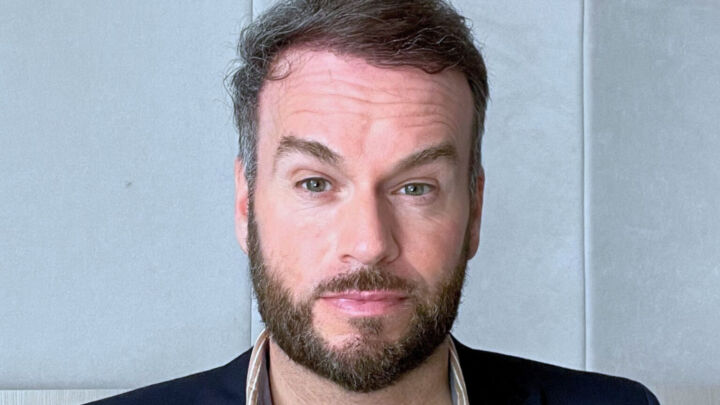
Andrew Orlowski is a weekly columnist at the Telegraph. Visit his website here. Follow him on X: @AndrewOrlowski.

spiked summit 2026
10am-5pm, Saturday 27 June
Emmanuel Centre, London, SW1P 3DW
With Lionel Shriver, Brendan O'Neill, Katharine Birbalsingh, Toby Young, Allison Pearson, Paul Embery, Tom Slater, Andrew Doyle, Fiyaz Mughal and more
Become a spiked supporter to get a discounted ticket
£80 or £50 for supporters
You’ve hit your monthly free article limit.
Support spiked and get unlimited access.
Support spiked and get unlimited access
spiked is funded by readers like you. Only 0.1% of regular readers currently support us. If just 1% did, we could grow our team and step up the fight for free speech and democracy.
Become a spiked supporter and enjoy unlimited, ad-free access, bonus content and exclusive events – while helping to keep independent journalism alive.
Monthly support makes the biggest difference. Thank you.





Comments
Want to join the conversation?
Only spiked supporters and patrons, who donate regularly to us, can comment on our articles.