Can Nolan’s Odyssey survive the culture war?
Hollywood only has itself to blame for the endless controversies over casting.
Want unlimited, ad-free access? Become a spiked supporter.
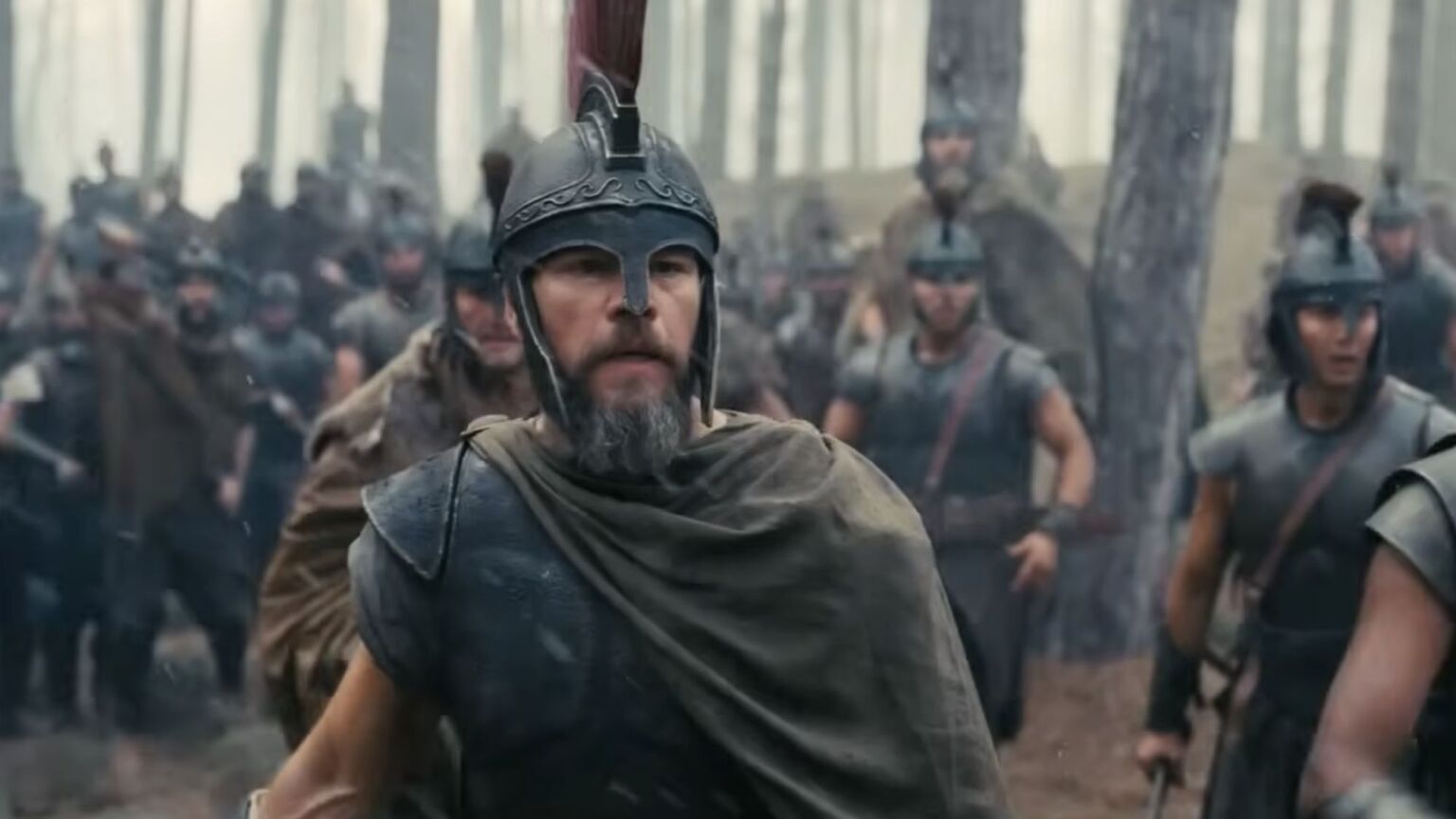
Christopher Nolan’s film adaptation of The Odyssey has not yet reached cinemas, yet it has already started a culture war. The trailer has been mocked for its American accents and modern dialogue. Matt Damon’s Odysseus shouting ‘Let’s go!’ has caused a minor outbreak of distress among classicists, while a clip of Antinous (Robert Pattinson) telling Telemachus (Tom Holland) that he is ‘pining for a daddy’ has left some viewers wincing.
On top of these disputes are bitter rows over casting decisions. Nolan has confirmed that Kenyan actress Lupita Nyong’o will play both Helen of Troy and Clytemnestra. He has also defended casting African-American rapper Travis Scott as a bard, saying he wanted to draw out the oral poetry in the Homeric epic. Meanwhile, an unconfirmed rumour that Elliot Page – a female actor who now identifies as a man – may be playing Achilles has prompted online convulsions.
In short, traditionalists and the online right have gone into meltdown over Nolan’s seemingly fast and loose attitude towards the classics, even before the film has been seen. Elon Musk has accused Nolan of casting Nyong’o because he ‘wants the awards’, and described the (unconfirmed) prospect of Page as Achilles as ‘one of the dumbest and [most] twisted things’ he had heard.
This furore is the logical outcome of the politics of representation becoming embedded in cultural production. ‘Representation’ may have begun life as an academic argument, but it has become a real-life, practical rulebook that now dictates how a lot of culture is made and evaluated.
The Academy Awards now requires Best Picture contenders to submit a confidential inclusion form and meet two out of four representation and inclusion standards. The British Film Institute (BFI) Diversity Standards are a contractual requirement for receiving grant funding. The British Academy Film Awards introduced diversity requirements for its British film categories in 2019, explicitly tying eligibility to the BFI framework.
The introduction of these rules was one of the great philistine victories over art in the modern film industry. Art now has to explain and justify itself in the language of access, inclusion, representation and eligibility. The intentions behind these rules may at some point have been well-meaning, but the effect has been to bureaucratise the imagination. Before a film can be judged as art, it is asked to declare how well it reflects a sanctioned picture of society.
This matters because it helps explain the online and traditionalist overreactions. Once casting has been so publicly absorbed into the machinery of diversity, every unconventional casting decision starts to look suspicious. We can’t know for sure why Nolan is making the choices he is. Was Lupita Nyong’o cast because she reveals something new about Helen, beauty and myth? Or because someone, somewhere, needed the right box ticked? Was Travis Scott cast because Nolan wants to connect Homeric oral poetry to rap? Or because of diversity? The fact that these questions can be asked at all is enough to cause damage to artistic creation. The bureaucratisation of representation has made audiences less willing to trust unusual artistic interpretations when they appear.

Everyone needs to take a breath for a moment. It needs to be said that not every unusual artistic choice is ‘woke’. And, although many will violently disagree, not every woke artistic choice is necessarily wrong or philistine. These things need to be taken case by case and considered with a cool head. Nolan is an auteur, a unique director who makes distinct films. Before we judge his take on The Odyssey, we should ask what his choices might mean artistically for the version he wants to create.
A black Helen of Troy may work or fail. It may make her beauty less clichéd, more confronting, less boring by the standards of European screen imagery. It may expose the possessive fantasies surrounding Helen: the idea that beauty belongs to men, to armies, to nations, to the people who think they own the story. Or it may simply be inert, a prestige casting choice that never develops into meaning. Casting Nyong’o as the sisters Helen and Clytemnestra may point to the arbitrary nature of Greek tragedy and the interchangeability of women in the conflict, and ultimately the inevitability of fate.
The Page-Achilles question is even more intriguing. Page’s role has not been confirmed, but the rumour alone has been enough to produce outrage. And yet Achilles is hardly the straightforward monument to classical masculinity imagined by the online guardians of Western civilisation. In the later Achilles on Skyros tradition, Thetis hides Achilles from the Trojan War by disguising him as a woman among the daughters of King Lycomedes, until Odysseus and Diomedes expose him.
So even if Nolan has cast Page as Achilles, the choice may not be some alien imposition on a pristine masculine myth. It could speak to one of the myth’s own long-standing tensions: Achilles as a figure suspended between categories, dragged from disguise into heroic violence.

The point here is that Nolan may be on to something interesting that’s not immediately obvious. None of this means that radical casting choices are necessarily brilliant by default. Page as Achilles, if true, could be inspired or disastrous. Nyong’o as Helen could be revelatory or merely fashionable. Travis Scott as a bard could make for a thrilling sense of epic poetry, or collapse into celebrity gimmickry. Nolan’s modern dialogue could make Homer immediate, or make the Bronze Age sound as if it has been workshopped by Netflix executives. We can’t know until we’ve seen the film.
These are first and foremost questions of art. The question is not whether Nolan is doing a disservice to Homer and history. It is whether he has created a meaningful, persuasive and internally consistent mythic world.
What art needs right now is not more policing but more freedom. It needs to be free from both the weight of tradition and the demands of representation. As long as these two opposing expectations are imposed on art, it will be both treated with suspicion and creatively thwarted.
Homer does not need protection from artistic adaptation. He has survived nearly three thousand years of singers, scribes, translators, painters, schoolmasters, directors and bores. He will survive Christopher Nolan, too.
Maren Thom is a senior research fellow at MCC Brussels.
spiked summit 2026 – SOLD OUT
Saturday 27 June 2026
10am-6pm, Saturday 27 June
Emmanuel Centre, London, SW1P 3DW
With Lionel Shriver, Brendan O’Neill, Katharine Birbalsingh, Toby Young, Allison Pearson, Paul Embery, Tom Slater, Andrew Doyle, Fiyaz Mughal and more
The spiked summit has now SOLD OUT. To join the waitlist, email:
[email protected]
£80 or £50 for supporters
You’ve hit your monthly free article limit.
Support spiked and get unlimited access.
Support spiked and get unlimited access
spiked is funded by readers like you. Only 0.1% of regular readers currently support us. If just 1% did, we could grow our team and step up the fight for free speech and democracy.
Become a spiked supporter and enjoy unlimited, ad-free access, bonus content and exclusive events – while helping to keep independent journalism alive.
Monthly support makes the biggest difference. Thank you.


Comments
Want to join the conversation?
Only spiked supporters and patrons, who donate regularly to us, can comment on our articles.