Akhmed Yakoob: a morbid symptom of multicultural failure
The flash, brash TikToking lawyer has ridden a wave of Muslim grievance politics to become an unlikely power broker.
Want unlimited, ad-free access? Become a spiked supporter.
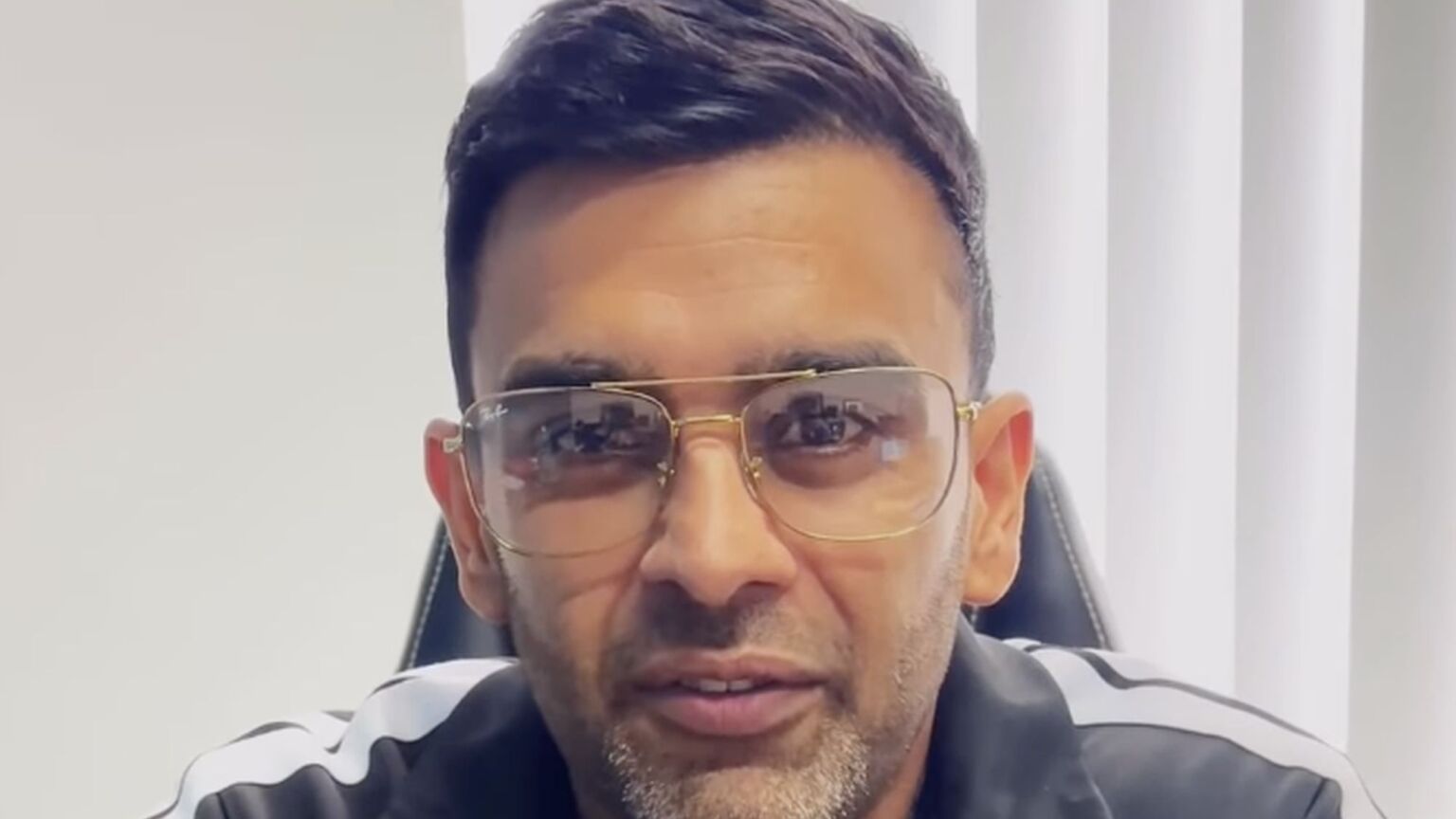
Birmingham-based criminal-defence lawyer Akhmed Yakoob has become an unlikely kingmaker in his city’s local politics, built on his relentless self-promotion, on his ‘straight-talking’, no-holds-barred online persona and on the public’s growing distrust of mainstream politics.
Yakoob has regularly promoted his legal services through catchy TikTok videos aimed at young people drawn to glamour and conspicuous wealth. He films himself next to his Lamborghini. Many in Britain would once have found his brash, Americanised style of marketing distasteful. Yet that style clearly resonates with a section of younger voters who feel alienated from traditional British politics, and who increasingly consume news and current affairs through social-media snippets, rather than through party manifestos or serious debate.
To some, Yakoob may appear clownish. But dismissing him as a joke misses the point entirely. He played a critical role in the election of nine independent councillors on Birmingham City Council in last week’s local elections. With the council now under no overall control, that bloc of councillors will inevitably seek influence and leverage through deal-making with larger parties.
When one looks closely at Yakoob’s campaigning themes, two issues dominate: bin collections and Palestine. The former is at least a local-government issue. The latter has virtually no relevance to the practical services local authorities are supposed to provide to residents.
The more important question is this: how have we reached a point where sectarian politics can secure sizeable clusters of council seats and where similar identity-driven politics delivered five parliamentary victories for independent candidates two years ago?
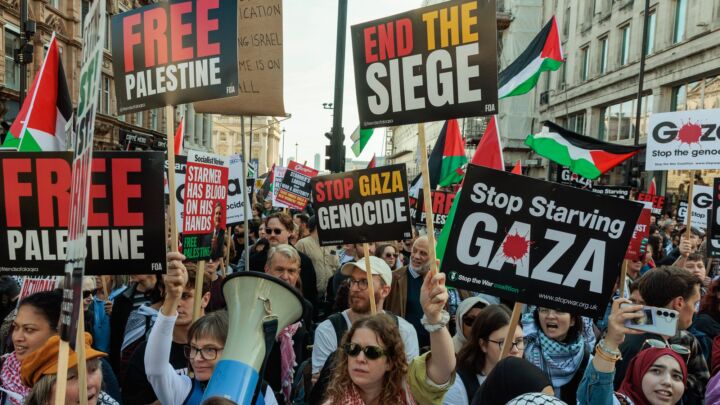
Having worked for more than 25 years within Muslim communities, I have seen first-hand how Palestine has repeatedly been used as a political football to suit the agendas of different groups in Britain. The first people to recognise its emotional and political potential were Islamist groups, affiliates of the Muslim Brotherhood and toxic agitators such as Abu Hamza and Omar Bakri Muhammad, the self-styled ‘Tottenham Ayatollah’. They understood early on that Palestine could be weaponised emotionally to cultivate grievance, anger and communal identity politics.
Such is the gravitational pull of the Palestinian issue that for some British Muslims, it can cloud basic common sense. Many of those most animated by the issue will never visit the West Bank, let alone Gaza, yet they are drawn into the black-and-white thinking that now dominates discourse around Israel and Palestine. Israel is viewed as wholly evil, incapable of doing anything right, while everything Palestinian is automatically cast as virtuous.
The contradictions are glaring. Some passionately denounce Israel while taking Teva-manufactured medication for blood pressure or chronic illness, apparently oblivious to the fact that the medicine helping to prevent catastrophic health events originates in Israel. That is how emotionally charged and irrational this debate has become in certain circles.
On the far end of this polarised spectrum, some have even come to see Hamas as ‘freedom fighters’. The cognitive dissonance runs so deep that they refuse to acknowledge the most basic reality: that Hamas’s barbaric actions on 7 October 2023 directly triggered the catastrophe we are witnessing in the Middle East today.
It is precisely this constituency that Yakoob appeals to – people angry about Palestine, angry about Britain and emotionally invested in a permanent victim narrative claiming that ‘Muslims have it bad in Britain’. This narrative persists even among those whose families own extensive property portfolios across the Midlands and the north of England, and who enjoy opportunities unavailable to millions across the world.
Yakoob himself is not the root cause of the problem. He is a symptom of a much deeper malaise: the catastrophic failure of successive integration policies that abandoned muscular liberalism in favour of passive multiculturalism. Rather than confidently promoting shared civic values, governments retreated into hand-wringing platitudes about ‘communities coming together naturally’.
Indeed, the current Labour government appears determined to continue with the same failed ‘melting pot’ fantasy – the kumbaya politics of assuming that social cohesion somehow emerges automatically without challenge, accountability or a firm defence of democratic norms. Ordinary British people increasingly see through this. They are tired of sectarianism, tired of anti-Semitism and tired of the relentless ‘Britain is uniquely awful’ rhetoric pushed by parts of the activist left.
A closer examination of Yakoob’s own public record reveals a deeply divisive and polarising figure who has nevertheless succeeded in mobilising thousands of voters.
In March 2026, Yakoob was arrested on suspicion of racially abusing a West Midlands police officer. Footage showed him detained in the back of a police van and, true to form, he turned the incident into yet another performance for the cameras, using confrontation and controversy to reinforce his outsider image. He was later released on bail in what is becoming an expanding catalogue of allegations surrounding him.
In May 2025, he was charged by the National Crime Agency with money-laundering offences allegedly committed between February 2020 and January 2021. Yet even then, he brushed aside the seriousness of the allegations with characteristic swagger, remarking that ‘Today’s newspapers are only going to be used to wrap up tomorrow’s bag of chips’.
Other remarks are also cause for concern. In June 2024, Yakoob was heard suggesting that ‘over 70 per cent of hell is going to be women’. Then, during a Sky News interview in March 2026, he reportedly suggested to voters that ‘the Zionists control everything’ – rhetoric that veers dangerously close to classic anti-Semitic conspiracy-theory tropes.
I grew up in Britain during the 1980s and 1990s, when local and national politics revolved around issues such as council tax, Europe, standards of living, economic opportunity and Britain’s place within NATO. Those issues still matter profoundly today, arguably more than ever. Yet the politics now emerging on the streets of Birmingham bear little resemblance to the civic politics many of us once knew.
What we are witnessing points to two uncomfortable truths. First, how deeply divided Britain has become. And second, how identity politics has been allowed to fester unchecked for decades. How have we arrived as a country when a young British Muslim who has never worked, who still lives in his mother’s home and who has little stake in Britain’s economic future can be mobilised more passionately around Palestine than around building a career, contributing to society or strengthening the nation in which he lives?
No, Yakoob is not the disease, but he is a symptom of our age – and of weak, hesitant governments that lacked the courage to challenge sectarianism before it embedded itself into our politics.
Fiyaz Mughal is founder of Faith Matters and Tell MAMA.
spiked summit 2026 – SOLD OUT
Saturday 27 June 2026
10am-6pm, Saturday 27 June
Emmanuel Centre, London, SW1P 3DW
With Lionel Shriver, Brendan O’Neill, Katharine Birbalsingh, Toby Young, Allison Pearson, Paul Embery, Tom Slater, Andrew Doyle, Fiyaz Mughal and more
The spiked summit has now SOLD OUT. To join the waitlist, email:
[email protected]
£80 or £50 for supporters
You’ve hit your monthly free article limit.
Support spiked and get unlimited access.
Support spiked and get unlimited access
spiked is funded by readers like you. Only 0.1% of regular readers currently support us. If just 1% did, we could grow our team and step up the fight for free speech and democracy.
Become a spiked supporter and enjoy unlimited, ad-free access, bonus content and exclusive events – while helping to keep independent journalism alive.
Monthly support makes the biggest difference. Thank you.


Comments
Want to join the conversation?
Only spiked supporters and patrons, who donate regularly to us, can comment on our articles.