The UAE’s exit from OPEC is bigger than the price of oil
The Iran War is remaking the Middle East – and has shattered any illusions about a unified ‘Muslim world’.
Want unlimited, ad-free access? Become a spiked supporter.
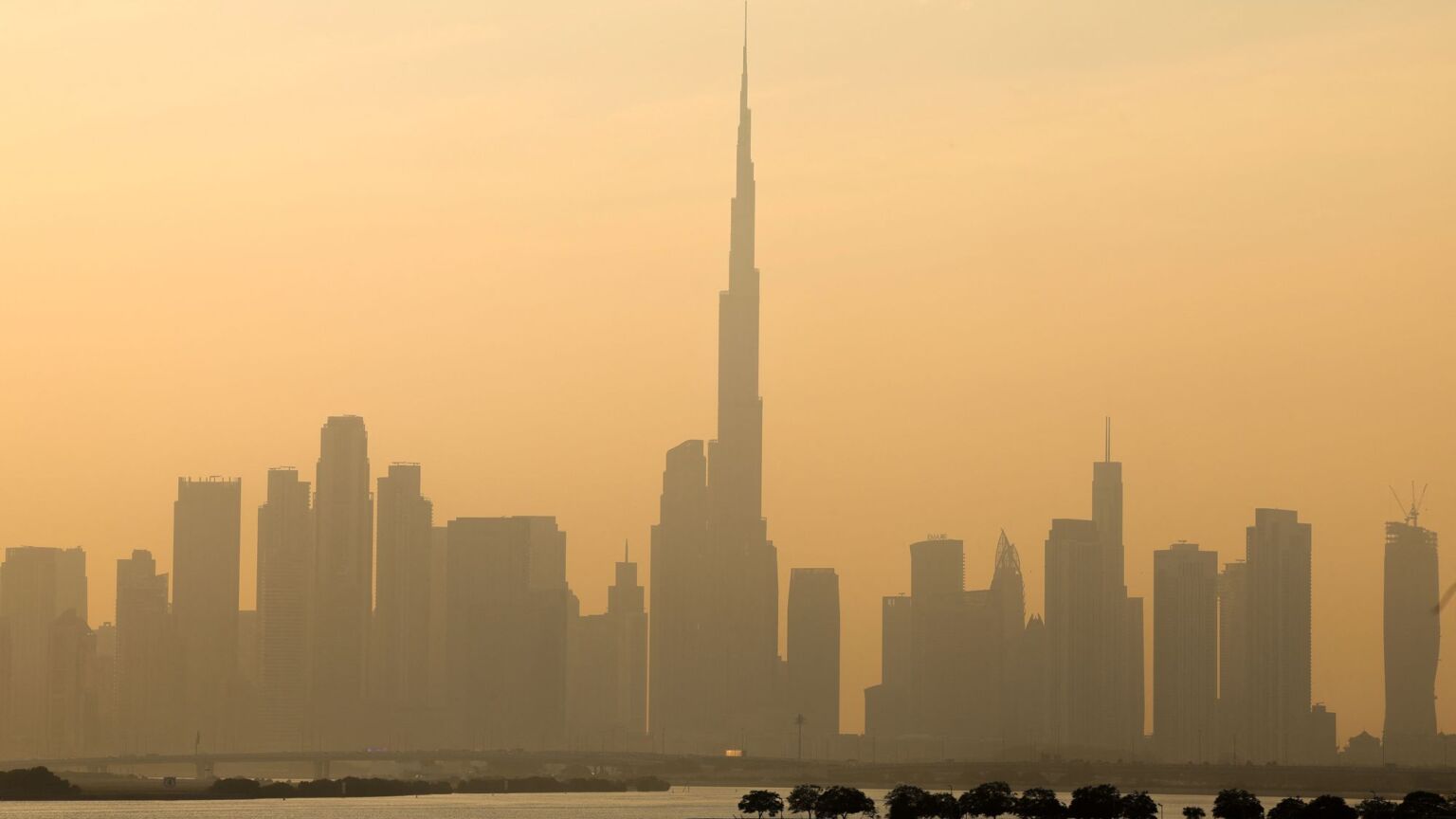
The United Arab Emirates has announced the end of its 59-year affiliation with the Organisation of Petroleum Exporting Countries (OPEC).
Founded in 1960 by Iran, Iraq, Kuwait, Saudi Arabia and Venezuela in a joint effort to spearhead the global oil markets, OPEC’s power has long been on the wane. In the 1970s, it was capable of dictating global crude supply. Today, with US shale-oil production rendering OPEC increasingly irrelevant, it barely manages oil prices. The UAE’s departure will only hasten its obsolescence.
The UAE had been mulling its future in the organisation for a while. Its membership of OPEC has meant it has had to suppress its oil production in line with the interests of the other members, led by Saudi Arabia. It looks as if the war in Iran has finally prompted Abu Dhabi to stop toeing the line, especially given the possibility of the UAE profiting from a potentially reopened Strait of Hormuz.
OPEC isn’t the only Saudi-led institution the UAE is challenging. Since the war in Iran started, the UAE has been subject to more missile and drone attacks from Tehran than any other state in the Gulf Cooperation Council (GCC). The UAE sees this as a collective failure of the GCC. And it is pinning the blame on Saudi Arabia, the dominant power in the GCC.
The same goes for the Islamic Military Counter Terrorism Coalition (IMCTC), an alliance of Sunni states designed precisely to counter Iran – an objective it has struggled to fulfil over the past few months. So whether it’s the IMCTC, the GCC or OPEC, the UAE clearly feels these Saudi-led organisations cleave too closely to Saudi interests, at the expense of Abu Dhabi’s own.
The UAE and Saudi Arabia seem to be increasingly engaged in geopolitical rivalry. Indeed, in recent years, Abu Dhabi has been pursuing a foreign policy that is increasingly at odds with Saudi’s.
The pair have recently been clashing in Sudan’s civil war. Riyadh has been backing the government of General Abdel Fattah al-Burhan’s Sudanese Armed Forces, while Abu Dhabi has been supporting Muhammad Hamdan Dagalo’s Rapid Support Forces. The two Gulf powers have been aggravating a horrendous conflict that has killed tens of thousands and displaced millions.
Their rivalry isn’t limited to Sudan. The two have been clashing in Yemen, too, where Abu Dhabi supports the Southern Transitional Council (STC) against government forces backed by Saudi Arabia. In December, the Royal Saudi Air Force bombed Emirati ships as part of its strikes on Yemen’s Mukalla port, prompting the UAE to announce the withdrawal of its forces.
Then there’s the case of Somaliland, a partially recognised state to the north of Somalia. The UAE is economically invested there – something that was a significant factor in Israel’s decision to formally recognise its statehood. Yet Riyadh backs the Somalian government, which opposes the secession of Somaliland. Both the UAE and Saudi Arabia see Somaliland as a means to exert regional influence from the Red Sea to the Horn of Africa.
There is a clear direction to Abu Dhabi’s policymaking – that is, to draw closer to the US and Israel. Something signalled by the UAE’s decision to sign the Abraham Accords with Israel in 2020.
It seems the UAE is trying to separate itself from Islamist geopolitics, pulling away from not just Saudi Arabia but Qatar, too. Indeed, its exit from OPEC reaffirms its intent to function as an independent actor no longer bound by any perceived Gulf, Arab or Muslim allegiance.
This ought to disabuse observers of any illusions they still have of a coherent Muslim or Islamic world. Iran’s willingness to wage jihadist proxy wars for decades, often to the detriment of its neighbours, had already made a mockery of any claims of Muslim unity. The UAE-Saudi rift, following the pair’s clash with Qatar over its backing of Islamist groups, officially marks the end of the ‘Muslim world’ as a political unit.
OPEC could well limp on for a while. It has survived other departures, including Qatar, Angola, Ecuador and Indonesia over the past decade alone. But the UAE’s exit will hurt. It has long been the group’s third-largest oil producer, and is the only state, other than Saudi Arabia, with the spare oil capacity needed to sustain markets.
Should the likes of Venezuela, Nigeria and Kazakhstan – each of which has been over producing oil – choose to follow the UAE out the exit door, OPEC might formally collapse. And with the UAE’s interests now diverging from Saudi Arabia’s, we could well see the emergence of a new rival group of oil-producing countries aligned with the US. Either way, the regional order of the Middle East, torn by war and geopolitical rivalries, is being reconfigured before our very eyes.
Kunwar Khuldune Shahid is a writer based in Pakistan.

spiked summit 2026 – SOLD OUT
Saturday 27 June 2026
10am-6pm, Saturday 27 June
Emmanuel Centre, London, SW1P 3DW
With Lionel Shriver, Brendan O’Neill, Katharine Birbalsingh, Toby Young, Allison Pearson, Paul Embery, Tom Slater, Andrew Doyle, Fiyaz Mughal and more
The spiked summit has now SOLD OUT. To join the waitlist, email:
[email protected]
£80 or £50 for supporters
You’ve hit your monthly free article limit.
Support spiked and get unlimited access.
Support spiked and get unlimited access
spiked is funded by readers like you. Only 0.1% of regular readers currently support us. If just 1% did, we could grow our team and step up the fight for free speech and democracy.
Become a spiked supporter and enjoy unlimited, ad-free access, bonus content and exclusive events – while helping to keep independent journalism alive.
Monthly support makes the biggest difference. Thank you.

Comments
Want to join the conversation?
Only spiked supporters and patrons, who donate regularly to us, can comment on our articles.