Why are men still competing in women’s sports?
A year on from the Supreme Court ruling, female athletes continue to lose out.
Want unlimited, ad-free access? Become a spiked supporter.
ADF International and Sharron Davies’ Women’s Sports Union sent a joint letter last week to 10 sporting bodies across the UK, urging them to update their policies to reflect the law on single-sex provisions. It was a simple request: reserve the female category for females, and in doing so, maintain fairness, safety and integrity in sport for all.
A week before, it was the one-year anniversary of the Supreme Court’s landmark case, For Women Scotland vs Scottish Ministers, in which it was ruled that the terms ‘man’, ‘woman’ and ‘sex’ in the 2010 Equality Act refer to biological categories. But the British government, public bodies, and various other institutions are still refusing to alter their policies accordingly. Among the most egregious offenders are sporting bodies across the UK, many of which continue to allow biological men to compete against women.
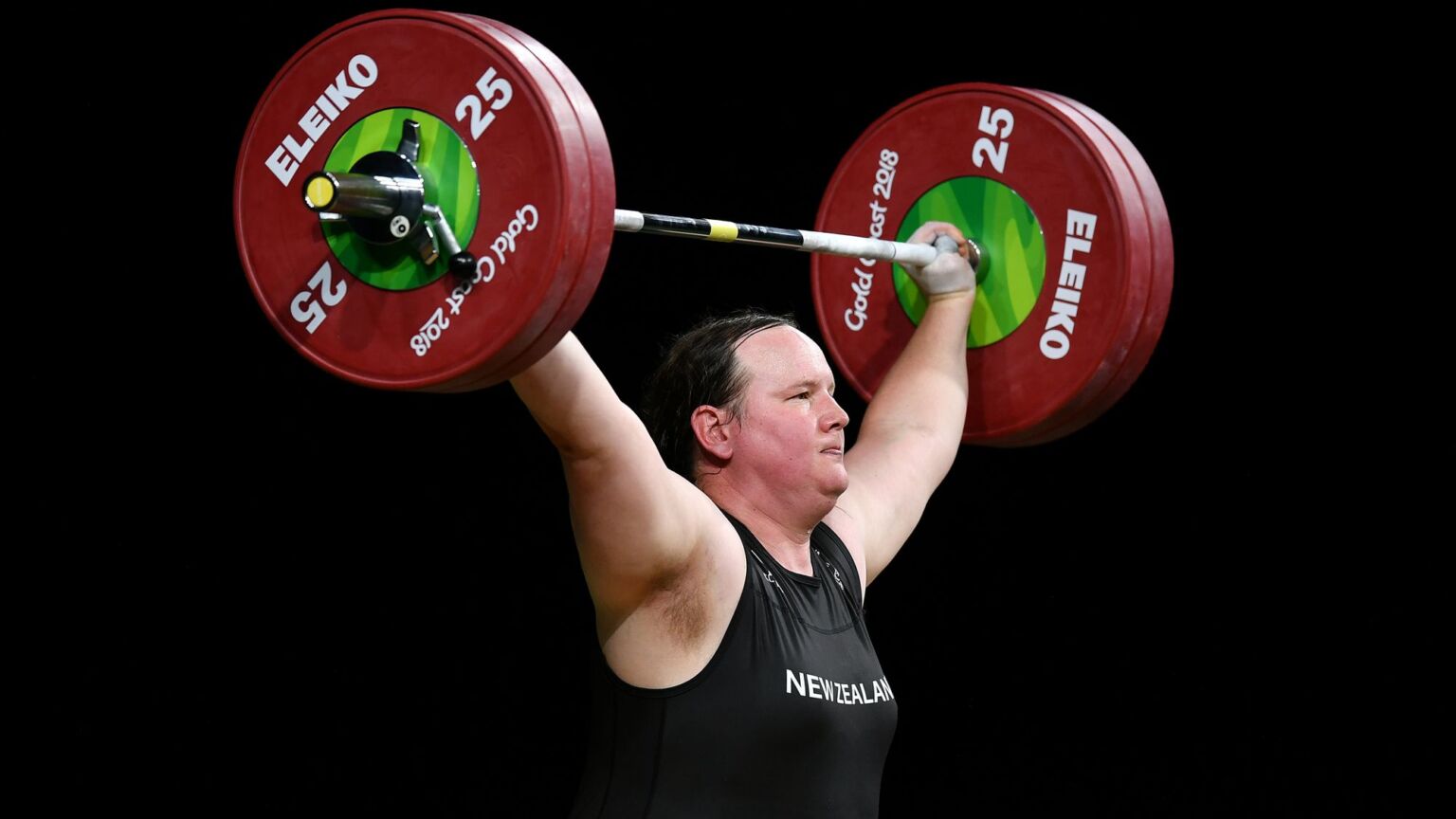
Despite overwhelming scientific evidence that men and women possess different physiological ceilings, even strength-based sports like powerlifting still allow males to compete in the female category. This is due to British Powerlifting’s continued adherence to the International Powerlifting Federation’s 2023 testosterone-based policy, which fails to address the enduring physical advantages conferred by male puberty. Others, like the British Baseball Federation, opt for case-by-case assessments, placing responsibility on ‘team managers, coaches and leaders’ to ensure ‘an unfair situation’ does not present itself. The policy recommends achieving this via ‘pre-game discussions’ with the relevant parties. In other words, ‘fairness’ is likely to be decided by the loudest voice in the room.
Rounders England takes a similar approach, with its female-talent pathways – up to and including the national level – open to anyone who identifies as female. Its 2024 policy, which assumes ‘no intent to… gain any competitive advantage’, says decisions about who should compete in the women’s category should be based on ‘good faith’, as opposed to scientific consensus, sporting precedent or the law. ‘Presently Rounders is not considered a gender-affected sport’, the group claims. Compare this assessment of a game based on throwing, batting and running with the Darts Regulation Authority’s recent decision to exclude biological men from the female category, citing scientific evidence that darts is sex-affected.
Even those sporting bodies that recognise the difference between males and females show little enthusiasm for imposing clear, sex-based categories. Several adopt a ‘middle ground’, protecting the female category only at the elite level. All those young girls attending after-school gymnastics clubs, or the ladies who just want to swim in peace at their local leisure centre, are apparently not worth the hassle.
One of the most shocking examples of this incongruence is Swim England’s transgender and nonbinary competition policy, which ‘ensures there are entry-level competitive opportunities for transgender people to participate in the majority of our disciplines within their gender identity’. That includes water polo, where transgender players ‘may self-ID as they see fit’ in the context of under-16s competitions. Water polo is an intense contact sport. How do we reconcile this approach with Swim England’s own acknowledgement that ‘the general consensus that post-puberty transgender females retain a biological level of performance advantage’? If the organisation truly believes this, then to implement gender self-ID at precisely the age when players are at different stages of puberty is nothing short of reckless.
The Supreme Court’s ruling was not ambiguous by any stretch. What’s more, the Equality and Human Rights Commission (EHRC) draft Code of Practice, published last September, spelled out how it should be applied. Yet endless stalling from the UK government has meant that, seven months on, the document remains in draft status. This ‘uncertainty’ has offered a convenient excuse for sporting associations that don’t wish to follow the law.
Now, calls for ministers to stop stalling are coming from the highest levels. Critics include Baroness Falkner, former chair of the EHRC, and Reem Alsalem, the UN special rapporteur on violence against women and girls. Both highlight the delay as a sign of reticence to upset supporters of transgender ideology, which many believe would be politically disadvantageous in the run-up to the local elections in early May. The optics certainly support this view: equalities minister Bridget Phillipson claimed earlier this month that purdah rules prevent her from publishing the updated guidance, despite the government making several other announcements in the same period.
Unsurprisingly, rumours are circulating that attempts have been made to water the guidance down. Whether or not we accept this perspective, the government’s inaction proves, at the very least, that it does not consider protecting female-only spaces and services a priority. Women and girls are still losing out, and will continue to do so until sports governing bodies – and the British government itself – stand up for basic biological truth.
Robert Clarke is a barrister and Director of Advocacy at ADF International. Follow him on X: @Rob_ADFIntl.
You’ve hit your monthly free article limit.
Support spiked and get unlimited access.
Support spiked and get unlimited access
spiked is funded by readers like you. Only 0.1% of regular readers currently support us. If just 1% did, we could grow our team and step up the fight for free speech and democracy.
Become a spiked supporter and enjoy unlimited, ad-free access, bonus content and exclusive events – while helping to keep independent journalism alive.
Monthly support makes the biggest difference. Thank you.







Comments
Want to join the conversation?
Only spiked supporters and patrons, who donate regularly to us, can comment on our articles.