Has Iran won the ‘economic war’? Not even close
The Strait of Hormuz blockade could push the Islamic Republic to breaking point.
Read our latest coverage of the French riots here – paywall-free all of this week..
Western liberal critics of Washington’s war on Tehran have been rubbing their hands with glee in recent days. Always quick to trumpet Iran’s resilience and its supposed stockpile of missiles and drones, critics of the war – from the Guardian, through to bigwigs at America’s Council on Foreign Relations – are convinced that Iran can and will inflict further humiliations on The Donald.
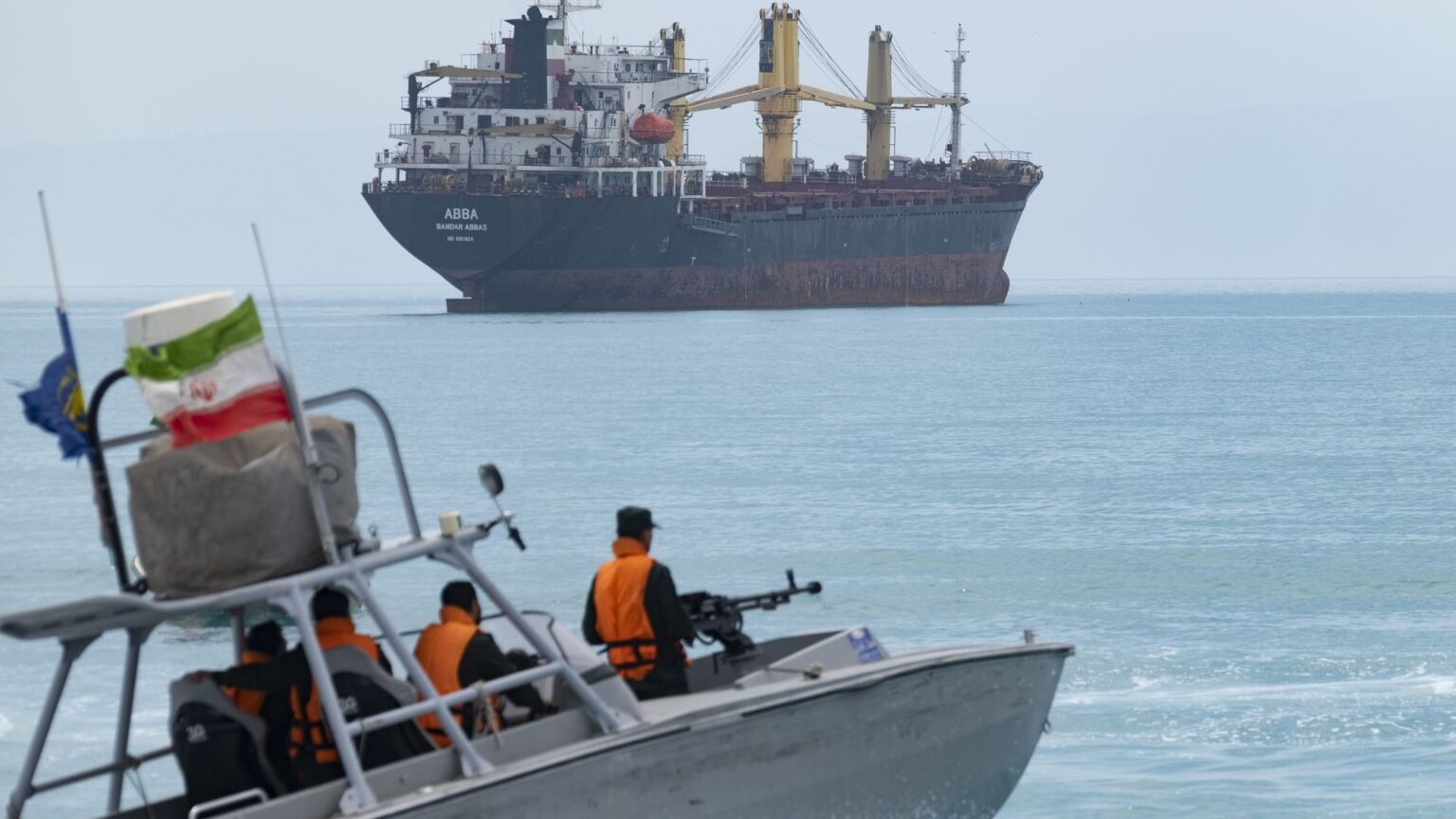
Their argument rests on Iran’s control of the Strait of Hormuz. When the war on Iran began on 28 February, Tehran blocked most tankers carrying crude oil, oil products and liquefied natural gas (LNG) from going through the Strait – blocked transit, that is, for a quarter of the world’s oil and a fifth of its LNG. By the end of March, Iran approved a plan to impose tolls on ships using the Strait. On 8 April, the same day that an abortive ceasefire between Iran and America was announced, Iran’s Islamic Revolutionary Guard Corps (IRGC) shut the Strait in reprisal for Israel’s war on Lebanon, only allowing through the few freighters prepared to pay the tolls of between $1million and $2million – an unprecedented move.
In response, Donald Trump has now imposed a blockade of his own. At the beginning of this week, he sent the US Navy to the Gulf of Oman, subjecting any vessel bound to or leaving Iran to what the US Central Command called ‘interception, diversion and capture’.
Those desperate for America’s defeat are right about one thing: the Strait of Hormuz will, in one way or another, decide the fate of the war. A bottleneck connecting the Persian Gulf to the Gulf of Oman to its east, it is the only exit point for traffic bound for the open seas from Iran and the Gulf nations. A usefully deep waterway for shipping, the Strait forms a tight chokepoint – little more than 20 miles wide, at its narrowest – between Iran to its north and Oman, plus the United Arab Emirates, to its south.
Iran has taken merciless advantage of its control of the Strait. Oil exports from the Persian Gulf have fallen off a cliff, leaving the world’s daily output of about 100million barrels a day down by roughly 17million. This hasn’t just impacted energy and fuel prices. Because natural gas is vital to the production of fertilisers, food producers in Brazil, India, Sudan, Tanzania and Somalia have all been hit hard. Supplies of helium, 30 per cent of which is produced by Qatar, have been blocked by Iran, raising costs for manufacturers of semiconductors in South Korea and Taiwan.
So there can be little doubt that Iran has the ability to hold the world to ransom. Time will tell, too, whether the US counter-blockade will succeed.
And yet it is not at all a foregone conclusion that America’s nerve will break before that of the remnants of the Iranian regime. We have little idea about the full range of technologies and capabilities that the US could bring to bear in and around the Strait. What we do know is that, apart from considerable naval and airborne power, the US has bolstered its land forces in the Middle East by 10,000 to 50,000. Expanding the US blockade to an amphibious assault by marines, perhaps on the giant Iranian oil terminal at Kharg Island, will not be easy. But if the evidence of the war so far is anything to go by, America – and only America – has the ability to do this.
Which brings us to the current state of play. Iran’s leadership has been decapitated and its military decimated. Now, it is facing complete economic ruin. Iran has so far relied on oil exports to finance its war. But that is no longer possible – with the US blockade of Hormuz, the regime is reportedly losing $150million a day. Iran has exhausted all of its options and played all of its cards. America has not – as Trump’s threats to target its energy and water infrastructure illustrate.

None of this means that America is bound to win. Only that too many know-it-all geopolitical commentators are shallow and premature in their judgement that Trump faces inevitable defeat.
spiked has always been suspicious of US interventionism and, in Iran, has always insisted that regime change must be instigated by Iranians, of their own volition. But it is still way too soon, and way too sympathetic to the Islamic Republic, to say that Iran is winning this war. Trump Derangement Syndrome will not bring Tehran the victory that America’s anti-Western critics would like.
James Woudhuysen is visiting professor of forecasting and innovation at London South Bank University. Follow him on X: @jameswoudhuysen.
spiked summit 2026 – SOLD OUT
Saturday 27 June 2026
10am-6pm, Saturday 27 June
Emmanuel Centre, London, SW1P 3DW
With Lionel Shriver, Brendan O’Neill, Katharine Birbalsingh, Toby Young, Allison Pearson, Paul Embery, Tom Slater, Andrew Doyle, Fiyaz Mughal and more
The spiked summit has now SOLD OUT. To join the waitlist, email:
[email protected]
£80 or £50 for supporters
You’ve hit your monthly free article limit.
Support spiked and get unlimited access.
Support spiked and get unlimited access
spiked is funded by readers like you. Only 0.1% of regular readers currently support us. If just 1% did, we could grow our team and step up the fight for free speech and democracy.
Become a spiked supporter and enjoy unlimited, ad-free access, bonus content and exclusive events – while helping to keep independent journalism alive.
Monthly support makes the biggest difference. Thank you.





Comments
Want to join the conversation?
Only spiked supporters and patrons, who donate regularly to us, can comment on our articles.