The shameful silence over Nigeria’s Palm Sunday massacre
Why do the media continue to downplay the Islamist slaughter of Nigeria’s Christians?
Want unlimited, ad-free access? Become a spiked supporter.
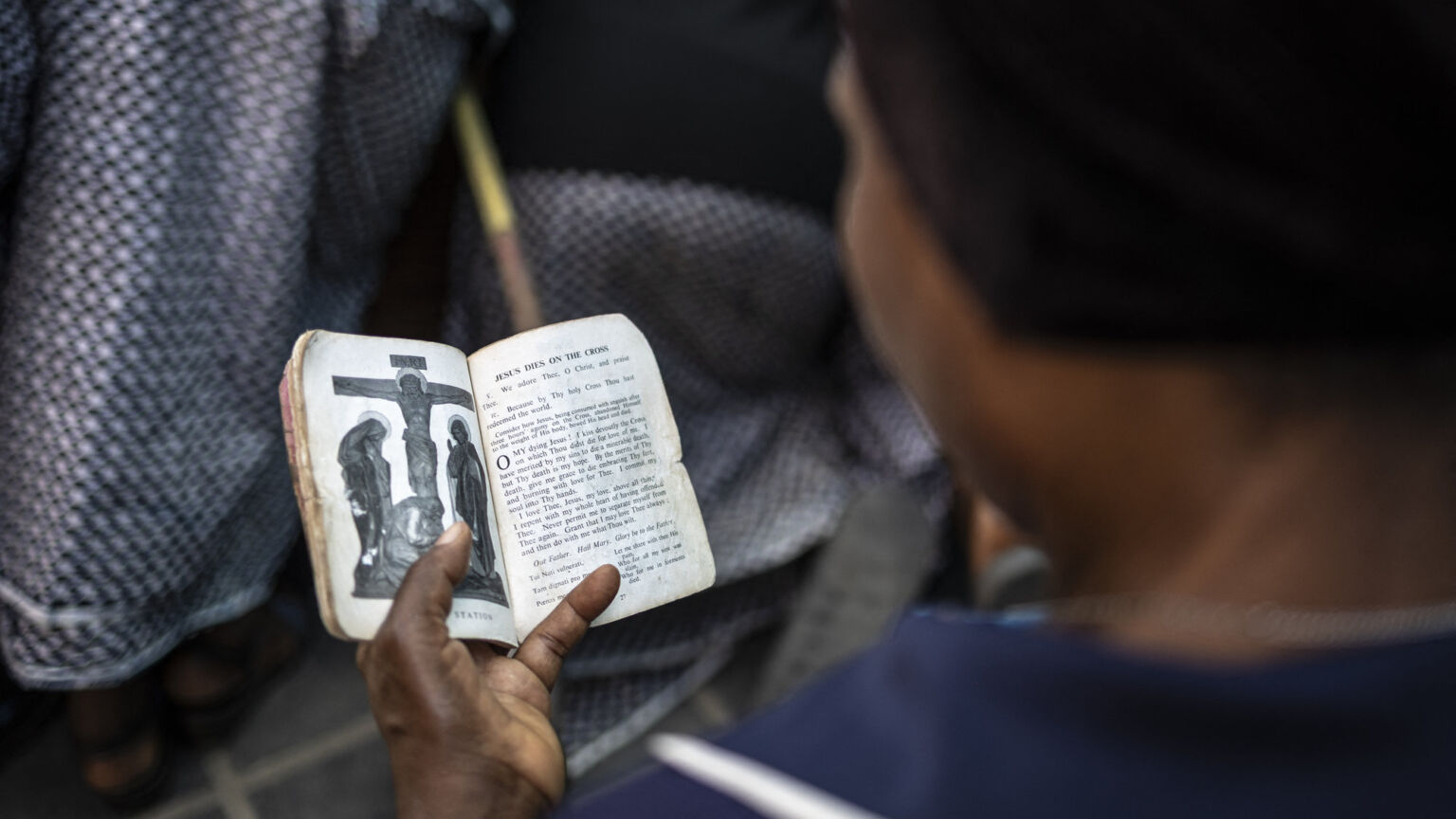
For Christians around the world, Palm Sunday marks the beginning of Holy Week, in commemoration of the entrance of Jesus Christ into Jerusalem.
On Palm Sunday this year, on Saturday 29 March, Christians in the city of Jos in northern Nigeria’s Plateau State saw AK-wielding jihadists enter their city on motorbike. Dozens were then slaughtered. One local leader told me of the pain of praying with a single mother whose 17-year-old son was murdered. Another woman was pregnant when she was shot dead.
In the days following the attack, some Muslim mobs have roamed the city, looking for Christians to kill. It is unclear why security forces have not stopped them.
The brutality of the attack and its occurrence within the relatively peaceful city of Jos – rather than in the countryside to the south of the city, where brutal massacres have occurred against Christians for years – have brought it some attention. But it was not the only attack against Christians in northern Nigeria on Palm Sunday.
In nearby Kaduna state, over a dozen Christians were killed during a wedding celebration, with many others kidnapped for ransom. The next day, near Chibok in northeast Nigeria (the same Chibok where hundreds of mostly Christian schoolgirls were kidnapped by Boko Haram in 2014), another dozen Christians were killed by the Islamic State – West Africa Province.
Holy days have become a preferred moment for jihadists in Nigeria to terrorise Christian communities. Last year, over 50 Christians were killed after a Palm Sunday service in Zikke village, near Jos, and over 240 were killed during Lent and Easter in Plateau and Benue states. Around 200 Christians – some estimates are higher – were massacred over Christmas Eve 2023 in dozens of villages south of Jos.
When you look at the death toll, northern Nigeria is the most dangerous place on Earth to be a Christian, and has been for years. Christian charity Open Doors found nearly 3,500 Christians targeted and murdered for their faith in 2025, and they consider that likely an undercount. Dozens of terrorist and jihadist groups occupy nearly every corner of northern Nigeria, and attacks can seemingly pop up anywhere, at any time. Early warnings go unheeded.
This is a place where a Christian can be stoned and burned to death on video for simply proclaiming the name of Jesus, and absolutely no one is held responsible.
There seemed to finally be an awakening to this utterly devastating crisis last year, when at least some major media figures began to pay attention, and US president Donald Trump warned Nigeria’s government that it was doing far too little to stop the persecution of Christians.
This past Christmas was relatively peaceful – perhaps because pressure from the US had intensified so much and so quickly, culminating in US airstrikes to take out terrorists in Sokoto State in north-west Nigeria. But attacks and massive kidnappings started again in the new year. Real progress is being made, but structural changes necessary for sustained improvement will take time to thoroughly implement, and the determined jihadists are taking advantage of that.
But if you turn to the mainstream media, there’s still no religious persecution to see here. The BBC shamefully characterised the Palm Sunday attack in Jos as an ‘attack on a bar’, and claimed the violence was caused by disputes over ‘access to land and water points’. The New York Times downplayed the obvious religious aspect of the attack, saying the violence is ‘much more complex’, and is ‘fuelled by criminals, rather than religious or ethnic tensions’.
The mainstream media have buried their heads in the sand. If Christians are the victims, it’s a story to be explained away. If Islamist jihadists are the perpetrators, they must have been inspired to act by anything else besides religion.
One Nigerian Catholic bishop, Jude Arogundade, saw his own diocese’s church attacked by jihadists on Pentecost in 2022, leaving over 40 dead. In his Palm Sunday homily, he said that he used to be one of those who doubted the extent of the killing of Christians, but not anymore. ‘It is happening, and it is spreading like wildfire’, he said
The facts are plain as day that Christians continue to be targeted for their faith with alarming regularity in northern Nigeria. Mainstream media ignorance is inexcusable. The US and the West must redouble their efforts to hold Nigerian officials accountable for these continuing atrocities. And no one – let alone the media – should ignore the brutality of the Islamist jihadists responsible.
Sean Nelson is an international human rights lawyer serving as Senior Counsel for Global Religious Freedom with ADF International. Follow him on X: @Sean_ADFIntl
spiked summit 2026
10am-5pm, Saturday 27 June
Emmanuel Centre, London, SW1P 3DW
With Konstantin Kisin, Lionel Shriver, Brendan O'Neill, Katharine Birbalsingh, Toby Young, Allison Pearson, Tom Slater and more
Become a spiked supporter to get a discounted ticket
£80 or £50 for supporters
You’ve hit your monthly free article limit.
Support spiked and get unlimited access.
Support spiked and get unlimited access
spiked is funded by readers like you. Only 0.1% of regular readers currently support us. If just 1% did, we could grow our team and step up the fight for free speech and democracy.
Become a spiked supporter and enjoy unlimited, ad-free access, bonus content and exclusive events – while helping to keep independent journalism alive.
Monthly support makes the biggest difference. Thank you.

Comments
Want to join the conversation?
Only spiked supporters and patrons, who donate regularly to us, can comment on our articles.