Beware the ‘experts’
The late Paul Ehrlich’s predictions of doom showed how catastrophically wrong the credentialed elites can be.
Want unlimited, ad-free access? Become a spiked supporter.
I may not be an ‘expert’, but at least I can admit when I was wrong.
In a Chicago Tribune article last year I wrote, ‘In an ever more complex society, have we run the risk of becoming overly dependent on experts – delegating decisions and responsibilities to them that are outside their domain?’
Several readers called me out, justifiably. They asked whether it was a good idea for anyone other than an expert to fly my plane or perform my open-heart surgery. Point taken. I have spent a lot of time both in planes and operating rooms. Without question, I want experts calling the shots in both of them. In fact, I even wrote in the original article, ‘a functioning society depends on experts. They are indispensable to every profession for tasks ranging from developing essential software to building bridges to performing cardiac surgery.’
My mistake was in failing to point out the distinction between experts with technical knowledge (the ones who actually know how to do things) and experts who have earned their status primarily as a result of their educational credentials or public opinions. Between these two types of ‘experts’ are distinct differences. Firstly, the technical experts are of far higher value to society than the opinion experts. Secondly, and more importantly, technical experts display a far greater willingness to admit when they’re wrong.
Indeed, genuine professionals would not be able to function in their field at all if they were unable to recognise and acknowledge their mistakes. As the saying goes: ‘There are old pilots and there are bold pilots, but there are no old, bold pilots.’ Put simply, if pilots don’t learn from the times when they were too bold, they are not likely to survive until retirement. Surgeons often recite a similar mantra – only in their case, it is their patients who don’t survive.
If you’re an opinion expert, however, refusing to reflect on the times you messed up rarely comes with life-threatening consequences. Which may be why so many of them don’t do it. All they need to do is be right enough, enough of the time. To be the equivalent of the ‘top’ economist who has predicted nine of the last five recessions.
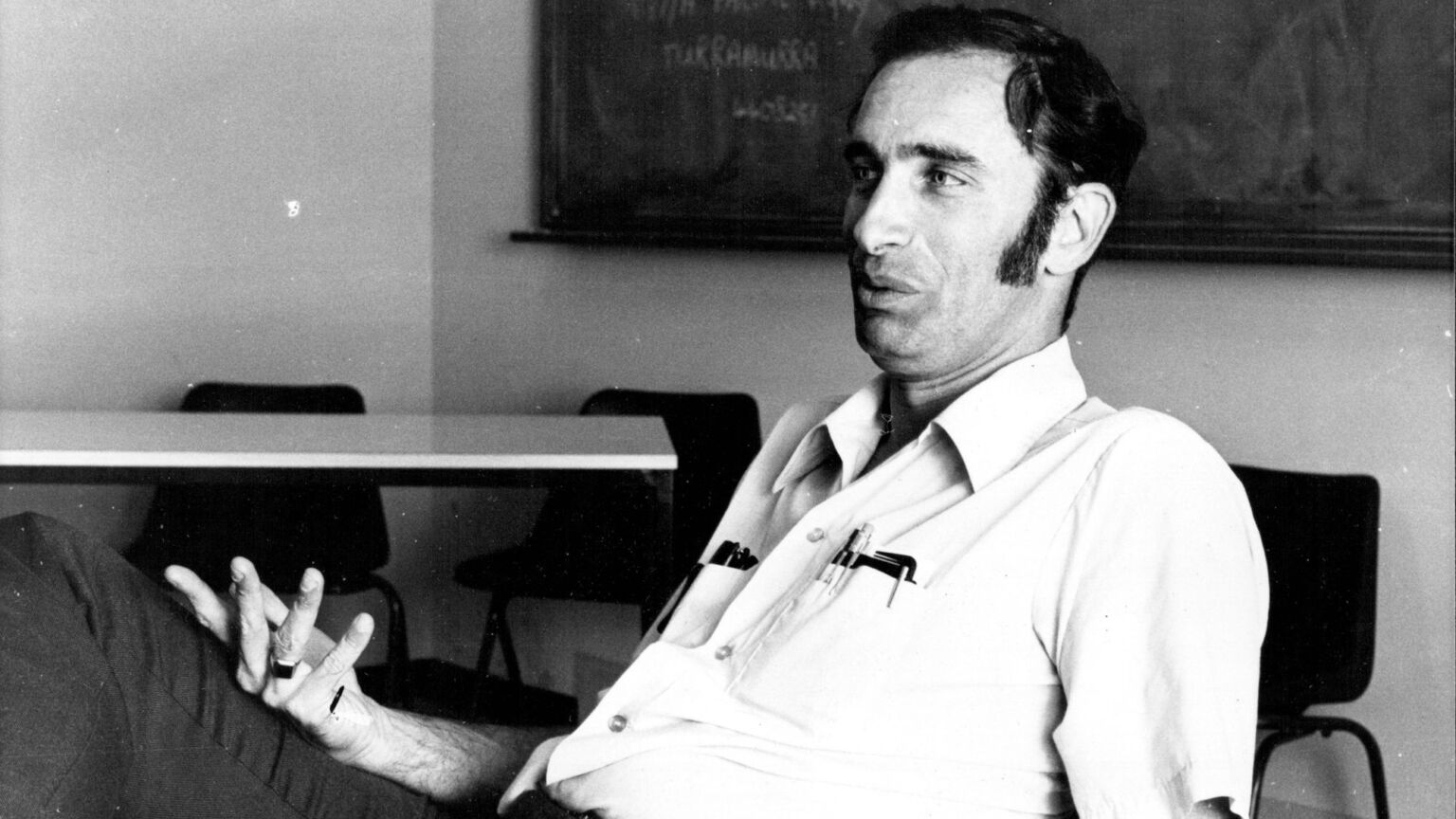
No better example of the opinion expert exists than the late ecologist and population scientist, Paul Ehrlich, who died last month. Ehrlich’s best-selling book, The Population Bomb, shot him to stardom in the late Sixties (he was featured on The Tonight Show Starring Johnny Carson over 20 times). Among the predictions set out in his book were: mass starvation would occur in the 1970s and 1980s, England would cease to exist by 2000, oceans would essentially be devoid of animal life by 1990, and US life expectancy would drop to 42 years by 1980. Ehrlich himself lived to the age of 93.
Obviously, Ehrlich got things spectacularly wrong. But this had virtually no effect on his celebrity or airtime. And, like so many academic experts, he never publicly reflected on his errors. On the contrary, he doubled down: ‘If I’m always wrong, so is science, since my work is always peer-reviewed, including The Population Bomb, and I’ve gotten virtually every scientific honour. Sure I’ve made some mistakes, but no basic ones.’ Personally associating himself with science made him sound like another famous ‘expert’ – Dr Anthony Fauci, who famously pronounced, ‘attacks on me, quite frankly, are attacks on science’.
Such hubris can have dire consequences. As science writer Michael Fumento pointed out, the ‘overpopulation’ panic Ehrlich fuelled led in part to forced sterilisations in India and the brutal enforcement of China’s ‘One Child Policy.’
Opinion experts also provide fertile ground for conspiracy theories. For years, forensic pathologist Cyril Wecht, an ‘expert’ on the JFK assassination, made strident claims that one bullet could not have struck both President Kennedy and Governor John Connally as the Warren Commission found. The bullet, Wecht opined, would have had to make an impossible bend to strike both men. This idea was then popularised by Hollywood director Oliver Stone in the 1991 thriller JFK. The problem was that Wecht assumed Connally was sitting directly in front of JFK – but it was easily verifiable that Connally was seated to the left and slightly below the president. No bullet-bending was necessary. The shot went straight through both men. Wecht died in 2024 without ever backtracking on his claims.
Of course, personal politics plays a role. While it doesn’t matter if your pilot is a MAGA enthusiast or your surgeon is a DEI warrior, the public pronouncements of opinion experts are highly susceptible to bias. Those whose zealotry blinds them to ideas they dislike – the de facto evangelists for ‘the right thinking’ – are also far more easily manipulated by politicians and policymakers who wish to reward desirable opinions.
The lesson here is that ‘listening to the experts’ should be no less important than listening out for humility when said expert realises they’re wrong. Those who do usually know what they are talking about. Those who refuse to do so in the face of the evidence should be regarded with a great deal of suspicion.

Cory Franklin’s The Covid Diaries 2020-2024: Anatomy of a Contagion As It Happened, is now available on Amazon in Kindle and book form.
You’ve hit your monthly free article limit.
Support spiked and get unlimited access.
Support spiked and get unlimited access
spiked is funded by readers like you. Only 0.1% of regular readers currently support us. If just 1% did, we could grow our team and step up the fight for free speech and democracy.
Become a spiked supporter and enjoy unlimited, ad-free access, bonus content and exclusive events – while helping to keep independent journalism alive.
Monthly support makes the biggest difference. Thank you.




Comments
Want to join the conversation?
Only spiked supporters and patrons, who donate regularly to us, can comment on our articles.